
What is Financial Planning?
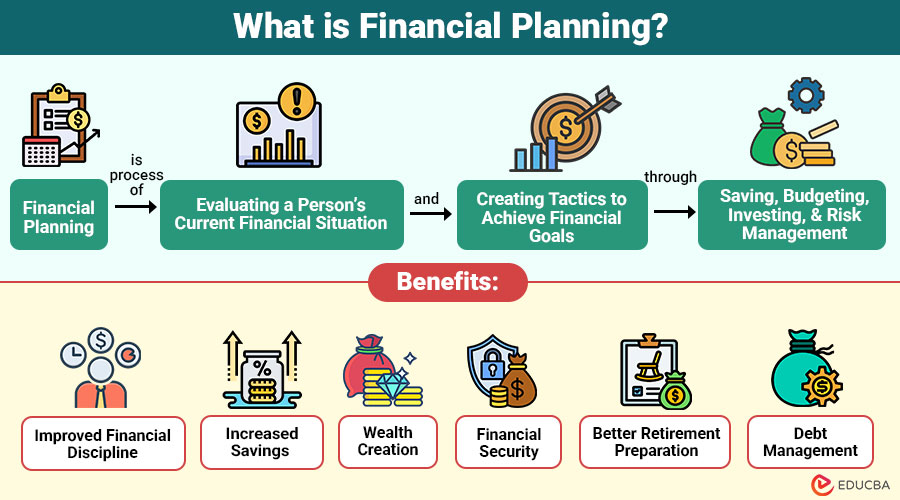
Financial planning is process of evaluating a person’s current financial situation and creating tactics to achieve financial goals through saving, budgeting, investing, and risk management. It helps individuals allocate their resources effectively while preparing for future financial needs such as education, home ownership, retirement, or emergencies.
Table of Contents:
- Meaning
- Importance
- Key Components
- Types
- Process
- Benefits
- Strategies
- Common Mistakes
- Tools
- Real-World Example
Key Takeaways:
- Financial planning helps individuals manage income, control expenses, build savings, and achieve financial security effectively.
- Setting clear financial goals and following structured plans improve decision-making, reduce risk, and support stability.
- Regular saving, early investing, and proper risk management allow money to grow steadily through compounding.
- Reviewing financial plans periodically ensures adjustments for life changes, economic conditions, and evolving personal goals.
Importance of Financial Planning
Here are the key reasons why it is important for individuals and organizations.
1. Better Money Management
Helps individuals track their income and expenses, ensuring that money is used efficiently.
2. Goal Achievement
Whether it is purchasing property, starting a business, or planning retirement, planning helps prioritize and achieve these goals.
3. Emergency Preparedness
A successful financial plan includes emergency funds to handle unexpected events such as medical emergencies, job loss, or economic downturns.
4. Reduced Financial Stress
Proper planning provides financial clarity and reduces anxiety related to money management.
5. Improved Investment Decisions
Assists people in selecting investments that complement their financial goals and risk tolerance.
Key Components of Financial Planning
Consists of several components that work together to create a comprehensive financial strategy.
1. Budgeting
Budgeting is the foundation. It involves tracking income and expenses to ensure spending does not exceed earnings. A budget helps individuals identify unnecessary expenses and allocate funds toward savings and investments.
2. Saving
Saving money is an essential part. It entails allocating a percentage of income for unforeseen expenses like crises, significant purchases, or schooling.
3. Investment Planning
The primary objective of investment planning is to make investments in financial instruments such as stocks, bonds, mutual funds, or real estate. Effective investing techniques enable people to produce long-term financial gains.
4. Risk Management
Risk management entails using insurance plans, such as life, health, or property insurance, to safeguard financial assets against unforeseen circumstances.
5. Retirement Planning
Retirement planning guarantees that people have enough money to support their way of life once they retire. It involves long-term investments and savings plans designed to generate retirement income.
6. Tax Planning
Tax planning helps individuals legally reduce their tax liabilities by taking advantage of deductions, exemptions, and tax-saving investment options.
7. Estate Planning
Estate planning guarantees that a person’s assets are allocated in accordance with their final desires. Wills, trusts, and other legal documents might be involved.
Types of Financial Planning
It can be categorized by financial goals and time horizons.
1. Short-Term
Short-term planning focuses on financial goals that can be achieved within one to three years. Creating an emergency fund or settling minor debts are two examples.
2. Medium-Term
Medium-term planning typically covers goals that require three to ten years, such as buying a car or saving for children’s education.
3. Long-Term
Long-term focuses on goals that take more than ten years to achieve, such as retirement planning or wealth creation.
Financial Planning Process
Follows a structured process to ensure effective results.
1. Assessing the Current Financial Situation
This step involves evaluating income, expenses, savings, assets, debts, insurance, and investments to clearly understand the individual’s present financial health and stability.
2. Setting Financial Goals
In this step, individuals define clear, realistic, and measurable short-term and long-term financial goals to guide their saving, spending, investing, and overall financial decisions.
3. Developing a Financial Plan
A structured financial plan is created, including budgeting, saving strategies, investment options, risk management, and tax planning to achieve the defined financial goals efficiently.
4. Implementing the Plan
This step involves putting the financial plan into action by following the budget, investing regularly, controlling expenses, and consistently applying recommended financial strategies.
5. Monitoring and Reviewing
Requires regular review of income, expenses, investments, and goals to make necessary adjustments in response to life changes, risks, and economic conditions.
Benefits of Financial Planning
Offers numerous advantages for individuals and businesses.
1. Improved Financial Discipline
Promotes responsible spending habits, controlled budgeting, and regular saving, helping individuals maintain discipline and avoid unnecessary expenses or financial mistakes.
2. Increased Savings
A proper financial plan encourages consistent saving by setting clear targets, helping individuals build emergency funds, and prepare for future financial needs effectively.
3. Wealth Creation
Helps individuals choose suitable investment options, manage risks, and grow their money steadily over time to achieve long-term wealth and stability.
4. Financial Security
With proper financial planning, individuals can prepare for unexpected situations by maintaining savings, insurance, and emergency funds to ensure financial stability during difficult times.
5. Better Retirement Preparation
Long-term helps individuals invest and save regularly, ensuring they have sufficient funds to maintain a comfortable, secure lifestyle after retirement.
6. Debt Management
Helps track liabilities, manage borrowing, and develop repayment strategies, allowing individuals to reduce their debt burden and maintain a healthy financial condition.
Financial Planning Strategies
To achieve financial success, individuals should adopt practical strategies.
1. Create a Realistic Budget
A realistic budget helps track income, control expenses, avoid overspending, and ensure proper allocation of money for savings and investments.
2. Build an Emergency Fund
Saving three to six months of living expenses as emergency funds provides financial support during unexpected situations like job loss or emergencies.
3. Diversify Investments
Investing in variety of asset classes, including stocks, bonds, and real estate, lowers risk and raises the possibility of steady long-term gains.
4. Manage Debt Wisely
Avoid unnecessary borrowing, pay high-interest debts first, and maintain a proper repayment plan to reduce financial burden and improve financial stability.
5. Plan for Retirement Early
Starting retirement savings early allows money to grow through compounding, helping individuals build sufficient funds for a comfortable retirement.
6. Review Financial Plans Regularly
Financial situations change over time, so reviewing financial plans regularly helps adjust them to income, expenses, goals, and economic conditions.
Common Financial Planning Mistakes
Many people make mistakes that can affect their stability.
1. Lack of Budgeting
Without a proper budget, individuals may overspend, lose control of finances, and fail to save money for future needs.
2. Ignoring Emergency Funds
Without emergency savings, unexpected expenses like medical bills, repairs, or job loss can cause financial stress.
3. Delaying Investment
Postponing investments reduces the benefit of compounding, limiting long-term wealth growth, and making it harder to achieve future financial goals.
4. Poor Risk Management
Failing to purchase adequate insurance coverage can result in serious financial loss due to accidents, illness, property damage, or other unexpected emergencies.
5. Not Reviewing Financial Plans
Financial plans should be reviewed regularly to adjust goals, investments, and budgets in response to changing income, expenses, and life circumstances.
Financial Planning Tools
Various tools can help individuals manage their finances effectively.
1. Lack of Budgeting
Without a proper budget, individuals may overspend, lose control of finances, and fail to save money for future needs.
2. Ignoring Emergency Funds
Lack of emergency savings can create financial stress when unexpected expenses such as medical bills, repairs, or job loss occur.
3. Delaying Investment
Postponing investments reduces the benefit of compounding, limiting long-term wealth growth, and making it harder to achieve future financial goals.
4. Poor Risk Management
Failing to purchase adequate insurance coverage can result in serious financial loss due to accidents, illness, property damage, or other unexpected emergencies.
5. Not Reviewing Financial Plans
Should be reviewed regularly to adjust goals, investments, and budgets in response to changing income, expenses, and life circumstances.
Real-World Example
Consider a young professional who earns a stable monthly income. Through financial planning, they allocate their income into different categories such as living expenses, savings, investments, and insurance.
They build an emergency fund, invest in retirement plans, and gradually increase their investment portfolio. Over time, disciplined financial planning helps them achieve financial independence and long-term wealth.
Final Thoughts
Financial planning is an important process for achieving financial stability and long-term prosperity. By effectively managing income, expenses, investments, and risks, individuals can build a secure financial future. A well-structured financial plan helps individuals achieve life goals, handle financial emergencies, and prepare for retirement. By adopting disciplined saving habits, making informed investment decisions, and regularly reviewing financial plans, individuals can ensure sustainable financial growth and stability.
Frequently Asked Questions (FAQs)
Q1. What is the first step in financial planning?
Answer: First step is assessing the current financial situation by analyzing assets, income, expenses, debts, and savings.
Q2. When should someone start financial planning?
Answer: Should start as early as possible to maximize savings and investment growth over time.
Q3. How often should financial plans be reviewed?
Answer: It should ideally be reviewed at least once a year or whenever major life changes occur.
Q4. Is financial planning only for high-income individuals?
Answer: No, it is important for everyone regardless of income level, as it helps manage money wisely and achieve financial stability.
Recommended Articles
We hope that this EDUCBA information on “Financial Planning” was beneficial to you. You can view EDUCBA’s recommended articles for more information.


