
What is Content Amplification?
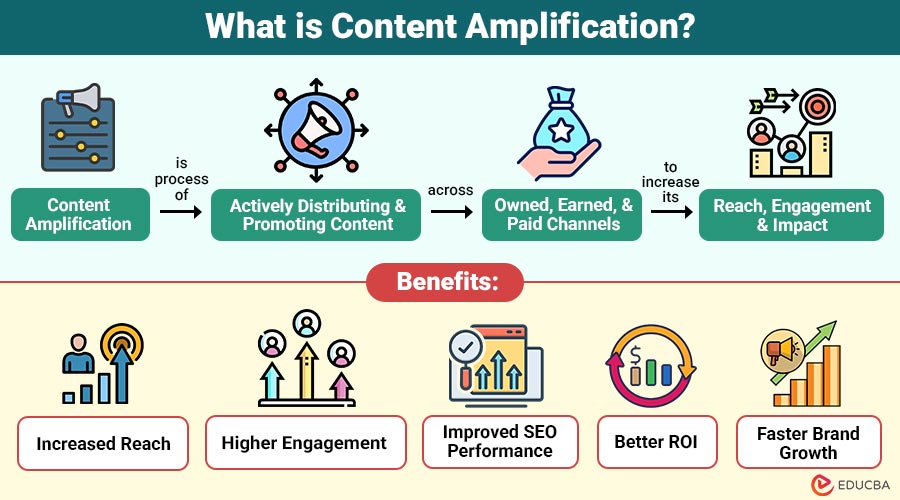
Content amplification is the process of actively distributing and promoting content across owned, earned, and paid channels to increase its reach, engagement, and impact.
Unlike traditional content marketing, which often emphasizes content creation, amplification focuses on distribution and visibility optimization. The goal is to ensure that valuable content does not remain limited to a website or blog but reaches audiences through social media, email, influencers, advertising platforms, and third-party publications.
Table of Contents:
- Meaning
- Why Content Amplification Matters?
- Types
- Channels
- Strategies
- Benefits
- Challenges
- Metrics
- Real-World Examples
Key Takeaways:
- Content amplification ensures valuable content reaches wider audiences through strategic distribution across owned, earned, and paid channels.
- Effective amplification maximizes content ROI by extending lifespan, boosting visibility, and driving sustained engagement and conversions.
- Combining organic, influencer, and paid amplification accelerates content discovery and builds stronger brand authority over time.
- Measuring reach, engagement, conversions, and cost metrics is essential to optimizing and scaling content amplification.
Why Content Amplification Matters?
Here are the key reasons why content amplification plays a critical role in maximizing reach, engagement, and business impact.
1. Reduces Dependency on Organic Traffic Alone
Content amplification minimizes reliance on organic reach by distributing content across paid, owned, and partnered channels consistently.
2. Accelerates Content Discovery
Amplification speeds up content visibility, ensuring target audiences discover valuable content faster across multiple digital platforms.
3. Improves Return on Content Investment
Content amplification spreads content further and lasts longer, helping businesses get better results from the time, money, and effort spent.
4. Strengthens Brand Authority and Recall
Repeated exposure through amplified channels builds credibility, reinforces brand messaging, and improves long-term audience recall.
5. Supports Lead Generation and Conversions
Amplified content reaches high-intent audiences, driving qualified traffic that increases lead generation opportunities and conversion rates.
Types of Content Amplification
Content amplification can be categorized into three primary types based on distribution channels.
1. Owned Media Amplification
Owned media amplification uses brand-controlled channels to repeatedly distribute, repurpose, and reinforce content among existing and loyal audiences.
Examples:
- Company website and blog
- Email newsletters
- Mobile apps
- Social media profiles
2. Earned Media Amplification
Earned media amplification occurs when third parties voluntarily share or mention content, increasing reach, trust, and credibility without direct payment.
Examples:
- Social media shares
- Influencer mentions
- Guest posts
- Press coverage
3. Paid Media Amplification
Paid media amplification promotes content through advertising to ensure immediate visibility, precise targeting, and scalable reach across digital platforms.
Examples:
- Social media ads
- Sponsored content
- Native advertising
- Pay-per-click (PPC) campaigns
Key Content Amplification Channels
Here are the primary channels brands use to effectively amplify content reach, visibility, and audience engagement.
1. Social Media
Social media amplifies content by increasing engagement and shares, making it ideal for thought leadership and trending topic discussions.
2. Email Marketing
Email marketing drives repeat traffic by nurturing subscribers with blog posts, guides, and newsletters tailored to their interests.
3. Influencer Marketing
Influencer marketing expands reach to niche audiences, supporting product launches and boosting brand awareness through trusted voices.
4. Paid Ads
Paid advertising quickly boosts content visibility, showing it to specific audiences to reach more people effectively.
5. Content Syndication
Content syndication extends the lifespan of long-form articles and reports by republishing them across relevant third-party platforms.
6. Communities & Forums
Communities and forums build authority by sharing educational, problem-solving content and engaging in meaningful discussions.
Content Amplification Strategies
Here are the most effective strategies for maximizing content reach, engagement, and long-term visibility across channels.
1. Audience-Centric Distribution
Distribution that is audience-centric adjusts scheduling, messaging, and material formats to the platforms where target audiences are most engaged.
2. Content Repurposing
Content repurposing transforms a single asset into multiple formats, extending its lifespan and ensuring consistent amplification without additional creation effort.
3. Influencer and Partner Collaboration
Working with influencers and partners uses their trusted audiences to increase reach, engagement, and credibility for your content.
4. Paid Boosting for High-Value Content
Paid boosting strategically promotes high-performing or evergreen content, maximizing visibility, ROI, and sustained traffic growth.
5. Timing and Frequency Optimization
Timing and frequency optimization involves re-sharing content across time zones and days to increase reach and visibility.
Benefits of Content Amplification
Here are the benefits businesses gain by strategically amplifying their content across multiple channels.
1. Increased Reach
Content amplification expands distribution beyond existing followers, helping brands reach new, relevant, and previously untapped audiences.
2. Higher Engagement
Strategic amplification drives increased likes, shares, comments, and conversations by placing content where audiences actively interact.
3. Improved SEO Performance
4. Better ROI
Amplification increases returns by extracting more value from existing content without proportional increases in creation costs.
5. Faster Brand Growth
Consistent amplified exposure builds credibility, reinforces brand messaging, and accelerates long-term brand recognition and authority.
Challenges in Content Amplification
Despite its advantages, it comes with challenges:
1. Content Fatigue
Excessive promotion of content can overwhelm audiences, leading to reduced engagement, lower interest, and declining overall campaign performance.
2. Budget Constraints
Paid amplification demands careful budget allocation, as inefficient spending can limit reach, ROI, and long-term sustainability.
3. Platform Algorithm Changes
Frequent algorithm updates reduce organic reach, forcing brands to constantly adjust amplification strategies and distribution tactics.
4. Audience Targeting Errors
Inaccurate audience targeting wastes resources, decreases relevance, and significantly lowers engagement and conversion effectiveness.
Metrics to Measure Content Amplification Success
Here are the key metrics used to evaluate the effectiveness, impact, and ROI of content amplification efforts.
1. Reach and Impressions
Reach and impressions measure how many users see amplified content, indicating overall visibility and distribution effectiveness across platforms.
2. Engagement Rate
Engagement rate shows how much the people interact with content through likes, shares, comments, and reactions.
3. Click-Through Rate
CTR measures how often users click amplified content links, indicating the effectiveness of messaging, creatives, and calls to action.
4. Conversion Rate
By monitoring the proportion of users who complete desired actions, conversion rate establishes a direct connection between amplification efforts and commercial results.
5. Cost per Engagement
The cost per engagement assesses paid campaign efficiency by calculating spend relative to total interactions generated from amplified content.
6. Content Lifespan and Reusability
Content lifespan and reusability measure how long content remains relevant and how effectively it supports repeated amplification efforts.
Real-World Examples
Here are notable brands effectively using content amplification to extend reach, engagement, and business impact.
1. HubSpot
HubSpot amplifies blog content through email newsletters, social media, paid ads, and content syndication, maximizing lead generation.
2. Airbnb
Airbnb leverages user-generated content, influencer collaborations, and social campaigns to amplify its global brand storytelling.
3. LinkedIn
LinkedIn amplifies thought leadership content via sponsored posts, employee advocacy, and professional communities.
Final Thoughts
Content amplification transforms content marketing from a passive publishing strategy into an active growth engine. By strategically promoting content across owned, earned, and paid channels, businesses can significantly increase reach, engagement, and return on investment. In a digital world where attention is limited, content amplification ensures that valuable content gets the visibility it deserves—making it a critical component of any successful marketing strategy.
Frequently Asked Questions (FAQs)
Q1. Is content amplification necessary for small businesses?
Answer: Yes. Even small businesses can amplify content using organic channels, partnerships, and low-budget paid campaigns.
Q2. How often should content be amplified?
Answer: High-value content can be amplified multiple times over weeks or months with refreshed messaging.
Q3. Does content amplification replace SEO?
Answer: No. Amplification complements SEO by increasing visibility and engagement, while SEO builds long-term organic traffic.
Q4. What type of content is best for amplification?
Answer: Evergreen, educational, and high-performing content delivers the best amplification results.
Recommended Articles
We hope that this EDUCBA information on “Content Amplification” was beneficial to you. You can view EDUCBA’s recommended articles for more information.

