


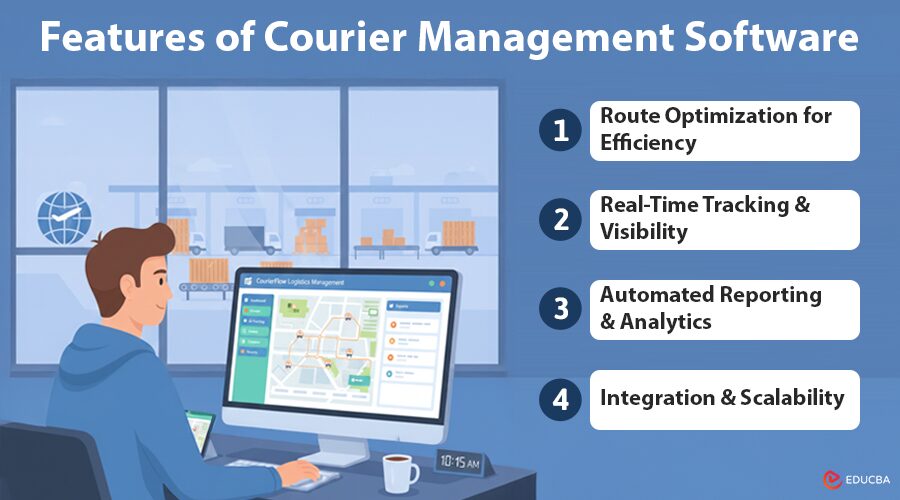
Introduction to Features of Courier Management Software
The global courier and parcel industry is expanding at an unprecedented pace, driven largely by e-commerce growth and shifting consumer expectations. Experts project worldwide B2C parcel shipments to reach around 121 billion by 2025, growing at about 10% annually, while the total parcel delivery market is expected to exceed $1.16 trillion by 2027. This surge in delivery volume has placed immense pressure on traditional, manual management systems, which struggle to keep up with demands for rapid, reliable service and often result in costly delays and errors.
In this environment, understanding the features of courier management software has become essential for logistics and delivery businesses. These platforms automate route planning, provide real-time tracking, streamline delivery assignments, and manage customer communications. By replacing manual coordination with intelligent workflows, companies adopting courier management software report improved on-time delivery rates, reduced operational errors, and higher overall efficiency.
Beyond operational gains, the advanced features of courier management software also enhance data visibility across the entire delivery chain. Real-time dashboards, predictive analytics, and mobile app integrations empower managers with actionable insights for better forecasting and decision-making. For customers, accurate delivery estimates and proactive notifications significantly reduce failed deliveries and improve satisfaction. As a result, digitization is no longer a competitive advantage; it is a baseline expectation.
In the hyper-competitive market, where same-day and next-day delivery services are rapidly becoming standard, businesses that leverage the right features of courier management software gain a clear edge. These solutions allow organizations to handle higher shipment volumes with fewer resources, adapt quickly to demand fluctuations, and maintain consistent service quality in a fast-evolving delivery economy.
Key Features of Courier Management Software
Here are some of the best features of courier management software that help streamline operations and improve delivery performance:
1. Route Optimization for Efficiency
One of the most impactful features of courier management software is intelligent route optimization. Even small routing inefficiencies can lead to higher fuel consumption, longer transit times, and increased operating costs. As delivery networks grow more complex, optimizing routes is no longer optional; it is essential for maintaining service reliability and controlling costs.
Traditional manual scheduling relies heavily on dispatcher experience and static plans, making it difficult to respond quickly to disruptions such as traffic congestion, vehicle availability issues, or shifting delivery priorities. In contrast, AI-driven route planning is one of the advanced features of courier management software, continuously analyzing real-time data, including traffic conditions, delivery constraints, and asset availability, to recommend optimal routes.
The real-world impact is substantial. Companies that implement route optimization within their courier management systems report faster deliveries, improved vehicle utilization, and lower fuel and labor costs. Over time, these efficiency gains compound, helping operators meet tighter delivery windows while reducing operational expenses.
2. Real-Time Tracking and Visibility
Real-time tracking is among the most critical features of courier management software for modern logistics operations. Real-time delivery tracking software with GPS-enabled monitoring of drivers, vehicles, and shipments provides continuous visibility into delivery progress, allowing operators to maintain accurate oversight of network performance.
Customer-facing tracking features extend this transparency beyond internal operations. Shippers and clients can monitor shipment status in real time, receive automated updates, and access more reliable delivery estimates. This reduces the need for manual communication, minimizes disputes, and builds trust through consistent, data-driven information sharing.
The operational impact is significant. Real-time visibility improves accountability across teams, supports faster decision-making, and enhances service reliability. As a result, organizations achieve better customer satisfaction while also strengthening internal control over performance, costs, and service quality.
3. Automated Reporting and Analytics
Automated reporting and analytics help rail and logistics operators track key performance metrics in near real time, replacing manual data collection and fragmented spreadsheets with standardized, accurate insights.
The automatic generation of operational and financial reports significantly reduces administrative workload and the risk of human error. Performance summaries, cost breakdowns, and compliance reports can be produced on a regular schedule or on demand, providing managers with timely insight without slowing daily operations.
Most importantly, analytics-driven insights help organizations continuously improve. By identifying recurring bottlenecks, inefficiencies, or cost drivers, courier companies can take targeted action to optimize routes, refine scheduling, and allocate resources more effectively. Over time, these data-focused features of courier management software contribute to more resilient, scalable, and efficient delivery operations.
4. Integration and Scalability
Seamless integration with existing ERP, CRM, and payment systems is essential for modern logistics and courier operations. When route planning, tracking, billing, and customer data flow through connected platforms, organizations reduce data silos and gain a unified operational view. This integration improves accuracy, shortens processing times, and ensures that operational and financial workflows stay aligned.
Scalability is equally critical as delivery volumes continue to rise and networks expand. Software solutions must support more routes, vehicles, users, and data without sacrificing performance or reliability. Flexible architectures allow operators to scale gradually, adapting to seasonal peaks, new service areas, or business growth without the need for frequent system replacements.
COAX Software specializes in developing tailored, scalable solutions that emphasize these core features of courier management software. By focusing on custom development and long-term adaptability, COAX Software helps logistics organizations implement systems that evolve alongside their business needs.
Final Thoughts
Smart courier management software combines route optimization, real-time tracking, automated reporting, and seamless integration to simplify complex delivery operations. These capabilities directly impact business performance by reducing delivery times, lowering operational costs, and improving asset and workforce utilization.
Beyond efficiency gains, modern software enhances transparency across the entire delivery process. Real-time visibility and reliable analytics support better decision-making, strengthen accountability, and improve customer satisfaction. At the same time, scalable system architectures ensure that operations can grow without disruption as volumes, service areas, and customer expectations increase.
For delivery businesses operating in increasingly competitive markets, adopting intelligent courier management software is no longer optional. It is a strategic investment that enables companies to remain efficient, adaptable, and resilient while meeting the demands of modern logistics.
Recommended Articles
We hope this guide to the features of courier management software helps you make informed decisions to optimize delivery operations. Explore these recommended articles for expert insights, practical strategies, and the latest trends in logistics technology.

