


Overview
Trauma-informed practices are about how people show up for others. At work, in schools, in healthcare, and in community settings. The idea is simple: Past harm can shape behavior, stress responses, and trust. When systems account for that reality, outcomes improve. This approach does not focus on labels or diagnoses. It focuses on people. Their experiences. And the conditions that help them feel steady and safe.
What Trauma-Informed Practices Actually Mean?
Trauma-informed practices start with a mindset shift. Instead of asking, “What is wrong with this person?” the better question is, “What may have happened, and how does that affect today?” That shift changes interactions in small but meaningful ways. Clear expectations reduce anxiety. Consistent routines help people feel grounded. Making a choice can restore a sense of control that people may have lost.
These practices also recognize that trauma is common. It can stem from a single event or from repeated stress. Loss. Violence. Medical crises. Financial instability. Displacement. None of these experiences looks the same, but they often leave similar marks. A trauma-informed setting assumes that anyone may carry this history. This is why approaches such as trauma-informed medical practice or trauma-informed financial literacy are so important. That assumption leads to care, patience, and fewer unnecessary confrontations.
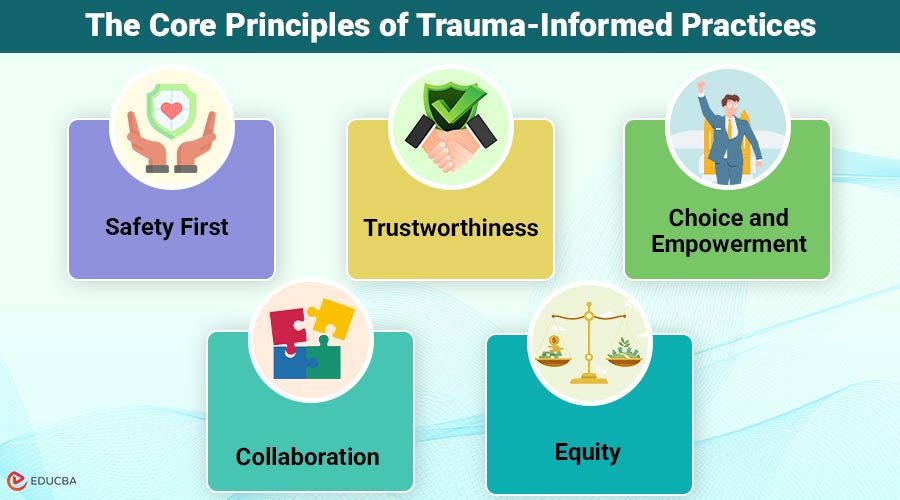
The Core Principles of Trauma-Informed Practices
Most trauma-informed frameworks share a few core principles:
- Safety First: Physical safety matters, but emotional safety is equally important. People need to feel respected and free from humiliation or threat.
- Trustworthiness: Clear rules, roles, and decisions build trust. The team has no hidden agendas and always explains sudden changes.
- Choice and Empowerment: Even small options matter like choosing between two appointment times or deciding how feedback is delivered. These moments help rebuild a sense of control.
- Collaboration: Trauma-informed systems avoid rigid hierarchies. They invite input and treat people as partners, not problems.
- Equity: Trauma often intersects with social and economic pressures. A trauma-informed lens recognizes these patterns and avoids blame.
How Trauma-Informed Practices Show Up in Real Settings?
Here is how trauma-informed practices are applied across different environments, with examples:
- Schools: Teachers focus on regulation before correction. A student who shuts down receives support before punishment. Calmer discipline methods help students feel safe and understood.
- Healthcare: Clinicians slow the pace, explain procedures, and ensure consent is ongoing not just a one-time form. This reduces fear and improves follow-through.
- Workplaces: Managers set predictable expectations, provide respectful and direct feedback, and offer time-off policies that consider mental strain, not just physical illness. Even small organizations can adopt trauma-informed practices through simple actions, such as maintaining a clear agenda, using a respectful tone, and following up.
Trauma-informed practices are not about lowering standards. They concern creating conditions that enable people to meet expectations. When safety and trust are present, both performance and well-being tend to improve.
Final Thoughts
Trauma-informed practices are more than just methods they are a mindset that prioritizes understanding, empathy, and human dignity. By integrating these practices across schools, workplaces, healthcare settings, and community settings, organizations can foster environments where individuals feel safe, supported, and empowered to thrive.
Recommended Articles
We hope this guide to trauma-informed practices helps you create safer, more supportive environments. Check out these recommended articles for more insights and practical strategies.

