
What is Lead Scoring?
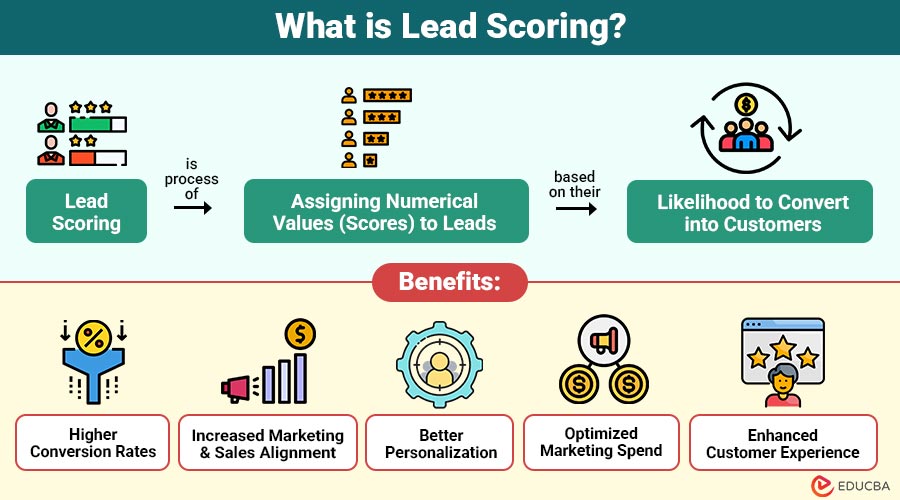
Lead Scoring is process of assigning numerical values (scores) to the leads based on their likelihood to convert into customers. This score is calculated using combination of demographic data, behavioral actions, engagement level, and intent signals. The higher the score, the more qualified and sales-ready the lead is considered to be.
For example, a lead who downloads your whitepaper (+10), attends a webinar (+20), visits pricing pages (+30), and matches your ideal customer profile (+15) will have higher score than someone who only opens an email (+2).
Table of Contents:
- Meaning
- Why Does Lead Scoring Matter?
- Working
- Types
- Lead Scoring Models
- Benefits
- Real World Example
- Common Mistakes
Key Takeaways:
- Lead scoring transforms scattered prospect activity into measurable insights that help teams target genuinely interested buyers effectively.
- Structured scoring frameworks bring clarity to qualification, reducing guesswork and enabling consistent decision-making across marketing and sales.
- Balanced scoring models ensure accurate evaluation by combining intent signals, customer characteristics, engagement depth, and interaction patterns.
- Adopting automated scoring systems improves speed, accuracy, and scalability, allowing businesses to identify revenue opportunities much earlier.
Why Does Lead Scoring Matter?
Lead scoring matters because it helps businesses:
1. Prioritize High-Quality Leads
Prioritizing high-quality leads allows sales teams to concentrate their attention on prospects who are more likely to convert fast and successfully.
2. Align Sales & Marketing
It establishes unified qualification standards that enable seamless collaboration and improve communication between marketing and sales.
3. Save Time & Resources
By filtering out uninterested leads early, businesses actively save significant time, effort, and operational resources they would otherwise waste on unqualified prospects.
4. Identify Nurture vs Sales-Ready Leads
Clearly distinguishes nurturing-required prospects from sales-ready buyers, enabling targeted engagement at the perfect moment.
5. Boost Marketing ROI
Focusing on leads with higher conversion likelihood maximizes marketing returns, effectively improving revenue outcomes from every campaign investment.
How Does Lead Scoring Work?
The workflow typically involves the following steps:
1. Define Your Ideal Customer Profile
Defining an ICP helps identify leads closely matching your target audience, ensuring higher qualification accuracy.
2. Track Lead Behavior Across Touchpoints
Tracking behavioral interactions reveals engagement levels and intent, assigning weighted values to each meaningful user activity.
3. Assign Scores Based on Demographics and Actions
Demographic details and specific actions receive assigned scores, helping measure each lead’s readiness for conversion.
4. Define a Threshold for Qualification
A clear score threshold determines when a lead becomes an MQL and transitions to the sales team.
5. Automate Scoring With CRM or Marketing Tools
CRM and automation platforms instantly streamline scoring, ensuring consistent, real-time updates for all captured leads.
Types of Lead Scoring
Here are the different lead-scoring types businesses use to evaluate prospects more accurately.
1. Demographic
Demographic scoring evaluates a lead based on attributes such as job role, industry, age, location, and company size.
2. Behavioral
Behavioral scoring analyzes user actions—such as mail opens, clicks, product views, tool usage, and cart activity—to assess purchase intent.
3. Firmographic
Firmographic scoring focuses on company-level factors such as corporate size, revenue, market standing, and total employee count.
4. Predictive
Predictive scoring uses machine learning to analyze historical patterns and automatically estimate each lead’s likelihood of conversion.
5. Negative
Negative scoring deducts points for low-intent behaviors, such as inactivity, career-page visits, unsubscribing, or sharing inaccurate information.
Lead Scoring Models
Here are the primary models businesses use to evaluate and rank leads effectively.
1. Point-Based Model
The most common model is one in which each lead receives points according to defined rules.
| Action/Attribute | Score |
| Opens an email | +5 |
| Visits the pricing page | +20 |
| Downloads ebook | +10 |
| Requests a demo | +40 |
| Unsubscribes | -10 |
2. Logistic Regression Model
Uses statistics to determine conversion probability using historical data. Suitable for data-driven organizations with advanced analytics teams.
3. Predictive Scoring Model
AI-based models in platforms like HubSpot or Salesforce Einstein that analyze:
- Past conversions
- Behavior patterns
- Lead sources
- Engagement history
4. Multi-dimensional Scoring Model
This model integrates behavioral, demographic, engagement, and intent scores to generate a comprehensive, well-rounded evaluation of each lead’s readiness to purchase.
Benefits of Lead Scoring
Here are the benefits businesses gain by implementing a structured system.
1. Higher Conversion Rates
Prioritizing high-intent leads shortens sales cycles, increases efficiency, and significantly boosts the number of successfully closed deals.
2. Increased Marketing and Sales Alignment
Clear, mutually agreed-upon scoring criteria minimize team friction, enhance collaboration, and ensure accountability throughout the entire lead management process.
3. Better Personalization
Segments audiences into distinct groups, enabling highly tailored nurturing that improves relevance, engagement, and conversion likelihood.
4. Optimized Marketing Spend
Focusing resources on high-value leads maximizes budget efficiency, prevents waste, and improves overall returns from marketing investments.
5. Enhanced Customer Experience
Providing timely, interest-based content and follow-ups ensures smoother interactions, increased satisfaction, and stronger relationships throughout the customer journey.
Real-World Example
Here is how lead scoring can transform marketing effectiveness for an e-commerce brand.
E-commerce Brand
An online fashion retailer receives 12,000 leads per month from social ads, website visits, and email sign-ups. Without lead scoring, the marketing team sends the same messages to all visitors—resulting in low engagement and wasted remarketing budget.
Implementation:
| Action | Score |
| Adds item to cart | +30 |
| Browses product pages 3+ times | +20 |
| Signs up for SMS alerts | +25 |
| Applies the discount code but does not purchase | +15 |
| No website activity for 20 days | -10 |
Results:
- Only leads with scores above 70 enter the high-intent retargeting campaign
- Cart abandonment recovery improves by 28%
- Email-to-purchase conversion increases by 22%
- Marketing spend is reduced by 18% due to better targeting
- Product recommendations become more accurate and personalized
Common Mistakes in Lead Scoring
Here are common mistakes companies make when implementing, which can reduce its effectiveness.
1. Too Many Points for Minor Behaviors
Giving high scores to low-impact actions inflates lead quality and misguides sales prioritization accuracy.
2. Ignoring Negative Scoring
Failing to deduct points for low-intent actions makes unqualified leads appear more falsely promising and engaged than they are.
3. Outdated ICP Data
Relying on old ideal customer profiles misaligns scoring criteria with current market realities and buyer behavior.
4. No Sales Team Involvement
Excluding sales insights creates inaccurate scoring rules that do not reflect real conversion patterns or customer readiness.
5. Overcomplicating Models Early
Adding excessive rules early creates confusion, reduces usability, and prevents teams from successfully adopting scoring.
Final Thoughts
Lead scoring is no longer optional—it is a strategic necessity for any business that wants to convert leads efficiently. By assigning accurate scores based on demographics, behavior, engagement, and intent, organizations can focus their energy on leads that genuinely matter. Whether you are a startup or an enterprise, implementing a strong system elevates your sales performance, enhances personalization, and unlocks higher ROI from every marketing effort.
Frequently Asked Questions (FAQs)
Q1. Is lead scoring only for B2B companies?
Answer: No. B2C brands, especially e-commerce and EdTech, benefit equally because it helps personalize engagement.
Q2. What is a good lead scoring threshold?
Answer: Typically 65–80 for MQLs, but it varies by industry and sales cycle.
Q3. Which software is best for lead scoring?
Answer: Popular tools include HubSpot, Marketo, Pardot, Salesforce, Zoho, and Act-On.
Q4. How often should lead scoring be revised?
Answer: Every 3–6 months or whenever customer behavior patterns change.
Recommended Articles
We hope that this EDUCBA information on “Lead Scoring” was beneficial to you. You can view EDUCBA’s recommended articles for more information.


