


Introduction to Thesis Statements
A strong thesis statement is the backbone of every successful academic paper, whether you are writing an undergraduate essay, a Master’s dissertation, or a full thesis. Yet many students struggle with it, not because they lack ideas, but because they do not know how to turn those ideas into a clear, arguable, academically sound claim. A thesis statement does more than summarize your topic. It defines your position, establishes the direction of your argument, and sets expectations for the reader. Without it, even the most detailed research feels scattered.
With the right approach, crafting a thesis statement becomes manageable and even empowering, giving you greater clarity, direction, and confidence in your writing. If you want a tool that helps transform your research into a sharp, defensible thesis statement, platforms like AnswerThis scan guide you by generating literature reviews, extracting central themes, and revealing gaps in the research that can shape your claim. Below is a clear, structured guide to help you write a thesis statement that is focused, original, and grounded in real academic scholarship.
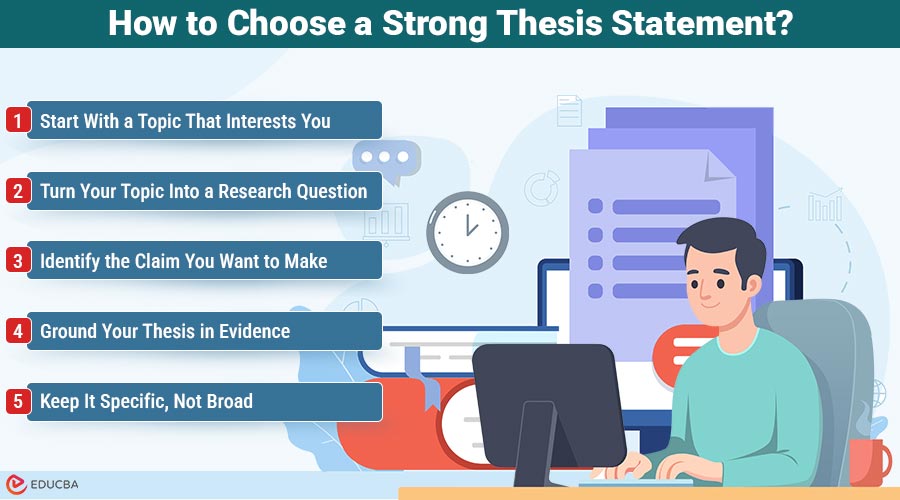
How to Choose a Strong Thesis Statement?
Your thesis statement should communicate your central argument in one or two sentences. But crafting it requires deliberate thought and strategic research. You can generate a thesis statement instantly with AnswerThis, which is built on solid foundations, as we will see here. Here is how to develop one that stands out.
1. Start With a Topic That Interests You
Your thesis statement guides your entire paper, so choose a topic you genuinely want to explore. Interest fuels persistence, especially when research becomes challenging. Choose a topic connected to your degree, but also meaningful to you personally or professionally. This keeps the writing process sustainable.
2. Turn Your Topic Into a Research Question
A good thesis statement begins by asking an interesting question.
For example:
“How do adaptive learning systems influence student performance in higher education?”
This question invites exploration rather than description. Tools like AnswerThis quickly generate literature reviews to show what is known and what remains unexplored.
3. Identify the Claim You Want to Make
Your thesis statement should present a clear argument or perspective, not a broad observation.
For example:
Weak: “Adaptive learning systems are widely used in education.”
Strong: “Adaptive learning systems significantly improve student outcomes because they personalize instruction and reduce cognitive overload.”
Notice the difference, one states a fact; the other makes an arguable claim.
4. Ground Your Thesis in Evidence
Your thesis must be defensible. This means your claim should rely on existing research, not guesswork. A quick way to gather this evidence is by conducting a literature review. Tools like AnswerThis automatically pull verified, peer-reviewed studies, helping you understand the research landscape and identify the strongest arguments. This foundation ensures your thesis statement is not only well written but also academically credible.
#5. Keep It Specific, Not Broad
A common mistake is writing a thesis statement that tries to cover too much.
- Broad: “Technology influences learning.”
- Focused: “AI-driven tutoring tools increase retention rates among first-year university students.”
The more specific your claim, the easier it becomes to structure your paper around it.
#6. Consider the Impact and Audience
Your thesis statement should matter to the field, to potential employers, and to future research.
Ask yourself:
Who benefits from this argument? Why is this claim important now?
Academic writing is stronger when it has purpose, not just structure.
How to Research for a Strong Thesis Statement?
Once you have a topic and an initial claim, the next step is supporting it with evidence. Effective research strengthens your thesis and helps you refine it into a precise academic argument.
1. Use Reference Libraries
Themes and scholarly relevance organize books in academic libraries. Browsing nearby titles often reveals valuable insights or foundational theories that can reinforce your thesis.
2. Explore Library Catalogs
Most universities use searchable online catalog systems (OPAC). Use keywords from your topic, combine terms with Boolean operators, and search for authors who are considered experts in your field.
3. Search Academic Databases
Databases such as JSTOR, PubMed, Scopus, and IEEE Xplore offer peer-reviewed articles that help validate your thesis statement. These sources are essential for establishing credibility. For faster synthesis, AnswerThis can generate a comprehensive literature review for your topic, saving hours of manual searching and allowing you to focus on developing your argument.
4. Use Google Scholar and Google Books for Broader Searches
If your university does not provide access to certain journals, Google Scholar helps you find alternative versions or open-access papers. Google Books can also preview chapters you may not have physical access to.
5. Refine Your Thesis Based on What You Learn
A strong thesis statement evolves as you research. You might find new angles, contradicting evidence, or stronger arguments. Adjust your claim to fit the evidence; this is a sign of academic maturity, not uncertainty.
Final Thoughts
Crafting a compelling thesis statement is one of the most important parts of your academic writing journey. It shapes your argument, guides your research, and determines the clarity of your entire paper. By choosing a meaningful topic, forming a clear research question, grounding your claim in evidence, and refining it through structured research, you create a thesis statement that is both insightful and academically robust.
If you want extra support, tools like AnswerThis make the process smoother through AI-powered literature reviews, paraphrasing, research gap detection, and organized note building. These features help transform your ideas into a polished, credible thesis backed by real scholarship. Approach your thesis statement with intention, clarity, and curiosity, and you will set the foundation for a paper that not only earns strong grades but also contributes meaningfully to your academic field.
Recommended Articles
We hope this guide helps you craft a clear and compelling thesis statement. Explore these recommended articles for more tips and insights to strengthen your academic writing.

