


What is Strategy Evolution?
Strategy evolution is the continuous process of refining and adapting an organization’s long-term plans to align with changing market conditions, evolving customer expectations, emerging technologies, and shifting competitive pressures. It enables businesses to stay relevant, resilient, and aligned with the dynamic business environment.
For example, a retail business that once depended solely on physical stores may evolve its strategy by launching an e-commerce platform, introducing digital payment options, and offering home delivery as consumer behavior shifts toward online shopping. This ongoing strategy evolution helps the company remain competitive and sustain long-term growth.
Table of Contents
Key Takeaways
- Strategic evolution is essential for organizations to remain relevant in rapidly changing markets, technologies, and customer expectations.
- Key drivers such as innovation, competition, regulations, and economic shifts push businesses to refine and adapt their long-term plans.
- A structured evolution process, encompassing awareness, formulation, implementation, evaluation, and continuous improvement, ensures effective strategic transformation.
- Businesses that embrace agility, data-driven insights, and customer-centric thinking evolve more successfully and sustain long-term growth.
- Future trends, including AI, sustainability, automation, and hybrid work models, will significantly shape how companies develop and adapt their strategies in the future.
Why Strategy Evolution Matters?
Businesses operate in environments that are constantly changing. Markets shift, new technologies disrupt traditional systems, customer expectations evolve, and competitors introduce fresh ideas that challenge existing norms. To stay ahead, companies must evolve their strategies with purpose and agility.
When organizations actively refine and update their strategic approach, they:
- Strengthen competitive advantage by positioning themselves ahead of industry trends and rivals.
- Enhance decision-making and resource allocation by establishing clearer priorities and leveraging data-driven insights to inform informed decisions.
- Enhance adaptability in dynamic markets by responding quickly to opportunities and potential threats.
- Boost long-term sustainability by aligning operations with changing economic and environmental conditions.
- Drive innovation across products, processes, and customer experiences by encouraging proactive experimentation and continuous improvement.
A rigid strategy can limit growth and make businesses vulnerable to disruption. In contrast, evolving strategically builds resilience, supports long-term success, and ensures that organizations stay relevant in an ever-changing business landscape.
Key Drivers of Strategy Evolution
Several powerful forces shape how and why organizations evolve their strategies. These key drivers influence business decisions, market positioning, and long-term growth:
1. Changing Customer Expectations
Customers demand convenience, personalization, and fast service. Companies evolve their strategies to meet these expectations by adopting digital tools, enhancing service quality, and delivering value-driven experiences.
2. Technological Advancem ents
Technologies such as AI, automation, cloud platforms, and data analytics are continually transforming the way businesses operate. Organizations integrate these technologies to increase productivity, reduce costs, and introduce innovative products and services.
3. Competitive Pressure
When fresh competitors emerge or challenge existing business models, companies refine their strategies to safeguard market share and seize new opportunities.
4. Regulatory and Policy Changes
Governments introduce new regulations related to data privacy, taxation, environmental standards, and consumer protection. Companies evolve strategies to remain compliant and avoid legal or operational risks.
5. Globalization
As markets expand across borders, organizations adjust their strategies for distribution, pricing, marketing, and localization to serve diverse global audiences effectively.
6. Economic Conditions
Inflation, recession, and fluctuations in consumer spending shape strategic decisions around investments, pricing models, and risk management.
Stages of Strategy Evolution
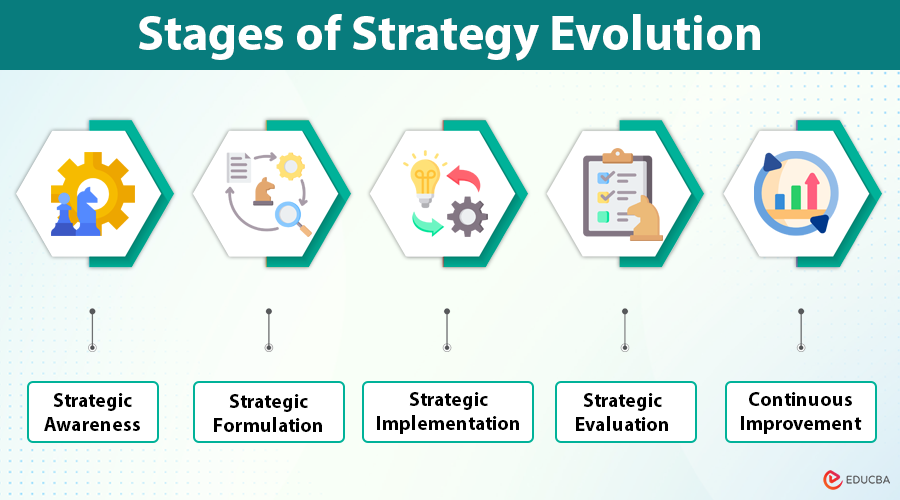
Strategy evolution follows a structured process that helps organizations adapt, refine, and optimize their long-term direction. Each stage contributes significantly to building strong and lasting strategies.
1. Strategic Awareness
Organizations first recognize that external or internal factors demand change. Leadership analyzes risks, challenges, opportunities, and market trends to understand the need for strategic adjustment.
2. Strategic Formulation
Companies develop new plans, set revised goals, explore market opportunities, and redefine product or service positioning to align with current business realities.
3. Strategic Implementation
Teams implement updated strategies through operational improvements, technological upgrades, marketing realignments, and optimized resource allocation.
4. Strategic Evaluation
Businesses assess performance using KPIs, customer feedback, financial reports, and market insights to determine the effectiveness of the newly implemented strategy.
5. Continuous Improvement
Organizations consistently refine and enhance their strategies to improve outcomes, support long-term growth, and remain aligned with evolving market dynamics.
How Companies Evolve Their Strategies?
Organizations achieve effective strategy evolution by adopting specific practices that strengthen adaptability, Innovation, and long-term performance. The following approaches help businesses stay competitive in dynamic environments:
1. Embrace Innovation
Companies focused on innovation continuously try new concepts, adopt cutting-edge technologies, and allocate resources to research and development to remain competitive.
2. Use Data-Driven Insights
Modern businesses rely on analytics to track customer behavior, forecast market trends, and make informed strategic decisions.
3. Foster Agile Cultures
Agile organizations respond quickly to challenges, streamline processes, and adjust strategies without delays or complications.
4. Encourage Cross-Functional Collaboration
Teams across marketing, finance, operations, and HR collaborate to bring strategies to life, ensuring alignment and cohesive execution.
5. Listen to Customers
Companies collect and analyze customer feedback to refine strategies based on real needs rather than assumptions.
Examples of Strategy Evolution in Action
Various industries have transformed their strategies to stay competitive, meet customer expectations, and adapt to technological and market shifts. These examples show how organizations successfully evolve:
1. Retail Industry
Retailers shifted from traditional offline stores to omnichannel experiences by integrating e-commerce platforms, contactless payments, real-time inventory systems, and personalized shopping journeys.
2. Telecom Sector
Telecom providers evolved from offering basic calling and messaging services to delivering fiber broadband, OTT entertainment platforms, and IoT-based connectivity solutions.
3. Automotive Industry
Car manufacturers have transformed their strategies by investing in electric vehicles (EVs), autonomous driving technologies, smart mobility solutions, and sustainable production practices.
4. Banking & Financial Services
Banks transitioned from branch-dependent operations to digital-first models, incorporating mobile banking, digital wallets, AI-driven financial advisory services, and automated customer support.
Benefits of Strategy Evolution
When organizations continuously evolve their strategies, they unlock several advantages that strengthen performance and long-term growth:
- Increases operational efficiency: Businesses streamline workflows, remove bottlenecks, and improve overall productivity.
- Enhances customer satisfaction: Companies deliver better experiences by adapting products and services to customer needs.
- Reduces business risks: Organizations anticipate market changes and respond proactively to avoid potential disruptions.
- Boosts innovation and creativity: Teams experiment with new ideas, technologies, and approaches to stay competitive.
- Supports strategic expansion: Businesses can enter new markets, launch new offerings, and scale operations with greater confidence.
- Improves profit margins and growth stability: Businesses make smarter choices and utilize their resources more efficiently, resulting in enhanced financial outcomes.
Future Trends Shaping Strategy Evolution
As markets, technologies, and workforce dynamics continue to transform, several emerging trends will heavily influence how organizations evolve their strategies in the coming years:
1. AI-Driven Decision Making
Businesses will increasingly utilize artificial intelligence to optimize operations, enhance forecasting accuracy, and facilitate more informed strategic planning.
2. Sustainability and ESG Integration
Companies will embed eco-friendly practices, ethical supply chains, and social responsibility into their strategic frameworks to meet global sustainability expectations.
3. Hyper-Personalization
Brands will refine their strategies to deliver deeply personalized products, services, and experiences powered by advanced data insights.
4. Automation of Business Processes
Automation will streamline tasks, minimize human error, and accelerate strategic transformations across departments.
5. Remote and Hybrid Work Models
Organizations will redesign their talent and operational strategies to support flexible, globally distributed workforces.
Final Thoughts
Strategy evolution is no longer optional; it is a necessity for survival in a rapidly shifting business environment. Organizations that embrace continuous adaptation, leverage technology, prioritize customer needs, and foster innovation are better positioned to thrive. As industries transform under the influence of digital disruption, globalization, and shifting consumer behavior, businesses must continually refine their strategic approach to remain relevant and competitive.
Ultimately, strategy evolution empowers companies to stay resilient, future-ready, and capable of seizing new opportunities while mitigating emerging risks.
Frequently Asked Questions (FAQ’s)
Q1. Is strategy evolution the same as strategy change?
Answer: No. Strategy change is often a one-time shift, while strategy evolution is continuous, involving ongoing adjustments based on trends, technology, and customer needs.
Q2. How often should a company revisit its strategy?
Answer: Most organizations review their strategies annually, but fast-changing industries, such as technology, retail, or telecommunications, may assess them quarterly or even monthly.
Q3. What challenges do companies face when evolving strategies?
Answer: Common challenges include employee resistance, limited resources, outdated systems, unclear communication, and slow decision-making.
Q4. What is the risk of not evolving a strategy?
Answer: Organizations that fail to evolve face declining competitiveness, lost customers, reduced innovation, and greater vulnerability to disruption.
Recommended Articles
We hope this guide on Strategy Evolution was helpful. Explore related articles on Business Growth Strategies, Organizational Change Management, and Digital Transformation Frameworks to deepen your understanding and strengthen your strategic planning approach.

