


Introduction
The precision of delivery time can break the customer trust in the rapid world of logistics and transportation. Companies rely on accurate arrival forecasts to ensure that orders arrive at the destination on time. The combination of Estimated Time of Arrival (ETA) prediction and real-time traffic enabled the delivery system to transform industry functions, allowing companies to predict delays in terms of time, optimize routes, and increase customer transparency. Such technological synergy helps improve performance and also fosters better relationships between clients and businesses.
The prediction and traffic data on ETA is an efficient concept that can greatly improve the efficiency of a company in terms of its delivery. These aids are used to bridge the gap between planning and implementation by aligning delivery schedules with actual real-life conditions. With the increasing complexity of logistics networks, the use of intelligent, data-driven systems has become critical to maintaining market competitiveness in terms of speed, cost reduction, and customer satisfaction.
Understanding ETA Prediction
ETA prediction refers to the act of estimating the precise time when a vehicle will arrive at the time of delivery. Modern ETA systems take into consideration various variables, including driver behavior, weather conditions, vehicle performance, and live traffic updates, unlike the traditional methods of scheduling, which relied solely on distance or historical averages. This allows businesses to deliver products while building customer trust with accurate timelines.
The high-tech ETA algorithms are fueled by artificial intelligence and machine learning, which learn over time and with repetition, becoming more accurate. The changes that such systems can accommodate include road closures or sudden congestion, and they update in real-time to both customers and drivers. This dynamic adaptation empowers logistics teams to make instant decisions that improve the reliability of delivery processes overall.
The Importance of Traffic Data
Accurate traffic information is crucial for optimizing delivery routes and ensuring timely shipments.
- Improves Delivery Accuracy: Live traffic data provides real-time updates on congestion, accidents, and construction zones, enhancing delivery accuracy. This allows drivers to maintain smooth routes and ensures deliveries stay on schedule.
- Enables On-the-Spot Route Adjustments: Companies can utilize current traffic information to make immediate route adjustments, thereby avoiding delays and minimizing wasted time.
- Supports Strategic Planning: Continuous collection and analysis of traffic patterns helps identify frequent delay points. This enables companies to proactively enhance their routes and schedules.
- Turns Data into a Predictive Advantage: By analyzing traffic trends over time, organizations can foresee potential issues rather than reacting after delays occur, enhancing overall delivery efficiency.
- Boosts Customer Satisfaction: Accurate ETA predictions, backed by traffic data, enable businesses to provide realistic delivery times and updates, thereby building trust and reliability with customers.
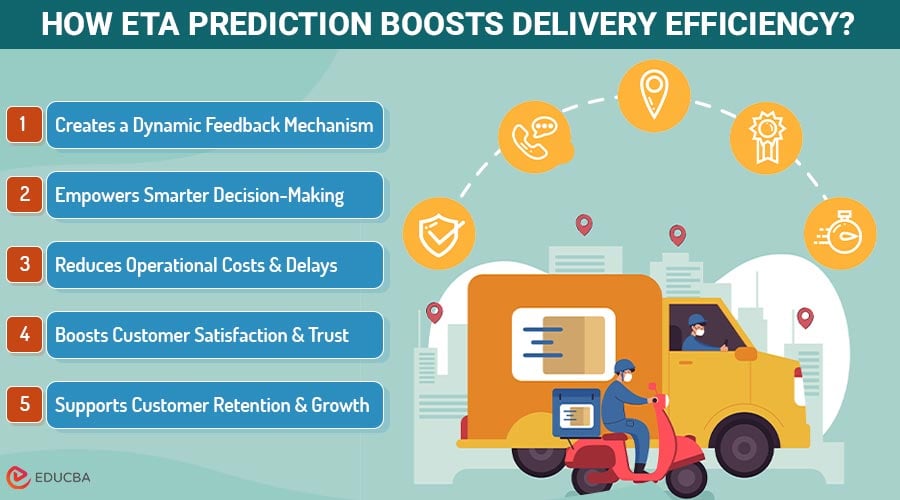
How ETA Prediction Boosts Delivery Efficiency?
Integrating ETA prediction with real-time traffic data transforms logistics operations, making deliveries faster, smarter, and more reliable.
- Creates a Dynamic Feedback Mechanism: The integration of ETA prediction with traffic data enables real-time adjustments throughout the delivery process, enhancing coordination among drivers, dispatchers, and customers.
- Empowers Smarter Decision-Making
- For Drivers: Optimize routes on the go based on traffic conditions.
- For Dispatchers: Monitor deliveries accurately and intervene when needed.
- For Customers: Track their orders and receive timely updates.
- Reduces Operational Costs and Delays: Synchronizing ETA predictions with live traffic data minimizes missed deliveries, reduces fuel consumption, and enhances overall time management within the logistics network.
- Boosts Customer Satisfaction and Trust
- Accurate ETAs and transparent updates enable customers to plan more effectively.
- Timely notifications of delays, along with realistic revised delivery times, increase customer confidence.
- Supports Customer Retention and Growth: Reliable deliveries enhance the company’s reputation, encouraging repeat orders and positive reviews, which help attract new customers.
Technology and Tools Supporting ETA Accuracy
Advanced delivery management software has significantly contributed to predicting ETA. These applications consolidate various data sources, including GPS positioning, driver schedules, and real-time traffic alerts, into a single, intelligent application. The software provides managers with real-time insights to identify inefficiencies and implement immediate improvements.
These systems enhance accuracy, in addition to automating complex processes. Rather than relying on manual calculations or disjointed data, companies will be able to utilize an automated route optimization service and receive real-time notifications. This automation saves time, cuts errors, and lets logistics teams focus on customer service and planning.
Challenges in ETA and Traffic Integration
While ETA and traffic integration offer significant benefits, implementing these systems comes with several challenges that businesses must address.
- Ensuring Data Reliability and Consistency: Traffic information is sourced from multiple sources, and inconsistent or delayed data—especially in remote areas—can compromise the accuracy of ETA predictions. Continuous, reliable real-time data streams are crucial for maintaining precision.
- Managing Large Volumes of Data: As logistics operations expand, the amount of traffic and delivery data grows exponentially. Without scalable systems and advanced analytical tools, this data can overwhelm dispatchers and reduce operational efficiency.
- Maintaining Efficiency Despite Complexity: Businesses must invest in robust software and infrastructure to effectively process and analyze large datasets. Proper management ensures that ETA predictions remain accurate and actionable across the logistics network.
Impact on Fleet Management and Sustainability
Efficient ETA prediction and traffic integration not only improve delivery operations but also strengthen fleet performance and environmental responsibility.
- Optimizes Routes and Reduces Fuel Usage: Accurate ETA forecasting combined with traffic information helps determine the most efficient paths, saving unnecessary mileage and fuel consumption.
- Lowers Operational Costs: Efficient routing reduces overall delivery expenses, including fuel, labor, and vehicle maintenance costs.
- Promotes Environmental Sustainability: Reduced mileage and optimized operations decrease the carbon footprint of delivery activities, supporting eco-friendly business practices.
- Extends Vehicle Lifespan: Strategic route planning minimizes wear and tear on vehicles, lowering maintenance expenses and prolonging fleet life.
- Enhances Driver Experience: Fewer delays and less time spent in traffic reduce stress for drivers, contributing to a healthier and more productive delivery network.
- Supports Economic and Environmental Goals: Optimized fleet management aligns with both cost-efficiency and sustainability priorities, benefiting businesses, customers, and the environment.
The Future of Predictive Delivery Systems
The future of delivery efficiency lies in the further development of predictive analytics. ETA predictions will become more accurate as vehicles, 5G networks, and smart infrastructure advance. Future data additions will offer a clearer view of delivery conditions, including weather and local event schedules.
Final Thoughts
A combination of ETA prediction and traffic data has revolutionized possibilities for current-day delivery systems. Having data converted into actionable insight allows businesses to deliver faster, more transparently, and become more sustainable. Delivery management software is key to creating smarter, more responsive logistics networks. By investing in predictive delivery systems, companies can boost efficiency and gain a competitive edge, as timely and accurate deliveries remain crucial in logistics.
Recommended Articles
We hope this guide on ETA prediction and traffic data helped you understand smarter delivery. For more logistics insights, explore below:


