
What is Sales Enablement?
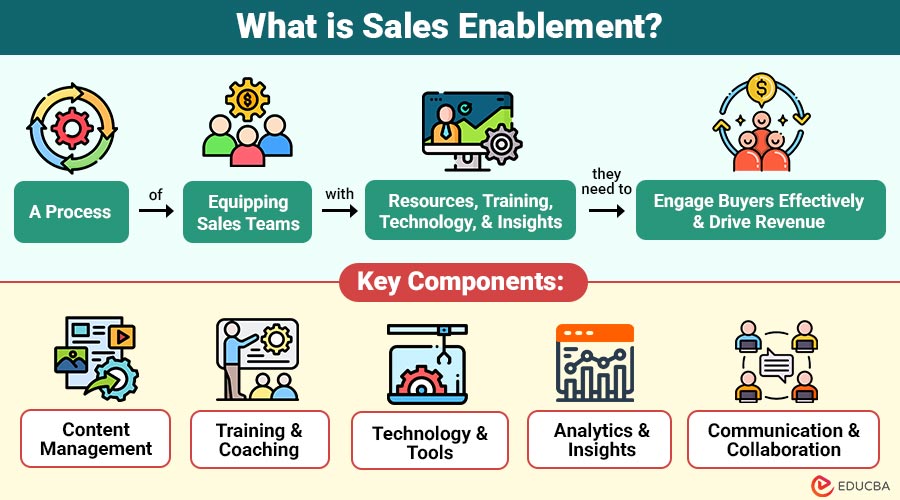
Sales Enablement is process of equipping sales teams with the resources, training, technology, and insights they need to engage buyers effectively and drive revenue. It aligns marketing, sales, and operations to ensure that sales representatives can access relevant content, understand customer needs, and communicate value consistently throughout the buyer’s journey.
Table of Contents:
Key Takeaways:
- Sales Enablement aligns sales, marketing, and customer success to drive consistent messaging and performance growth.
- It empowers sales teams with tools, training, and analytics to engage customers effectively and close deals.
- Data-driven insights and AI-powered platforms enhance decision-making, significantly improving productivity and revenue outcomes.
- Continuous enablement ensures adaptability, efficient onboarding, and lasting buyer relationships in an evolving digital marketplace.
Objectives of Sales Enablement
The primary objectives include:
1. Improving Sales Productivity
By automating tedious administrative duties, sales enablement increases productivity and frees up salespeople to concentrate more on efficiently interacting with prospects and closing deals.
2. Aligning Sales and Marketing
It facilitates smooth cooperation between marketing and sales teams, ensuring shared objectives, consistent communication, and cohesive tactics that drive overall company growth.
3. Enhancing Buyer Engagement
It provides personalized, relevant, and timely content to buyers, creating meaningful interactions and improving customer experience throughout the purchasing journey.
4. Boosting Sales Performance
By offering continuous training, performance analytics, and best practices, empowers sales teams to achieve higher success and exceed revenue targets.
5. Driving Consistent Messaging
It ensures all departments convey a unified brand voice, delivering clear, consistent, and credible messages across every customer touchpoint and communication channel.
Key Components of Sales Enablement
Sales Enablement is a multifaceted function that encompasses several components working together strategically:
1. Content Management
Sales reps need quick access to relevant, up-to-date content—such as case studies, brochures, pitch decks, videos, and whitepapers—to share with prospects. Content that is appropriate for every stage of the buyer journey.
2. Training and Coaching
Continuous skill development is crucial. It provides structured onboarding for new hires and ongoing coaching for existing reps through workshops, e-learning, and role-based simulations.
3. Technology and Tools
Modern Sales Enablement relies heavily on technology. Platforms such as Salesforce, HubSpot, Seismic, and Highspot help manage content, track engagement, and analyze sales performance.
4. Analytics and Insights
Finding what works and what does not is aided by data-driven insights. Strategy refinement is guided by metrics such as conversion rates, win rates, and content usage.
5. Communication and Collaboration
Enablement fosters collaboration between marketing, product, and sales teams, ensuring all departments share knowledge and customer insights for unified decision-making.
Sales Enablement Process
An effective process can be divided into key stages:
Step 1: Assessment and Planning
Organizations start by assessing current sales challenges—whether they stem from skill gaps, content availability, or tool inefficiencies. The team then develops a comprehensive enablement strategy to address these gaps.
Step 2: Content Creation and Organization
Relevant sales materials are created and categorized based on customer personas, buying stages, and product lines. This ensures sales reps can easily find and use the most appropriate assets during interactions.
Step 3: Training and Onboarding
Enablement programs introduce sales reps to best practices, company values, buyer psychology, and communication strategies. To ensure these strategies are mastered effectively, many organizations are upgrading their onboarding processes with immersive sales team training platforms that provide realistic conversation simulations and instant feedback on pitch delivery
Step 4: Execution and Engagement
Sales reps leverage enablement tools, use provided materials, and apply training insights during customer interactions to enhance conversions.
Step 5: Measurement and Optimization
The final step involves analyzing performance metrics, gathering feedback, and continuously refining the enablement strategy for better outcomes.
Sales Enablement Tools
A few widely used platforms include:
| Tools | Primary Function | Key Features |
| Seismic | Content management | AI-driven recommendations, analytics, automation |
| Highspot | Enablement platform | Guided selling, analytics, CRM integration |
| Showpad | Sales training | Learning management, content sharing |
| HubSpot Sales Hub | CRM and automation | Email tracking, analytics, templates |
| MindTickle | Sales readiness | Gamified learning, performance tracking |
| VAIS | Sales Intelligence | High Intent Leads, AI Prospecting, ABM Campaigns |
Benefits of Implementing Sales Enablement
Here are the key benefits organizations gain by implementing an effective strategy:
1. Increased Sales Productivity
By providing easy access to relevant tools and information, sales reps spend more time selling and less time searching for materials.
2. Enhanced Buyer Experience
Personalized content and informed communication lead to more meaningful buyer interactions, improving conversion and retention rates.
3. Better Alignment Between Sales and Marketing
Both teams share a unified vision, enabling smoother communication and consistent messaging across campaigns and touchpoints.
4. Faster Onboarding for New Reps
Enablement tools and training materials accelerate new hires’ learning curves, enabling them to become productive faster.
5. Data-Driven Decision-Making
Real-time analytics empower managers to track success metrics, identify skill gaps, and optimize future sales strategies.
Challenges in Sales Enablement
Despite its advantages, implementing a Sales Enablement strategy comes with certain challenges:
1. Content Overload
Excessive and poorly organized sales materials can confuse and overwhelm representatives, making it difficult to locate relevant, up-to-date, and useful resources.
2. Lack of Adoption
Without adequate training or clear guidance, sales teams may resist adopting new enablement platforms, reducing overall productivity and organizational efficiency.
3. Poor Collaboration
When marketing and sales teams fail to communicate effectively, it leads to misalignment, inconsistent messaging, and reduced effectiveness of enablement programs.
4. Inadequate Measurement
Insufficient tracking of performance data prevents organizations from understanding enablement success, identifying improvement opportunities, and optimizing future sales strategies.
5. Rapid Market Changes
Constantly evolving buyer behavior and frequent product updates require continuous adjustments to ensure that enablement content remains relevant and maintains a competitive advantage.
Real-World Example
Here is how a leading organization successfully leverages Sales Enablement to drive consistent performance and growth:
HubSpot’s Sales Enablement Strategy
A strong Sales Enablement framework is offered by HubSpot, a pioneer in the inbound marketing and CRM solutions. It integrates marketing automation with sales intelligence to ensure that every rep receives real-time insights about prospect behavior.
- Centralized Content Library: Marketing creates and uploads assets accessible through HubSpot’s CRM.
- AI-Powered Recommendations: Reps receive suggestions for the best content to send based on buyer stage.
- Continuous Coaching: Reps participate in regular sales bootcamps and micro-learning sessions.
Analytics Dashboards: Performance metrics and engagement data are analyzed to improve processes.
This integrated approach helps HubSpot’s sales teams consistently outperform industry benchmarks for conversion and deal velocity.
Key Metrics to Measure Sales Enablement Success
Success in Sales Enablement can be quantified using specific KPIs such as:
1. Win Rate
This metric measures the percentage of deals successfully closed, reflecting the effectiveness of sales strategies, training, and the enablement tools provided.
2. Sales Cycle Length
It tracks the total time taken for leads to progress through the sales funnel, highlighting efficiency and process improvement opportunities.
3. Quota Attainment
Represents the percentage of sales representatives meeting or exceeding their sales targets, indicating enablement program success and overall team performance.
4. Content Usage Rate
Measures how frequently and effectively sales representatives use provided enablement materials, demonstrating content relevance and contribution to deal success.
5. Training Completion Rate
Evaluates the participation level and performance of sales teams in enablement training programs, ensuring continuous skill development and knowledge retention.
6. Revenue Growth
Assesses the increase in overall sales and profitability directly linked to the impact of enablement initiatives and improved sales performance.
Final Thoughts
Sales Enablement serves as the foundation of modern sales excellence, integrating people, processes, and technology to boost performance and customer engagement. Through consistent messaging, data-driven insights, and ongoing improvement, it drives long-term business growth. In today’s digital-first world, success depends not on adopting but on how effectively organizations implement and optimize it.
Frequently Asked Questions (FAQs)
Q1. How does Sales Enablement differ from Sales Training?
Answer: While Sales Training focuses on skill development, Sales Enablement provides a holistic framework that includes content, tools, and analytics alongside training.
Q2. Which departments benefit from Sales Enablement?
Answer: Primarily the sales and marketing departments, but customer success and product teams also gain alignment benefits.
Q3. Why is Sales Enablement important for startups?
Answer: For startups, it accelerates sales readiness, ensures consistent messaging, and helps scale operations effectively as the team grows.
Recommended Articles
We hope that this EDUCBA information on “Sales Enablement” was beneficial to you. You can view EDUCBA’s recommended articles for more information.

