


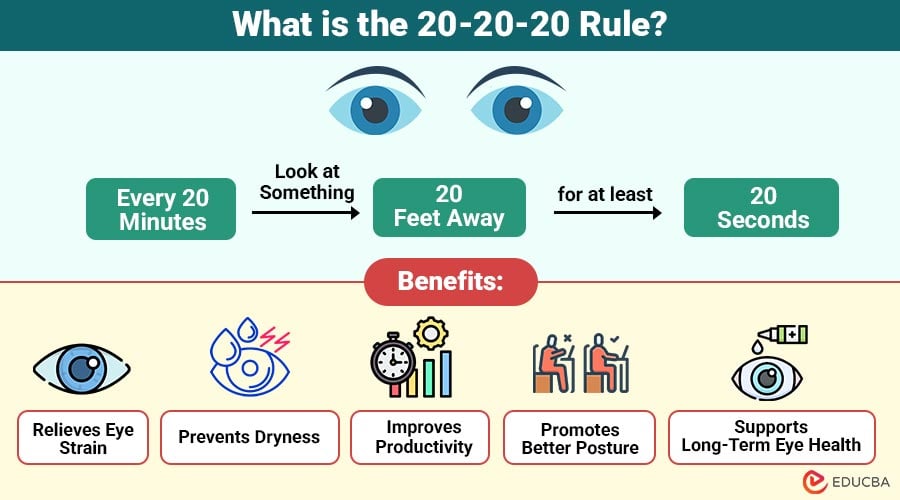
What is the 20-20-20 Rule?
The 20-20-20 Rule is a guideline aimed at reducing digital eye strain. It states:
“Every 20 minutes, look at something 20 feet away for at least 20 seconds.”
This short visual break helps relax the eye muscles, reduces fatigue, and restores natural blinking patterns disrupted by prolonged screen use. The concept was popularized by optometrist Dr. Jeffrey Anshel, who introduced it as a simple and easy-to-remember preventive technique for screen-related discomfort.
Table of Contents:
- Meaning
- Why do we Need the 20-20-20 Rule?
- Working
- How to Practice the 20-20-20 Rule in Daily Life?
- Who Should Follow the 20-20-20 Rule?
- Benefits
- Limitations
- Real World Example
Key Takeaways:
- The 20-20-20 Rule prevents digital eye strain by giving eyes frequent relaxation breaks.
- Looking at distant objects every 20 minutes helps alleviate symptoms of dryness, fatigue, and blurred vision.
- Simple reminders, ergonomic setups, and micro-exercises enhance the effectiveness of the 20-20-20 Rule.
- Regular practice supports long-term eye health, improves productivity, and ensures comfort in today’s screen-driven lifestyle.
Why do we Need the 20-20-20 Rule?
Here are the key reasons why following the 20-20-20 rule is essential for eye health and overall well-being:
1. Increased Screen Dependency
Screen time has increased dramatically due to remote employment and online learning. According to research, adults use digital devices for 7–10 hours a day on average, but students frequently use them for longer during exam seasons or assignments.
2. Reduced Blink Rate
When focusing on screens, our blink rate decreases by about 60%, leading to dryness and irritation. Natural blinking lubricates the eyes, but reduced blinking leads to discomfort.
3. Eye Muscle Fatigue
Your eye muscles continuously adjust focus when reading small text or watching moving images. Constant close-up focus strains them, resulting in eye fatigue and blurred vision.
4. Long-Term Risks
Unchecked digital strain may worsen conditions like myopia (nearsightedness), sleep disturbances, or headaches. Although not usually permanent, these effects lower productivity and overall quality of life.
How the 20-20-20 Rule Works?
Here are the three simple steps that make the rule effective:
1. Distance (20 feet away)
Looking at a distant object allows the ciliary muscles inside your eyes to relax. These muscles are responsible for focusing on near objects. Giving them a break reduces strain.
2. Duration (20 seconds)
A 20-second break gives your eyes enough time to adjust, relax, and rehydrate through blinking.
3. Frequency (every 20 minutes)
Taking frequent breaks helps prevent eye strain from building up. Waiting until discomfort sets in is less effective compared to preventing it from the start.
How to Practice the 20-20-20 Rule in Daily Life?
Here are practical ways to incorporate the rule into your routine:
1. Set a Timer or Reminder
Most people forget to take breaks when absorbed in work. Use digital reminders, alarm apps, or smartwatches to prompt you every 20 minutes.
2. Look Out a Window
If possible, focus on trees, buildings, or the sky. Outdoor views are especially beneficial because they include natural light and depth.
3. Use Indoor Alternatives
If you do not have access to a window, look at a picture or object across the room. The key is focusing beyond immediate screen distance.
4. Combine with Micro-Exercises
During the 20-second break, gently roll your eyes, blink intentionally, or do neck stretches. This refreshes both vision and posture.
5. Adjust Screen Ergonomics
It is most effective when combined with ergonomic practices, including keeping screens at arm’s length, adjusting brightness to match, and using protective filters.
Who Should Follow the 20-20-20 Rule?
Here are the groups that can benefit most from practicing the rule regularly:
1. Office Workers
It is crucial for preserving comfort and productivity because prolonged computer screen time frequently causes digital eye strain.
2. Students
With online learning and continuous near vision focus, students are at heightened risk of eye fatigue, so practicing the 20-20-20 Rule helps significantly reduce strain.
3. Gamers
Gaming sessions often extend for hours, stressing the eyes heavily. Regular breaks following the 20-20-20 Rule prevent discomfort, dryness, and vision fatigue from prolonged play.
4. Remote Professionals
Remote workers attending virtual meetings, multitasking, and screen-sharing require frequent eye rest. The 20-20-20 Rule ensures sustained comfort, productivity, and eye health throughout daily activities.
5. Anyone with a Digital Lifestyle
Even casual smartphone browsing, video streaming, or scrolling through social media contributes to screen fatigue. Applying the 20-20-20 Rule minimizes eye discomfort in everyday routines.
Benefits of the 20-20-20 Rule
Here are the key benefits of following the rule regularly:
1. Relieves Eye Strain
It reduces eye strain symptoms like itching, burning, heaviness, and fatigue, ensuring greater comfort during extended screen time.
2. Prevents Dryness
Taking short, regular breaks encourages natural blinking, reducing dryness, irritation, and discomfort, effectively preventing the onset of dry eye syndrome over time.
3. Improves Productivity
Well-rested eyes enhance concentration, reduce distracting headaches, and promote greater mental clarity, helping individuals remain more efficient and productive during study or professional work.
4. Promotes Better Posture
Frequent visual breaks encourage small body movements, such as stretching or adjusting posture, which reduces physical stress, prevents stiffness, and effectively relieves neck and shoulder tension.
5. Supports Long-Term Eye Health
Consistent use of the 20-20-20 Rule lowers risks of chronic eye strain, supports healthier vision, and promotes sustainable visual comfort long-term.
Limitations of 20-20-20 Rule
While highly effective, the rule has certain limitations:
1. Not a Medical Cure
The 20-20-20 Rule reduces digital eye strain symptoms but cannot treat or correct existing underlying vision-related problems.
2. Requires Consistency
Many people struggle to practice the rule consistently, often forgetting without reminders, reducing its effectiveness in managing digital eye strain.
3. Varies by Environment
Small or enclosed spaces may limit available distance, making it difficult to focus on something 20 feet away as recommended.
Real World Example
Imagine a software developer named Raj, who spends 9 hours daily coding. He often experiences headaches and dry eyes by the afternoon. After consulting an optometrist, he starts practicing the 20-20-20 Rule with the help of a phone reminder app. Within two weeks, Raj reports:
- Fewer headaches
- Reduced dryness
- Improved concentration during coding sessions
This simple lifestyle change transformed his workday comfort without requiring expensive treatments.
Final Thoughts
The 20-20-20 Rule may seem simple, but its impact on eye health is profound. In a world dominated by screens, this small habit can save you from significant discomfort, boost productivity, and support long-term vision wellness. Whether you are a professional, student, or a casual user, applying the 20-20-20 Rule to your daily life is an investment in your general well-being, comfort, and eye health.
Frequently Asked Questions (FAQs)
Q1. Can I look at my phone instead of something 20 feet away?
Answer: No. The goal is to relax your eye muscles, which only happens when focusing on distant objects.
Q2. Does the rule help children too?
Answer: Yes, especially since children spend increasing time on online classes and gaming. Parents should encourage regular practice.
Q3. Is 20 seconds enough?
Answer: Yes. Research shows 20 seconds is sufficient for the eyes to reset. However, taking longer breaks occasionally (like 5–10 minutes every hour) is even better.
Q4. Can I replace the 20-20-20 Rule with special glasses?
Answer: Computer glasses and blue light filters can complement the rule but cannot replace it entirely. Regular breaks are still essential.
Recommended Articles
We hope that this EDUCBA information on “20-20-20 Rule” was beneficial to you. You can view EDUCBA’s recommended articles for more information.

