


What is Brain Computing?
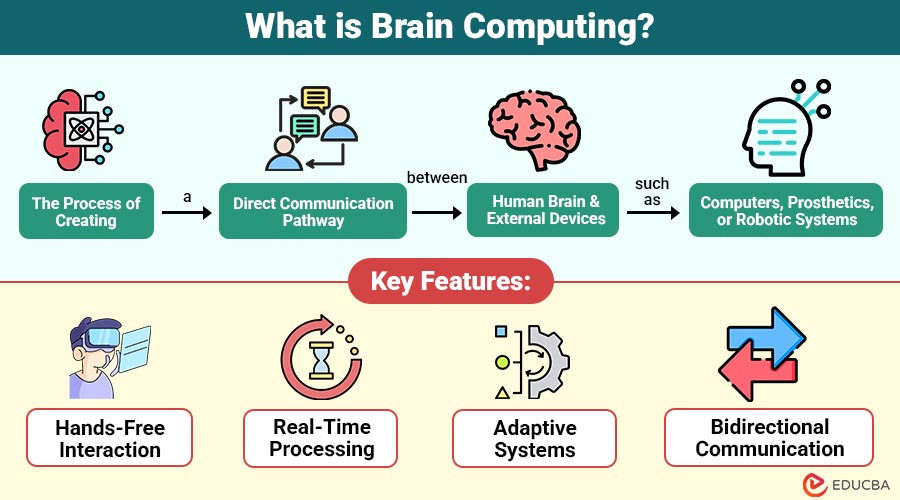
Brain Computing is the process of creating a direct communication pathway between human brain and external devices such as computers, prosthetics, or robotic systems.
It interprets brain signals and translates them into commands that machines can understand. This field combines neuroscience, artificial intelligence, machine learning, and biomedical engineering to create systems where human thought can control technology without the need for physical action.
Table of Contents:
Key Takeaways:
- Brain computing bridges human thoughts and machines, unlocking direct control without physical interaction barriers.
- This technology blends neuroscience, AI, and engineering to enable adaptive, intelligent, and responsive human–machine communication.
- Applications span healthcare, communication, gaming, defense, and education, transforming industries and personal accessibility worldwide.
- Despite immense potential, cost, ethics, and accuracy challenges remain before large-scale adoption becomes a reality.
How does Brain Computing Work?
Brain computing relies on the brain’s natural electrical activity. The billions of neurons that make up the human brain exchange electrical messages with one another. Specialized systems can capture, analyze, and translate these signals into commands.
The working process typically involves:
1. Signal Acquisition
Electrodes or sensors capture brain activity through techniques like EEG, ECoG, or invasive implants, recording electrical impulses.
2. Signal Processing
Advanced algorithms and artificial intelligence filter noise, enhance clarity, and extract meaningful brainwave patterns for further interpretation.
3. Translation
The processed brain signals are decoded and translated into recognizable commands, enabling direct communication between neural activity and digital systems.
4. Execution
These translated commands control external devices, such as prosthetics, wheelchairs, or computers, enabling seamless interaction through thought-driven actions.
Types of Brain Computing
Brain computing systems can be classified into three main types based on how signals are recorded:
1. Invasive BCIs
Invasive BCIs involve surgically implanting electrodes directly into brain tissue, capturing highly precise neural signals. They offer superior accuracy but pose surgical risks and potential medical complications.
2. Semi-Invasive BCIs
Semi-invasive BCIs place electrodes inside the skull, yet outside direct brain tissue. They balance safety with reliability, offering stable signal quality while avoiding deeper surgical complications of invasive methods.
3. Non-Invasive BCIs
Non-invasive BCIs use external sensors like EEG caps to detect brain signals without surgery. They are safe and widely used, but they provide lower accuracy and weaker signal quality.
Key Features of Brain Computing
Here are the major features that define and enhance the potential of brain computing:
1. Hands-Free Interaction
Brain computing enables users to control devices or systems entirely through thought, eliminating physical effort. This supports individuals with disabilities and enhances futuristic hands-free technological interactions.
2. Real-Time Processing
Communication with machines is made easy by the instantaneous translation of brain signals into actions. Real-time processing is essential for critical applications like prosthetics, gaming, and medical monitoring.
3. Adaptive Systems
Artificial intelligence algorithms within brain computing systems continuously learn and adjust to unique neural patterns, improving accuracy over time and delivering more personalized, responsive, and reliable control.
4. Bidirectional Communication
Some brain-computer interfaces support two-way interaction, where the brain controls external devices and simultaneously receives sensory feedback, enhancing immersion, medical rehabilitation, and advanced human–machine communication capabilities.
Applications of Brain Computing
Here are the major fields where brain computing is making a transformative impact across industries and daily life.
1. Healthcare
Brain computing is changing healthcare in powerful ways. It can help paralyzed patients move prosthetic limbs, allow people to communicate again, support recovery after strokes, and improve treatment for brain-related illnesses like epilepsy, Alzheimer’s, and Parkinson’s disease.
2. Communication
Brain-computer interfaces empower patients with conditions like ALS to communicate using thought-to-text technologies, bridging barriers for individuals unable to speak or move due to severe disabilities.
3. Education and Training
Brain computing enhances education by monitoring attention, detecting fatigue, and personalizing learning. In training, it tracks stress and performance, optimizing outcomes across academic and professional settings.
4. Gaming and Entertainment
Brain-computer interfaces enable immersive entertainment by integrating thought-controlled commands into virtual reality and gaming, allowing players to interact directly with digital worlds using only their minds.
5. Defense and Military
In defense, BCIs could allow soldiers to control drones, exoskeletons, or weapons with their thoughts, enhancing precision, reaction speed, battlefield effectiveness, and strategic decision-making capabilities.
6. Everyday Application
Advantages of Brain Computing
Here are the key advantages of brain computing that highlight its transformative impact on human life and technology.
1. Accessibility
Brain computing empowers individuals with disabilities by restoring independence, enabling them to control devices and interact with their environment using only their thoughts.
2. Speed and Efficiency
By bypassing physical input devices, brain computing ensures rapid, seamless control of systems, offering efficiency in communication, gaming, healthcare, and advanced technological interactions.
3. Enhanced Communication
BCIs allow individuals who cannot speak or move to express their thoughts directly, providing a vital lifeline for patients with conditions like ALS.
4. Rehabilitation Support
5. Innovation Potential
BCIs (Brain-Computer Interfaces) open up amazing new possibilities. They can let people control machines with their thoughts, make gaming more lifelike, improve healthcare, help in learning, and bring smart technology into everyday life.
Disadvantages of Brain Computing
Despite its promise, brain computing faces several challenges:
1. Technical Complexity
Extracting brain signals accurately is challenging because of signal noise, variability, and overlapping neural activity patterns.
2. Invasiveness
Surgical brain implants pose infection risks, potential tissue rejection, hardware failures, and long-term complications affecting patient health outcomes.
3. Cost
Brain computing systems remain expensive, limiting accessibility for patients, researchers, and institutions, slowing widespread adoption and commercial deployment globally.
4. Privacy and Security
Brain data is highly personal; misuse, unauthorized access, or leaks could trigger ethical dilemmas, legal disputes, and privacy violations.
5. Limited Accuracy
Non-invasive BCIs often produce weak, noisy signals with slower responses, reducing reliability and efficiency in real-world applications.
Real World Examples
Below are some prominent real-world examples that demonstrate the practical applications of brain computing:
1. Neuralink (Elon Musk’s Company)
Developing advanced invasive brain-computer interfaces to help restore communication, movement, and ultimately achieve seamless human-AI interaction.
2. Emotiv and NeuroSky
Offer affordable consumer-grade EEG headsets enabling brainwave monitoring for gaming, relaxation, mental health tracking, and academic or commercial research.
3. BrainGate
A pioneering research initiative enabling paralyzed patients to control robotic arms, wheelchairs, and computers directly using thought-driven neural signals.
4. Facebook (Meta) Research
Conducting non-invasive brain-computer interface research aimed at translating neural activity into real-time text, supporting natural, hands-free human communication.
Future of Brain Computing
The future of brain computing is both exciting and complex. Potential directions include:
1. Integration with AI
Artificial intelligence will make it easier to understand brain signals. This will allow brain-computer systems to work in real time, become more accurate, adapt to each person’s needs, and help humans and smart machines work together smoothly.
2. Medical Breakthroughs
3. Cognitive Enhancement
Outside of medicine, brain-computer interfaces could increase human abilities by improving memory, helping people focus better, and making thinking sharper. This could lead to smarter learning and better performance.
4. Everyday Use
Brain-controlled smartphones, cars, and smart homes could become common, allowing natural thought-driven interactions, reducing dependence on physical devices, and simplifying everyday life experiences significantly.
5. Ethical Frameworks
It will be essential to establish legal frameworks and ethical standards in order to protect the privacy of brain data, ensure responsible usage, stop exploitation, and provide equitable access.
Final Thoughts
Brain computing is revolutionizing human-technology interaction by linking the brain with machines. It holds promise for restoring abilities to patients, enhancing daily life, and driving innovation. Despite challenges like cost, ethics, and technical hurdles, rapid advancements in AI and neuroscience make it a transformative future technology. The vision of thought-driven digital control is nearing reality.
Frequently Asked Questions (FAQs)
Q1. Is brain computing safe?
Answer: Non-invasive BCIs are safe, but invasive ones involve surgery, which carries risks. Safety depends on the technology type.
Q2. Can brain computing read thoughts completely?
Answer: Not exactly. Current systems detect patterns related to intentions (like moving a hand), not detailed thoughts.
Q3. When will brain computing become mainstream?
Answer: It may take 10–20 years before affordable, reliable consumer-grade BCIs are widely available.
Q4. What are the ethical concerns?
Answer: Key concerns include privacy of brain data, potential misuse, and the risk of cognitive manipulation.
Recommended Articles
We hope that this EDUCBA information on “Brain Computing” was beneficial to you. You can view EDUCBA’s recommended articles for more information.


