


Introduction to Corporate Training Programs
Most businesses lack the time to develop workplace competencies unless employees receive corporate training. An effective training program that is built to scale and is agile enough for a diverse workforce split between remote work and in-office positions. To begin with, we will be looking at how organisations can build and deploy a relevant corporate training program for hybrid teams that not only outdo the traditional norms but bring about a detailed change to how learning and growth are sustained across levels of hierarchy.
Importance of Corporate Training Program for Hybrid Teams
Hybrid work provides company flexibility and enables new challenges for employee development. What worked effectively nationally before would not be as efficient or scalable when your workforce is half remote and half onsite.
Benefits of a well-structured corporate training program for hybrid teams:
- Easy access to learning from anywhere
- High-quality training for all employees
- Better engagement and motivation
- Faster skill development to meet business needs
Scalable, adaptable, and tech-enabled training solutions are required for companies to achieve these aims, which is where Revive Systems comes into its own.
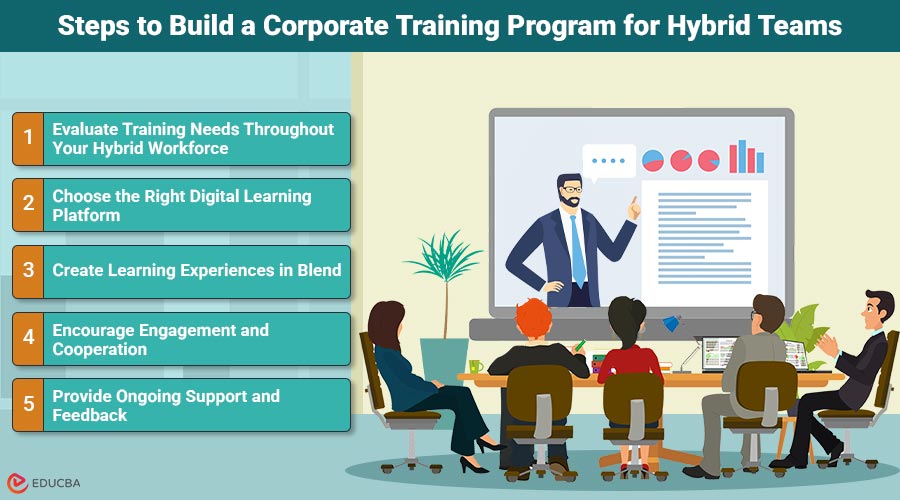
Steps to Build a Corporate Training Program for Hybrid Teams
Here are the key steps to design, implement, and scale impactful training for your hybrid workforce.
Step 1: Evaluate Training Needs Throughout Your Hybrid Workforce
First, determine the skill gaps and specific training requirements for your hybrid workforce. This involves collecting data through:
- Employee surveys and self-assessments
- Manager feedback and performance reviews
- Strategic business goal and pipeline analysis.
Understanding how and where your hybrid teams need development can help to customize training content, delivery methods, and timing to capitalize on results.
Step 2: Choose the Right Digital Learning Platform
Hybrid team corporate training must be more scalable by design, so it should rely on technology. It is very important to invest in developing a strong digital learning platform. Features to look for:
- Learn from anywhere, anytime via cloud-based access
- Remote student support with a mobile-friendly design
- Videos, Quizzes, and Gamification (interactive types of content)
- Social learning features enable peer-to-peer interaction.
- Monitoring and accountability via analytics and reporting
A good example of a digital learning platform like this is Simplilearn, which allows organisations to deliver training seamlessly across different environments.
Step 3: Create Learning Experiences in Blend
The winning formula for hybrid teams is to adopt a mixed or blended learning approach that supports synchronous needs as well as asynchronous ones.
- A webinar by Aaron De Smet (senior partner of McKinsey & Company) emphasized that virtual instructor-led training will be vital because synchronous sessions help raise queries that are more difficult for e-reading platforms.
- Self-paced modules and recorded videos allow students to progress through the material on their own time.
Mixing these formats supports learning busy schedules and a variety of ways of learning, which can help to increase the attendance rate at training sessions as well.
Step 4: Encourage Engagement and Cooperation
Although retaining interest in hybrid training programs can be difficult, incorporating parts of social learning can assist:
- Discuss as a team in forums/eChat groups
- Encourage collaboration and peer feedback on projects
- Implement gamification, such as leaderboards and badges
- Present rewards and congratulatory messages for completing levels.
These techniques build team spirit across distances and keep employees motivated to finish the learning path.
Step 5: Provide Ongoing Support and Feedback
Large-scale corporate training programs are not one-time activities but need continued support. Offer:
- Mentors or coaches to supervise learners
- Scheduled manager check-ins and feedback buckets
- FAQs and help desks are easily accessible resources.
- Learners’ ability to review course quality
This allows me to continue supporting the student, gives them confidence, and helps them overcome any blockages right away.
Step 6: Evaluate Training Impact and Repeat
Lastly, ensure you assess your training with data-driven insights. Key metrics include:
- Completion rates and learner engagement
- Assessment scores and skill improvements
- Employee feedback and satisfaction surveys
- Productivity and retention are common business indicators.
Regularly analyze these metrics to adjust training content, delivery, and tools as necessary, improving the process and scaling it.
Top Reasons to Opt for Simplilearn Corporate Training Programs
Simplilearn leads in creating custom training programs for enterprises that scale and adapt to hybrid teams’ needs. By offering industry-recognised certifications, expert-led courses, and advanced learning platforms, their business customers can:
- Upskill employees efficiently at scale
- Create a culture of learning
- Foster Business Growth with a Talented Workforce
No matter where your teams are working from, Simplilearn’s holistic solutions can help you create a workforce for the future.
Final Thoughts
Creating a scalable corporate training program for hybrid teams requires careful planning, effective technology, and engaging strategies. Through needs assessment, adoption of blended learning, and continuing measurement of outcomes, corporations can achieve continuous skill-building in every single employee, thereby becoming the captain of their ship. Prepare your hybrid workforce for the future and start scaling your team’s skills.
Recommended Articles
We hope this guide to corporate training program for hybrid teams helps you enhance workforce development. Explore these recommended articles for more strategies to boost team performance.

