

Updated September 22, 2026
 Over the past decade, the number of internet users, websites, online services, and digital businesses has grown rapidly. In 2026, this continued digital expansion underscores the growing importance of websites for communication, education, e-commerce, entertainment, and business. This article explores the growth of the internet and websites and explains how the digital landscape has evolved over the years.
Shocked!!! Well, this is just a glimpse of the title we will cover. But before, let’s take some understanding of it. Then, we will help our readers with a clue – “it is everywhere, on the internet.”
These stats just trifold the pressure for front-end developers across the globe. With every passing second, one or more websites exist, which is an ever-increasing demand. So, yes, we will discuss front-end developers today in our article.
What is a front-end developer?
So, to start with, what exactly is a front-end developer? What do they do?
The front end means what appears in front of the users (yes, the websites). So, a front-end developer implements the structure, design, behavior, and animations related to every bit and piece you see whenever you open a website or a mobile application.
If you are looking for a Front-end Developer job, you need to prepare for the 2026 Front-end Developer Interview Questions. Every interview is indeed different as per the various job profiles. Here, we have prepared the critical Front-end Developer Interview Questions and Answers to help you succeed in your interview.
This 2026 article shall present the 14 most important and frequently asked Front-end Developer Interview questions. These questions are divided into two parts as follows:
Part 1 – Front-end Developer Interview Questions (Basic)
This first part covers basic Front-end Developer Interview Questions and Answers.
Q1. What skill set makes a complete front-end developer? Or what are the crucial skills needed for a front-end developer?
Answer:
The crucial skills needed for a front-end developer are as follows.
- HTML
- CSS
- JavaScript
- JQuery
Apart from these, some additional skills can enhance the profile:
- Understanding of cross-browser testing
- Content management systems like WordPress, Joomla, and Drupal
- Knowledge of SEO
Q2. Explain the layers present in a webpage. How does CSS play a role in it?
Answer:
There are three kinds of layers on any web page.
- Content Layer
- Presentation Layer
- Behaviour Layer
The content layer is the information that a website holds. It comprises the text details, facts, and information part.
Q3. Tell me something about W3C.
Answer:
W3C stands for the World Wide Web Consortium, an international standards organization for the web. These people are responsible for standardizing the web and making it accessible to all users.
The presentation layer defines how the content appears to its users. One can also say it is the look and feel of the web page. Here is the role of CSS, a.k.a. Cascading Style Sheets, which is a way to control and present the presentation layer in a web document.
The behavioral layer involves real-time user interaction with the web page.
Q4. Mention some advantages of CSS.
Answer:
The advantages of CSS are as follows:
- It saves time
- It helps in fast page loading
- Easy maintenance
- Superior to HTML style
- Multiple device compatibility
- Global standards for the web
- Offline browsing
- Platform independence
Q5. As a developer, what ways are applied to reduce the load time of any given website?
Answer:
Some crucial things we keep in consideration are:
- Enable proper browser caching
- Optimize the image files
- Minimize the HTTP requests
- Reduce redirects
Q6. As a developer, what are some crucial ways to reduce web application load time?
Answer:
Many ways are available to do this; these can reduce complexity.
- Browser caching
- By optimizing the image files
- Resource minification (remove unnecessary characters from source code)
- Minimize HTTP request
Q7. How will you declare a 3-dimensional array in JavaScript?
Answer:
By using this syntax:
var myArray = [ [ [] ] ];
Part 2 – Front-end Developer Interview Questions (Advanced)
Let us now look at the advanced Front-end Developer Interview Questions.
Q8. What would be the result of 9+6+”3”?
Answer:
The o/p will be 153.
Explanation: Here, 9 and 6 are data types (integers), so they will be added numerically. Since 3 is a string, the result would be concatenated and become 9+6 = 15, and 3 comes together to form 153 as output.
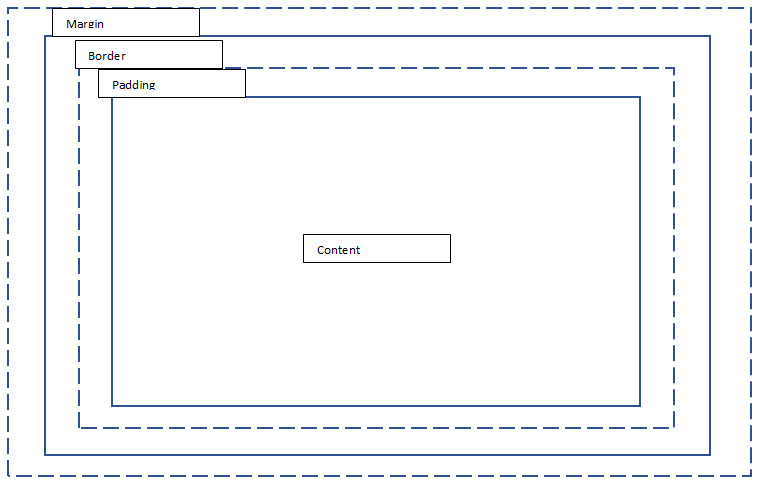
Q9. Explain the CSS box model.
Answer:
The Box model helps provide a more structured way to space elements in relation to each other for a web page.
The box model has several components such as:
- Margins
- Borders
- Padding
- Content
Q10. What is a CSS pre-processor? Why do we use them?
Answer:
A pre-processor is used for code conversion. Preprocessed languages such as SASS and LESS are converted to standard CSS.
Reasons for using them are:
- Ability to define variables
- Ability to use the nested syntax
- Use of mathematical and operational functions
- Ability to create and use mixins (functions)
Q11. Name some of the new features present in HTML5 and missing in HTML.
Answer:
Some new features in HTML5 are:
- DOCTYPE declaration
- Section tag (<section/. …</section>)
- Header and Footer tag
- Flgcaption tag
Q12. Tell me the components of a CSS style.
Answer:
The CSS style is made up of three things.
- Selector: A selector is an HTML tag to which styles can be applied. A selector can be anything, like <h1> or <table>
- Property: This is an attribute of the HTML tag. This property can be anything like colors, borders, shades, etc. The HTML attributes are converted into CSS properties.
- Value: A value is always assigned to any defined property.
Q13. Can you explain ways to apply CSS styles to a web page?
Answer:
The first way to do it is by using the inline style attribute on an element.
<div>

<p  style=”color: maroon; “></p>

</div>
One can use a <style> block in the <head> section of the HTML.
Lastly, use the <link> tag while loading the external CSS file.
Q14. How will you convert non-numerical values to numbers in JavaScript?
Answer:
The three main ways to do this are:
- parseInt ()
- parseFloat ()
- Number()
Recommended Articles
This has been a guide to Front-end Developer Interview Questions and Answers. Here we have listed the 14 most beneficial sets of interview questions to help the job seeker easily crack the interview. You may also look at the following articles to learn more –

