


Have you ever noticed that every other YouTube channel uses the same type of thumbnail: a shocked face with neon text? At this point, the YouTube homepage looks the same for all channels.
AI has definitely made things easier with prompting, but the problem is that it lacks emotion and human touch in most of the videos you see on YouTube. To outgrow the culture of copy-and-paste, your channel needs a USP. In this environment, understanding YouTube Monetization and how much YouTube pays per view starts with a reality check: the algorithm no longer rewards “perfection”; it rewards brand recall.
If your audience cannot remember your name five minutes after watching your video, your earnings will always stay at the bottom of the barrel. To truly maximize your revenue through YouTube Monetization in 2026, you have to stop trying to look like a “pro” and start trying to look like yourself.
The Reality Check: How Much Does YouTube Pay Per View in 2026?
Do not Track Pay-Per-View; Do Optimize for Trust-Based RPM
Most creators still ask the question, ” How much does YouTube pay per 1000 views?” For this, please understand that YouTube’s RPM is not based on pay-per-view. Here, the content niche comes into play.
High-trust, personality-led YT channels are currently commanding RPMs of $15.00 to $40.00 in high-intent niches. Meanwhile, “Generic AI” channels that fall into the sea of sameness are seeing their rates stagnate at $1.50 to $3.00 because advertisers will not pay a premium for viewers who are not emotionally invested.
The biggest mistake YouTubers seem to make is assuming that a professional-looking channel equals profitable content. However, have you thought about authenticity? In reality, a HubSpot report revealed a shocking shift: roughly 64% of consumers prefer content that feels human and authentic, even when AI is part of the production process.
This means that when you use a generic prompt to fit into a template-style YouTube channel by neglecting the human touch and your channel’s authenticity and opinions, you create a trust deficit with viewers. Such viewers do not return to your channel, signaling to the algorithm that your content does not resonate with their interests.
This directly impacts your YouTube Monetization earnings and long-term revenue. Your audience can tell whether a human or a bot wrote the script, and they will not stick around to build a lasting relationship if your content feels robotic.
Do not Hunt for Virality; Build Authority and Credibility
In the past, the goal of credibility was to go viral, attract more viewers, and monetize the channel to the fullest. But credibility does not come from virality. Data from the Pew Research Center indicates that 32% of adults now regularly get their news and critical information from YouTube.
This means a third of your potential audience is looking for an authority figure, not just an entertainer. When your branding looks like a carbon copy of ten other channels, you lose that authority instantly.
Building a USP for your YouTube channel is not enough; going viral is not enough. To maximize how much YouTube pays per view, you must move beyond the “information” layer (which AI can handle) and into the “insight” layer (which only you can provide).
Do not Target Passive Scrollers; Build a Loyal Community
According to the YouTube 2024 Culture & Trends Report, we have entered the era of the “Professional Fan.” While 82% of people have now posted video content themselves, creating a massive surplus of “average” content, the revenue is being driven by superfans who seek deep community connection.
If your growth strategy relies on the same aesthetic as everyone else, you are catering to the passive scroller, someone who watches, forgets, and never returns. To succeed with YouTube Monetization in 2026, your strategy must pivot toward brand recall.
Ask yourself: If a viewer saw your thumbnail without your name, would they know it was yours?
- The AI Trap: Using “Top 10” style AI scripts that lack a personal voice.
- The Branding Trap: Using the same “Success Blue” or “Urgent Red” color palettes as every other competitor.
- The Result: A forgettable experience that keeps your YouTube Monetization earnings and “per-view” pay at the absolute minimum.
YouTube Monetization Strategy Shift
In 2026, the YouTube algorithm is essentially a high-speed data processor. If you feed it “generic” data, it will find you “generic” (and low-value) viewers. This is where most creators fail: they wait for organic reach to “discover” them while their branding remains indistinguishable from the noise.
Strategic promotion is the only way to break this cycle. At VeeFly, we advocate for a “Data-First” promotion strategy. Instead of just buying views to look popular, you should use targeted promotion to reach a high-intent audience that specifically values your USP.
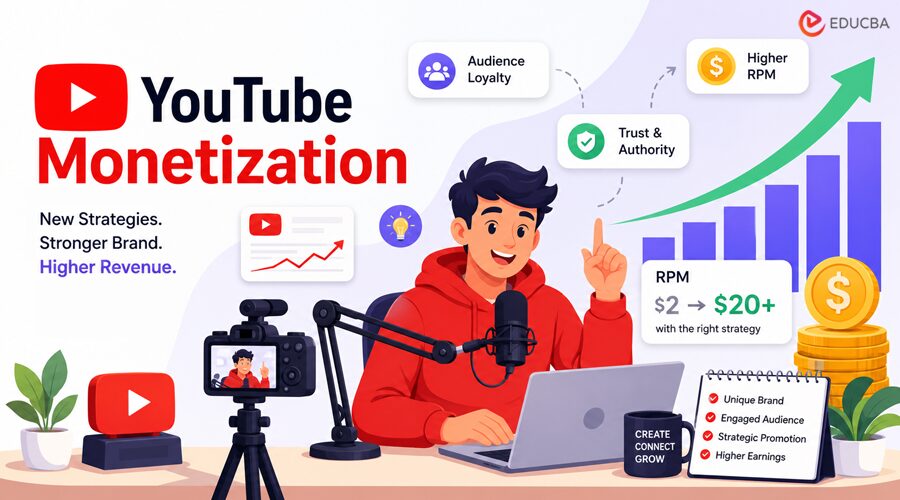
When you use promotion to drive the right eyes to a unique, branded experience, you are essentially “training” the YouTube algorithm. Once the algorithm sees that your “High-Recall” brand keeps viewers on the platform longer than the generic competition, it rewards you with higher-quality ad placements and increased organic reach. This is the secret to moving from a $2 RPM to a $20 RPM.
The 2026 YouTube Monetization Stack
To truly understand how much YouTube pays per view, you have to stop looking at AdSense as your only paycheck. The most successful creators in 2026 utilize a “Monetization Stack” built on brand loyalty:
- Differentiated Visuals: Moving away from AI-templated “neon” thumbnails toward a signature aesthetic that commands a “Pattern Interrupt.”
- Emotional Hooks: Writing scripts that prioritize personal anecdotes and “Opinion Hooks” over raw data.
- Strategic Promotion: Using tools like VeeFly to skip the “Sea of Sameness” and place your unique brand directly in front of viewers who pay for quality.
Final Thoughts
The “Sea of Sameness” is a choice, and in 2026, it is an expensive one. If you continue to look and sound like every other creator, you are essentially permitting YouTube to pay you the lowest possible rate.
The creators winning this year have realized that authenticity is not just a creative value; it is a financial multiplier. Stop trying to look like a “professional” version of everyone else and start building a unique identity that viewers instantly recognize.
In the future of YouTube Monetization, authenticity, authority, and audience loyalty will matter far more than generic viral tactics. Your RPM will thank you for it.
Recommended Articles
We hope this guide on YouTube Monetization in 2026 helps you understand how authenticity, brand recall, and community-driven strategies can improve channel growth and creator revenue. Explore the recommended articles below for more insights on YouTube growth strategies, creator branding, audience engagement, video marketing, and content monetization techniques.


