


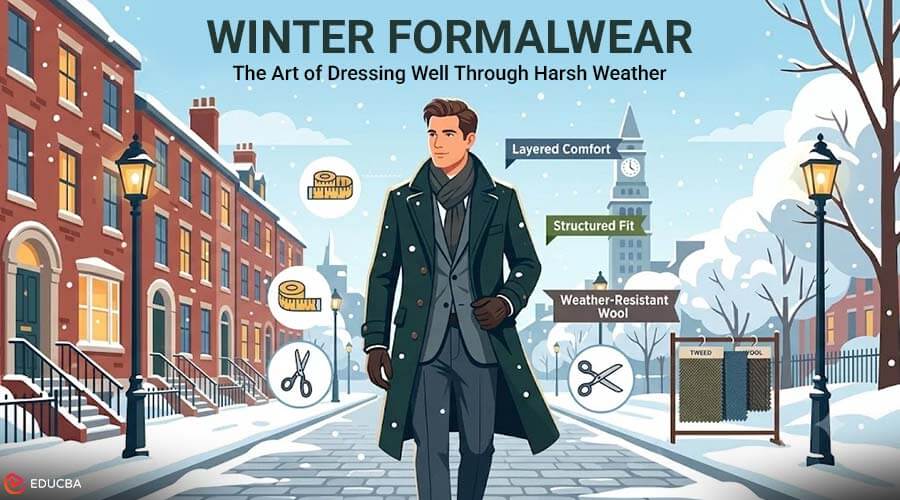
A city that spends nearly half the year moving between biting cold, sudden thaws, and unpredictable wind has little patience for clothing that only performs well in mild weather. Winter formalwear needs to provide warmth, comfort, durability, and flexibility throughout the day while maintaining a polished appearance. Unlike garments designed only for aesthetics, thoughtfully tailored winter formalwear is built to perform in real-world conditions. From walking across icy streets to moving between freezing outdoor temperatures and heated indoor spaces, every detail matters.
Why Winter Formalwear Needs to Balance Style and Function?
In regions with gentler climates, layering can be treated as a styling choice. In a place shaped by long winters, it becomes closer to a discipline. A jacket has to accommodate an extra layer underneath without losing its shape. Trousers need enough structure to hold their line even paired with thermal layers beneath.
None of this is visible to a casual observer, yet it shapes nearly every decision a thoughtful wearer makes when choosing formal clothing built to last through an entire cold season. This is one of the quieter reasons Boston suits have earned a reputation for practicality alongside polish. Clothing built in a demanding climate cannot afford decoration alone. It has to function under real conditions, which tends to produce more considered tailoring overall.
Fabric Weight Becomes a Serious Decision
Choosing fabric weight is rarely discussed outside specialist circles, yet in a city with genuine seasonal extremes, it becomes an obvious and necessary consideration. A heavier wool that performs beautifully in January can feel oppressive by late spring, while a lighter fabric chosen without thought to winter will fail exactly when needed most.
Tailors working in climates like this learn to think in seasons rather than single garments, often guiding wearers toward pieces that can adapt across a wider temperature range. People rarely credit this kind of practical thinking as part of good style, yet it remains inseparable from it. Clothing that cannot withstand the realities of daily life eventually ends up in a closet, regardless of how good it once looked in a fitting room.
A Lesson Worth Borrowing Anywhere
Even people living in areas with milder climates can benefit from the principles behind well-designed formalwear. Choosing formal clothing for function and style creates durable, comfortable garments that are worn more often. A jacket that performs only under perfect weather conditions is likely to spend much of its life hanging in a wardrobe. In contrast, clothing designed to adapt to changing temperatures and unpredictable weather proves its value with every wear. The next time you are selecting winter formalwear, consider a simple question inspired by colder climates:
Will this piece still deliver comfort and style when the weather becomes unpredictable?
Garments that can confidently answer “yes” tend to become long-term wardrobe staples rather than occasional purchases.
Practicality is Part of Great Style
We should never view practicality as a compromise on style. Instead, it represents a more complete definition of good dressing one that considers how clothing performs in everyday life rather than how it simply appears in photographs. The best winter formalwear combines timeless tailoring, thoughtful layering, appropriate fabric choices, and reliable performance. A wardrobe built around these principles serves its owner season after season, proving that true style depends not only on appearance but also on how well clothing meets the demands of real life.
Recommended Articles
We hope this guide to winter formalwear helps you make smarter style choices. Check out these recommended articles for more expert fashion tips and seasonal dressing advice.

