


Imagine you find yourself driving down a highway. You are going 70 miles an hour with your lights off and a blindfold over your eyes. That feeling of complete powerlessness reflects how people feel during the weekdays. You wake up at the beginning of the week and feel like you are lagging. You spend the week catching up with others’ lives, only to find yourself completely worn out when Friday finally comes around. It is not a fantasy. Surveys show that in 2022, the percentage of Canadians who felt constant time pressure reached its highest level in 30 years. Constantly functioning in survival mode is tiring, impractical, and entirely avoidable. Weekly planning can help you avoid this chaos by giving your week a clear direction.
You do not need drastic lifestyle changes or a military-style routine to end this chaos. You only need 30 minutes each week to create a practical roadmap, organize your schedule, and focus on what matters most.
Why Weekly Planning Works?
Most people do the silly thing of designing their lives somewhere along the way. One wakes up on Monday, asks what to do, goes online, and rushes to handle others’ tasks. By the end of the day, you are drained and have accomplished nothing important.
A concentrated half-hour planning session helps you protect your time by looking at the entire week. The weekly picture helps you avoid scheduling conflicts as you write down your duties on paper, so your brain can relax.
How to Plan Your Week in 30 Minutes?
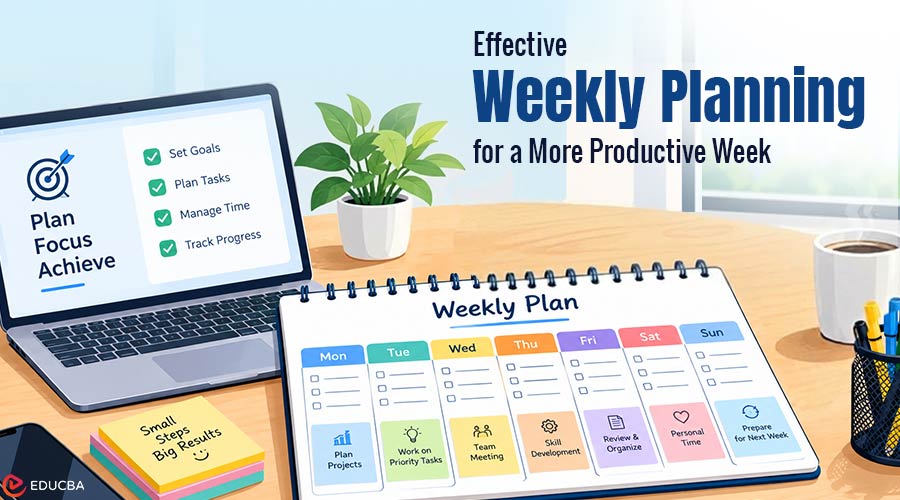
Follow these five weekly planning steps to organize your responsibilities, set priorities, and build a realistic schedule.
Step 1: Empty Your Mind With the Process of Brain Dumping (5 Minutes)
The first activity is to get a new notebook and write down everything that crosses your mind. For now, you do not have to think about the meaning of whatever you are writing down. Write down your work projects, grocery lists, calls you need to make, things to fix at home, and other personal tasks. The moment you write down these things, you will be relieved of stress.
Step 2: Review Your Big Picture and Calendar (5 Minutes)
Now, pull up your main schedule to see what you have planned for the week ahead. Look out for meetings, medical appointments, classes, and other obligations you cannot change. This helps you avoid accidentally overbooking yourself or saying a project is due when you would not be able to work on it. You may also want to look further ahead to check your longer-term commitments, especially when things get busy in the fall, and you are looking for a good October 2026 calendar.
Step 3: Choose Your Top Three Priorities (5 Minutes)
Review your lengthy list of tasks and ask yourself, “What are my three most important objectives to achieve this week to feel accomplished?” Upon answering that, you must identify and select the three important tasks from your list of work.
As a result, the three chosen jobs will be your priorities for the week. Everything else you planned for the week becomes secondary. Choosing only three tasks keeps you from feeling overloaded or drained while still getting the most important work done.
Step 4: Allocate Specific Time Slots to your Agenda (10 Minutes)
It is the right time to allocate personalized functioning spaces to the jobs on your calendar. Time-blocking means setting aside specific time for particular activities instead of trying to work through an endless list of tasks.
- Initially, secure the times for all your appointments, meals, gym sessions, and family obligations that hold high importance.
- Once you finish, focus on three main priorities at peak times like the morning, and schedule them accordingly.
- Always find a way to include smaller tasks, like answering messages and paying bills, and do them in one sitting.
Allow breaks between tasks, since meetings usually run longer than expected and traffic situations cannot be foreseen. Otherwise, you will risk getting late because of unexpected circumstances.
Step 5: Prepare for Roadblocks and Finish Up (5 Minutes)
Use the last five minutes to review the plan you created. Look for the busiest days in your schedule so you can plan a backup. For instance, if you have meetings nonstop on Thursday, you can throw together a slow-cooker meal the night before so you would not have to cook. This simple move helps you stick to the program when things get busy.
Manage Your Weekly Life by Making Simple Weekly Plans
The best way to be in charge of your busy life is to create an easy-to-follow weekly planning system. You should wake up every day feeling relaxed, confident, and ready for the day. Start by taking at least half an hour once a week to plan so you can focus on what really matters. Take baby steps, set a timer, grab a pen, and follow these easy planning steps. You will see how, without a plan, your weekdays will become much easier and more fun. If you feel it is time to get organized, CalendarKart can help you with free printable templates to streamline your planning.
Frequently Asked Questions (FAQs)
Q1. When is the best time to do your weekly planning session?
Answer: The best days are Sunday afternoon or Friday evening. If you like to start your week on Sunday, you can plan it then. If you prefer weekends free from work, you may use Friday evening to plan the week.
Q2. What should I do if my schedule changes suddenly?
Answer: If things change and do not go as expected, do not panic; your weekly schedule system is flexible. Your weekly schedule system is flexible. If you miss something important, schedule the task for another free time block.
Q3. Is it better to use paper planners or digital calendars?
Answer: The best tool to use is the one you are comfortable with and can use consistently. For example, digital calendars are great for setting reminders and sharing events with others, while paper planners lend themselves well to thoughtful, undistracted reflection.
Recommended Articles
We hope this guide to weekly planning helps you manage your time and build a more productive routine. Check out these recommended articles for more practical tips on organization, scheduling, and personal productivity.

