


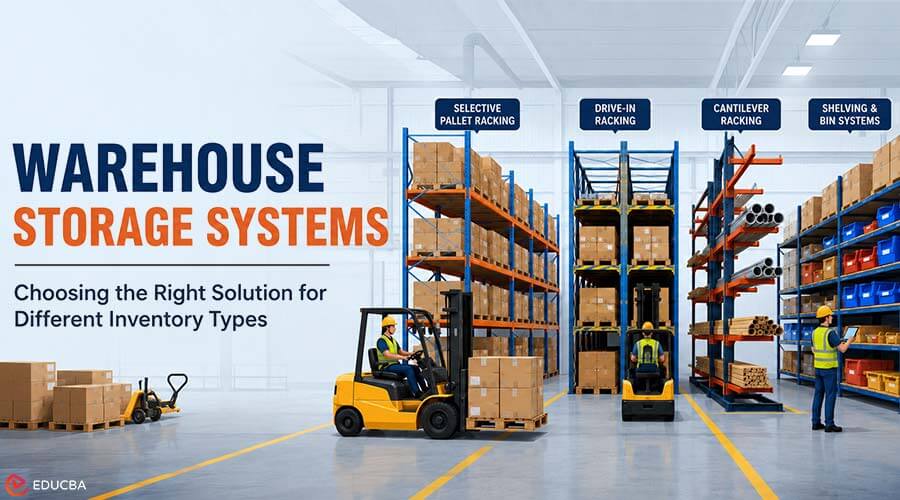
The main challenge in warehouse management typically is not a lack of space itself but a lack of usable space. While this might sound like a subtle distinction, in practice, it is the difference between a smooth operation and total gridlock. Technically, you could lease another 20,000 square feet and still struggle with slow picking, crowded aisles, and pallets that seem to migrate every week. Why does this happen often? The warehouse storage system, not the building, is usually the real limitation.
That is also why buying “the best” racking system rarely works out. The best solution is simply the one that matches the way your inventory actually moves. Before investing in any warehouse storage systems, here is one practical tip: map your top 20% fastest-selling products first. If those items require the longest forklift trips, changing your storage layout will often create a bigger improvement than purchasing new equipment. Spatial planning is only the starting point. Understanding different warehouse storage solutions, where each one works best, and how to select the right system without wasting money is essential for long-term efficiency.
Start With The Inventory Itself
Storage systems are often marketed as if a single solution fits everyone. In reality, it does not. For instance, a warehouse shipping thousands of identical beverage pallets has almost nothing in common with one storing replacement machine parts, computer components, or furniture. Still, many businesses regularly compare rack prices before asking a more important question: What specific operational demands does our inventory create?
Warehouse capacity is not just about square footage. It is about cubic utilization, picking speed, and how often employees have to touch the same product before it ships. All of these factors depend entirely on your inventory profile.
Selective Pallet Racking: Still the Safe Bet for Most Operations
If you stock many different SKUs, selective racking is hard to beat. Every pallet remains accessible, workers spend less time moving inventory just to reach something behind it, and layout changes are relatively painless when product lines evolve (which they usually do).
For companies watching costs, buying quality used warehouse pallet racks can also make financial sense. Spending less on racking sometimes leaves room in the budget for barcode scanners, better warehouse software, or forklift upgrades. Those improvements often return the investment faster than premium storage equipment alone.
High-Density Systems: High Capacity, Conditional Efficiency
Dense storage systems like drive-in, drive-through, push-back, and pallet flow systems maximize pallet counts per square foot. They are excellent for storing large quantities of the same product. For example, beverage distributors, food suppliers, cold storage facilities, and manufacturers often benefit the most. Here, the inventory moves in large, predictable blocks.
Problems start when product variety increases. Because high-density systems store pallets several deep, accessing a specific item often requires moving three or four other pallets out of the way first. The point is that more density does not automatically mean greater efficiency. Sometimes it simply means more forklift traffic.
Products That Refuse to Fit the Rules
Not everything belongs on a standard pallet. For example, long steel beams, timber, pipes, sheet materials, and furniture components usually work far better on cantilever racks. Small components are another story entirely. Fasteners, electronics, or maintenance parts often waste enormous amounts of space when they are palletized rather than organized on shelves or in bin systems. That is an expensive habit because you are essentially paying warehouse rent to store air.
Budget: Spend It Where It Actually Changes Operations
If funds are limited, resist the temptation to chase specialized storage first. Instead, fix the expensive problems. A poor layout adds labor costs every single day. Forklift damage usually occurs in the same predictable locations, so rack protection is rarely a waste of money. And if your inventory is difficult to locate, warehouse software will almost always outperform another row of storage. Automation can also be beneficial, but it should usually follow improvements in basic warehouse organization and storage efficiency.
Plan Warehouse Storage Systems for Future Growth
Businesses rarely regret leaving room to expand. What they do regret is installing a system that reaches capacity after one strong sales year. Before selecting a warehouse storage system, consider these future-focused questions:
- Will SKU counts increase?
- Could product dimensions change?
- Are heavier pallets likely in the future?
- Will automation become realistic within five years?
- Can additional rack bays be added without redesigning the warehouse?
Thinking through those questions early costs nothing. Redesigning an entire warehouse later rarely comes cheap. A flexible storage design can make future expansion much easier. Adjustable beam levels, room for extra aisles, and equipment that can expand without rebuilding half the warehouse usually pay off later. It is important to follow structural standards set by industry organizations like the Rack Manufacturers Institute (RMI). The goal is to ensure your rack configuration can safely scale as load requirements increase.
One Important Metric Many Warehouses Ignore
Most businesses track occupancy, but it is not that common for businesses to track touches per pallet. And that is a big mistake. Count how many times a pallet gets moved before it leaves your warehouse. Once is ideal. Three or four usually means your layout is creating unnecessary work.
Every extra touch adds labor, increases the risk of product damage, and keeps forklifts busy with jobs customers never see. That is why this is a surprisingly useful reality check: it exposes problems that occupancy rates never will.
Recommended Articles
We hope this guide to warehouse storage systems helps you choose the right solution for your inventory needs. Explore these articles for more insights on warehouse management and operational efficiency.

