
What is Financial Innovation?
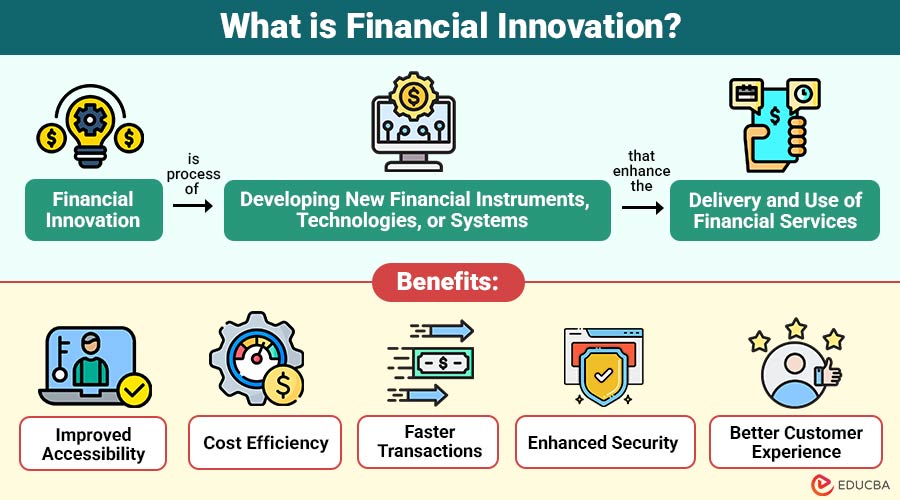
Financial innovation is the process of developing new financial instruments, technologies, or systems that enhance the delivery and use of financial services. These innovations aim to solve existing problems, reduce costs, improve efficiency, and create new opportunities in the financial ecosystem.
Table of Contents:
- Meaning
- Key Drivers
- Types
- Key Components
- Benefits
- Challenges
- Real-World Examples
- Use Cases
- Future Trends
Key Takeaways:
- Financial innovation leverages technology to improve accessibility, efficiency, and customer-centric financial services worldwide.
- It is caused by what customers want, rules, competition, and fast progress in technology across different industries.
- Financial innovation makes money transfers faster, cheaper, and easier for people using digital services around the world.
- It helps more people get banking, loan, and payment services, even those who were not served before.
Key Drivers of Financial Innovation
Below are the key drivers that are driving continuous innovation in the financial industry:
1. Technological Advancements
Emerging technologies, including big data analytics, blockchain, cloud computing, and artificial intelligence enable innovative financial services, products, and scalable business models.
2. Changing Consumer Expectations
3. Regulatory Changes
Governments and regulators promote innovation through supportive policies, open banking frameworks, and fintech sandboxes, encouraging competition and safe financial experimentation.
4. Globalization
Globalization increases cross-border trade and connectivity, creating demand for efficient, secure, and scalable financial systems that support international transactions seamlessly.
5. Competition from FinTech Companies
FinTech startups challenge traditional banks by offering innovative, customer-focused solutions, driving competition and accelerating the adoption of technology across the financial services industry.
Types of Financial Innovation
Financial innovation can be broadly categorized into the following types:
1. Product Innovation
Product innovation involves creating new financial products, such as digital wallets, peer-to-peer lending platforms, and cryptocurrency-based assets, to meet diverse customer needs.
2. Process Innovation
Process innovation improves the delivery of financial services through automation, online loan approvals, and real-time transaction processing, enhancing speed and efficiency.
3. Institutional Innovation
Institutional innovation introduces new financial entities, such as fintech startups, digital-only banks, and crowdfunding platforms, expanding access to financial services globally.
4. Technological Innovation
New technology uses tools like blockchain, AI, and APIs to make financial systems safer, faster, and easier to connect and use.
Key Components of Financial Innovation
Below are the essential key components that collectively enable and shape modern financial innovation:
1. Digital Payments
Digital payments enable cashless transactions via mobile apps, QR codes, and online banking, improving convenience, speed, and accessibility for users.
2. Blockchain Technology
Blockchain technology is descentralized ledger system that improves financial transactions between several parties worldwide in terms of security, transparency, and trust.
3. Artificial Intelligence
Artificial intelligence supports risk analysis, fraud detection, chatbots, and personalized financial services, significantly enhancing efficiency, accuracy, and the customer experience.
4. Big Data Analytics
Big data analytics processes large financial datasets to generate insights, improve decision-making, identify trends, and detect patterns, leading to better business outcomes.
5. Cloud Computing
Cloud computing provides scalable and cost-effective infrastructure, enabling financial institutions to store data, run applications, and deliver services efficiently.
Benefits of Financial Innovation
Below are the key benefits that financial innovation brings to businesses, institutions, and customers:
1. Improved Accessibility
Financial innovation expands access to services, enabling underserved and unbanked populations to use banking, payments, and credit facilities conveniently today.
2. Cost Efficiency
Automation and digital processes reduce operational costs for institutions while lowering fees for customers, making financial services more affordable and efficient.
3. Faster Transactions
Real-time payments and instant fund transfers significantly improve transaction speed, allowing users to complete financial activities quickly and conveniently anytime.
4. Enhanced Security
Strong security tools like encryption, fingerprint or face login, and fraud checks keep data safe and stop unauthorized transactions.
5. Better Customer Experience
Personalized services, simple and easy-to-use design, and seamless digital platforms improve customer satisfaction, making financial interactions smoother, faster, and more user-friendly overall.
Challenges of Financial Innovation
Below are the major challenges that can hinder the growth and adoption of financial innovation:
1. Regulatory Uncertainty
Rapid innovation often outpaces existing regulatory frameworks, creating uncertainty and compliance challenges for financial institutions as they adapt to new, evolving rules.
2. Cybersecurity Risks
3. Data Privacy Concerns
Handling sensitive financial data requires strict privacy policies, secure systems, and regulatory compliance to prevent breaches, misuse, and unauthorized access.
4. Technology Adoption Barriers
Not all users or institutions can quickly adopt new technologies due to limited skills, infrastructure challenges, costs, or resistance to change.
5. Systemic Risk
New financial innovations can create connected risks that spread across markets, making the financial system less stable and more vulnerable.
Real-World Examples of Financial Innovation
Below are some practical examples that demonstrate how financial innovation is transforming the global financial landscape:
1. Digital Payment Systems
Digital payment systems enable instant transfers and cashless transactions, transforming everyday payments by improving speed, convenience, and accessibility for users globally.
2. Peer-to-Peer Lending
Peer-to-peer lending offers quicker approvals, less fees, and more financial access by enabling people to borrow and lend money directly without the use of institutions.
3. Robo-Advisors
Robo-advisors are automated platforms providing investment advice using algorithms, helping users manage portfolios efficiently with minimal human intervention and lower fees.
4. Cryptocurrency
5. Buy Now, Pay Later (BNPL)
Buy now, pay later services give customers various payment alternatives and increase affordability by allowing them to divide purchases into installments.
Use Cases of Financial Innovation
Below are the use cases where financial innovation is actively transforming industries and improving financial processes:
1. Banking
Digital banking apps enable account management, fund transfers, bill payments, and loan services without requiring customers to visit physical bank branches.
2. Insurance
3. Investment
Online trading platforms and robo-advisors make investing easier, allowing individuals to manage portfolios, analyze markets, and invest with minimal effort.
4. Retail
Seamless digital payment options enhance customer experience, speed up checkout processes, and help businesses increase sales and customer satisfaction levels.
5. Cross-Border Transactions
Blockchain and digital payment systems reduce transaction costs, improve speed, and enable secure, efficient international money transfers across global financial networks.
Future Trends in Financial Innovation
Below are the future trends that are expected to shape the future of financial innovation globally:
1. Open Banking
Open banking allows secure data sharing between banks, helping create better, more personalized services and improved customer experiences.
2. Embedded Finance
Embedded finance integrates financial services into non-financial platforms, enabling seamless payments, lending, and insurance directly within apps and digital ecosystems.
3. Central Bank Digital Currencies
Central bank digital currencies are government-backed digital money, offering secure, efficient payment systems and gaining increasing global interest among regulators.
4. Decentralized Finance
Decentralized finance uses blockchain to offer financial services without banks, making transactions open, easy, and available to everyone.
5. AI-Driven Finance
Final Thoughts
Financial innovation is transforming the global financial ecosystem by improving accessibility, efficiency, and user experience. It empowers individuals and businesses with advanced tools for managing money, investing, and transactions. Despite the benefits, it also brings challenges such as regulation and security. As technology evolves, innovation will drive financial growth, inclusion, and reshape the future of global finance.
Frequently Asked Questions (FAQs)
Q1. What role does technology play in financial innovation?
Answer: Technology drives financial innovation by enabling automation, secure transactions, data analysis, and advanced financial services.
Q2. How is financial innovation changing banking?
Answer: It is enabling digital banking, faster transactions, and personalized financial services without physical branches.
Q3. How does financial innovation support financial inclusion?
Answer: It enables access to banking, credit, and payment services for underserved populations through mobile banking, digital wallets, and low-cost financial platforms.
Recommended Articles
We hope that this EDUCBA information on “Financial Innovation” was beneficial to you. You can view EDUCBA’s recommended articles for more information.


