


Introduction
Volatility significantly influences market price movements and the behavior of currency pairs. As a trader, understanding volatility can help you choose better trading strategies when markets are unpredictable, adjust risk, and interpret market movements. Whether you are a newbie or an experienced trader polishing your skills, learning how to use volatility in trading will give you an edge. This guide will explore what volatility is, why it matters, and how traders can turn it to their advantage.
What Is Volatility Trading?
To learn how to use volatility in trading, you must understand what it is and how it affects the forex market. In simple terms, volatility defines the rate at which prices change in the market over a specific period of time. The market can experience periods of high or low volatility. When volatility is high, prices move up or down significantly over a short period. On the other hand, when volatility is low, price changes are slow, and the degree of variation is small.
Volatility is a crucial aspect when assessing risk and uncertainty in the forex market. Assets or currency pairs with high volatility offer more opportunities for traders. However, they also have risks of bigger losses. Later in this guide, we will look at how traders quantify volatility using various tools and trading strategies.
Why Volatility Matters in Trading
Now that you have a basic understanding of volatility, let us look at why it matters in trading.
1. Risk Assessment and Risk Management
Volatility is often used as a risk-measuring gauge. Assets or currency pairs with high volatility are marked as high risk because their prices can swing significantly over a short period. As a trader, understanding volatility will help you build your trading strategies. Traders who favor stability will avoid buying currencies that exhibit high volatility.
However, risk-takers, such as day traders, prefer investing in highly volatile assets. When volatility is high, traders adjust various parameters to protect their capital. This often includes setting wider stop-loss and take-profit levels. Also, volatility helps traders determine how much risk they can take on per trade or position.
2. Opportunity Creation
It is not all gloom and doom when markets experience high volatility. Massive price changes often create opportunities for day traders. They can buy low, sell high, and vice versa, capitalizing on movements that do not exist in stable markets.
For instance, price changes occurring due to a geopolitical event make it possible for traders to profit from short holding periods.
3. Influence on Markets and Costs
Prices moving up and down quickly and unpredictably make trading more expensive. During periods of high volatility, the difference between buy and sell prices (the bid-ask spread) widens, forcing traders to spend more to open or close positions.
High volatility causes low liquidity in the market since most traders are afraid of the risk. This leads to fewer buyers and sellers, making it harder to get the prices you want. Another factor is high slippage risk due to volatility. The price you select may not be the price you get, reducing your profits or increasing your losses.
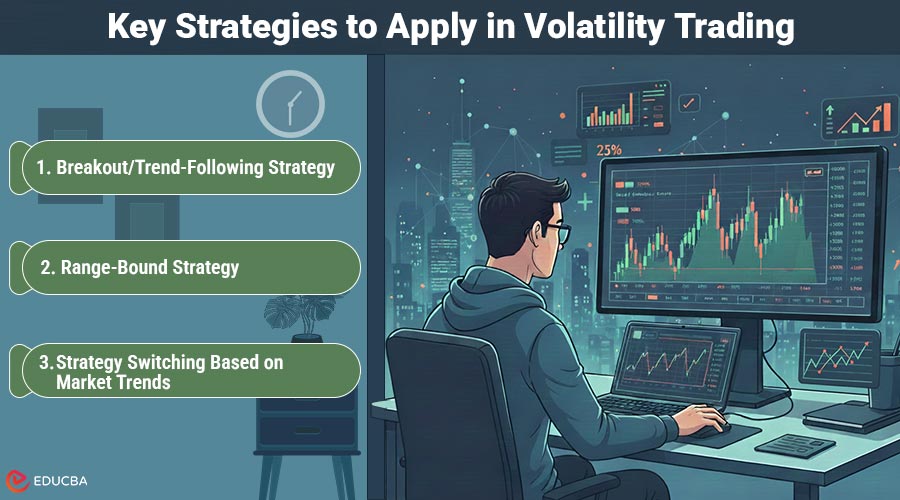
Key Strategies to Apply in Volatility Trading
How do you trade volatility? There are various strategies you can apply when trading in volatile markets. However, you also need to apply risk management to get the best outcomes.
1. Breakout/Trend-Following Strategy
When volatility is low, prices move sideways, a phenomenon known as a range or consolidation. The prices often oscillate between resistance and support. Breakouts occur when prices move below the support level or above the resistance level.
When breakouts occur, it may signal that volatility has increased. Forex traders use tools such as the average true range (ATR) to spot these market moments. A rising ATR could signal more market movement and a potential breakout. Once a breakout occurs, traders try to follow the new trend, holding their positions as long as it continues. This trading plan works best when volatility produces clear, strong price movements in one direction.
2. Range-Bound Strategy
Volatility is not static. Sometimes, prices move between the resistance and support levels without breaking out of bounds. This is what traders call a range-bound market. To learn how to use volatility in trading, traders use tools such as oscillators and Bollinger Bands.
Bollinger Bands stretch when volatility rises and contract when it drops. Traders can identify when the market is stretched and could move back to the middle, and vice versa. This strategy becomes useful when the market is moving sideways and not forming strong trends.
3. Strategy Switching Based on Market Trends
Volatility is unpredictable most of the time. The best traders master trading in volatile markets by switching between different strategies. Think of it like a boxer who can switch from a southpaw stance to an orthodox stance.
For example, a trader can rely on range trading when the markets are quiet and volatility is low. During periods when volatility is high, traders can switch to the breakout/trend strategy to take advantage of or control risks.
Risk Management During Volatility Trading
Volatility can create risk and opportunities in the market. Having a solid risk management plan is important for protecting capital and ensuring longevity in your trading career. Below are some tips you should apply if you want to master how to use volatility in trading.
1. Position Sizing
One of the best risk management moves is to adjust the size of your trades based on market volatility. Most traders choose smaller lot sizes when opening positions to reduce potential losses if the market turns against them.
2. Dynamic Stop-Loss Orders
Using stop-loss orders is critical when navigating markets during periods of high volatility. However, instead of using fixed stop-loss points, traders often rely on using tools such as the average true range to set dynamic stop-loss levels.
3. Set Daily Loss Limits
Trading based on emotions, especially after losing a substantial amount, is common among new traders. However, experienced traders often define a maximum daily loss. This helps avoid placing trades during periods of high market volatility, preserving capital for future trades.
Final Thoughts
Knowing how to use volatility in trading is a skill that will give an edge, especially during times when the market is experiencing high volatility. The best traders know how to adapt and switch strategies to maximize returns while mitigating risk.
Recommended Articles
We hope this guide on volatility trading helped you navigate market movements. For more insights, explore these recommended articles below:

