
What is Viral Marketing?
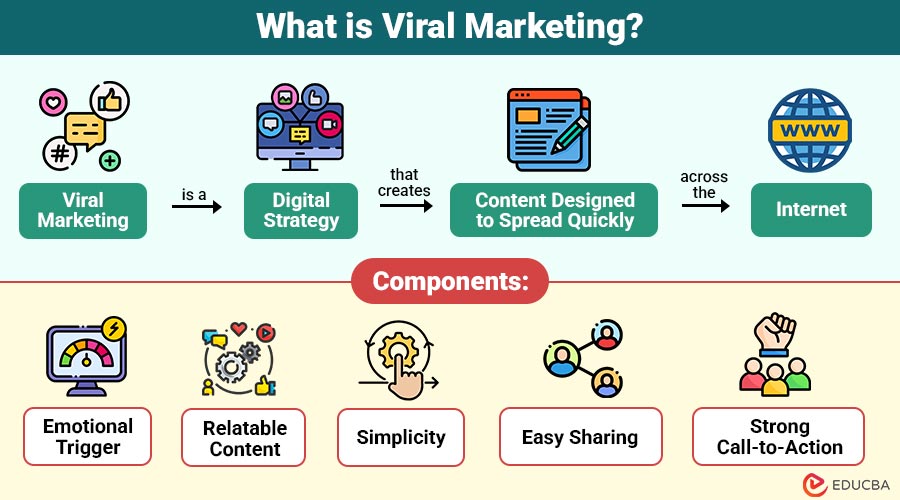
Viral marketing is a digital strategy that creates content designed to spread quickly across the internet. It relies on user engagement through shares, likes, and comments to amplify reach and visibility. The core idea is to create something so entertaining, emotional, surprising, or valuable that people feel compelled to share it with their networks.
It leverages:
- Social Media Platforms (Facebook, Instagram, TikTok, X/Twitter, LinkedIn)
- Messaging Apps (WhatsApp, Telegram, Messenger)
- User-generated Content (memes, videos, reviews, testimonials)
Unlike paid ads that push messages, viral campaigns rely heavily on organic growth through user participation.
Table of Contents:
- Meaning
- Importance
- Components
- Strategies
- Advantages
- Disadvantages
- Real-World Examples
- How to Create a Viral Marketing Campaign?
Key Takeaways:
- Viral marketing spreads rapidly through engaging content that emotionally connects with audiences, encouraging organic sharing.
- It offers massive brand visibility at minimal cost, making campaigns impactful without heavy advertising budgets.
- Success relies on simplicity, relatability, and timing, ensuring content resonates and travels across digital platforms.
- Despite benefits, virality is unpredictable, often short-lived, and difficult for brands to replicate consistently.
Why is Viral Marketing Important?
Here are the key reasons that make viral marketing a powerful strategy for brands and businesses:
1. Exponential Reach
Viral marketing enables a single piece of content to spread rapidly worldwide, reaching millions without requiring a massive advertising budget.
2. Brand Awareness
Creative viral campaigns transform lesser-known businesses into widely recognized brands, ensuring stronger visibility, popularity, and recall among global audiences.
3. Cost Efficiency
Compared to traditional advertising methods, viral campaigns achieve remarkable reach and engagement with minimal spending, maximizing overall return on investment.
4. Stronger Engagement
Emotionally appealing content encourages audiences to interact, comment, share, and engage in discussions, fostering deeper brand connections and more meaningful customer relationships.
5. Long-Term Impact
Viral content often continues to circulate, remaining memorable and influential long after campaigns end, creating lasting impressions and fostering brand loyalty.
Components of Viral Marketing
To understand how viral marketing works, let us break it down into essential components:
1. Emotional Trigger
Viral content thrives on emotions like humor, joy, or surprise, prompting audiences to share instantly because emotional experiences are more memorable and impactful.
2. Relatable Content
People naturally share content aligning with their beliefs, lifestyles, or personality, since relatable material strengthens identity expression and connection with their peers online.
3 Simplicity
Short, clear, and visually attractive content spreads faster because complex messages overwhelm audiences, while simplicity ensures better understanding, higher recall, and greater shareability across platforms.
4. Easy Sharing
The easier the content is to share, the quicker it spreads. Features like social buttons, hashtags, and trending challenges accelerate viral growth effectively.
5. Strong Call-to-Action
Subtle CTAs, such as “Share this” or “Tag a friend,” prompt audiences to act immediately, thereby boosting visibility, engagement, and viral spread.
Viral Marketing Strategies
Brands adopt different strategies to make their campaigns viral. Here are the most effective ones:
1. Humor-Based Content
Funny memes, jokes, or videos spark laughter, create instant engagement, and encourage wide sharing, boosting brand visibility quickly.
2. Emotional Storytelling
Heartfelt stories about kindness, resilience, or family bonds resonate deeply, encouraging shares and meaningful connections with global audiences effectively.
3. User-Generated Campaigns
Inviting customers to create content builds authenticity, strengthens trust, and drives viral growth through organic participation and shared personal experiences.
4. Contests and Challenges
Interactive challenges encourage user involvement, generate excitement, and spread virally as participants invite friends and communities to join.
5. Shock Value or Surprise
Bold, unexpected, or daring stunts capture attention instantly, spark curiosity, and spread quickly across social platforms worldwide.
6. Timely Relevance
Content aligned with trending events or cultural moments spreads rapidly, ensuring maximum engagement by capitalizing on ongoing global conversations.
Advantages of Viral Marketing
Here are the advantages that make viral marketing an effective and impactful digital strategy for brands:
1. Wide Exposure at Low Cost
Viral campaigns spread messages widely, achieving global visibility with minimal spending compared to traditional marketing methods.
2. Stronger Engagement and Loyalty
Creative viral content encourages sharing, commenting, and interaction, building strong emotional connections and long-term loyalty between customers and brands.
3. Boosts Sales and Leads
Viral success often results in immediate increases in traffic, conversions, sales, and leads, boosting business performance instantly.
4. Trendy and Culturally Relevant
Viral campaigns align with trends, making brands appear modern, relatable, and culturally significant within competitive, fast-paced digital environments.
Disadvantages of Viral Marketing
Despite its benefits, viral marketing comes with disadvantages that brands must carefully consider before launching a campaign:
1. Lack of Control
Viral campaigns spread unpredictably, sometimes leading to harmful misinterpretations, controversies, or reputational damage.
2. Short-lived Attention
Virality often peaks briefly, attracting attention for days or weeks, but declines rapidly, limiting long-term brand engagement.
3. Backlash Risk
Misunderstood or offensive viral content risks backlash, negative publicity, and reputational harm, damaging brand trust significantly.
4. Difficult to Replicate
Viral campaigns are unpredictable, making consistent replication difficult, since audiences demand fresh, original, and surprising content.
Real-World Examples
Here are some notable campaigns that achieved massive reach and engagement through viral marketing:
1. Dove’s “Real Beauty” Campaign
Dove’s campaign celebrated natural beauty by featuring real women instead of professional models. Its relatable and empowering message sparked global conversations and was widely shared across social media.
2. Spotify Wrapped
Personalized year-end playlists encouraged users to share their music habits on social media, spreading the brand organically.
3. Airbnb’s #WeAccept Campaign
A socially conscious campaign that gained widespread attention by aligning with cultural conversations on inclusivity.
How to Create a Viral Marketing Campaign?
Here are the essential steps to design a campaign that captures attention and spreads rapidly online:
1. Know Your Audience
Identify what excites, inspires, or entertains them, ensuring content aligns with their emotions, preferences, and lifestyle for maximum resonance.
2. Craft Shareable Content
Design videos, memes, stories, or infographics that are entertaining, simple, and relatable, making audiences feel compelled to share widely.
3. Leverage Influencers
Collaborate with trusted micro- or macro-influencers to amplify reach, boost credibility, and spread your campaign faster among targeted audiences.
4. Optimize for Mobile
Ensure content loads quickly, looks appealing, and functions smoothly on mobile devices, since most viral content consumption happens there.
5. Use Hashtags and Trends
Tap into popular hashtags, trending conversations, or viral challenges to increase campaign discoverability, relevance, and overall online visibility.
Final Thoughts
Viral marketing is one of the most robust tools in modern digital marketing. By creating content that sparks emotions, entertains, or resonates with audiences, brands can achieve exponential reach at minimal costs. However, virality is not guaranteed—success depends on creativity, timing, and audience connection. Whether it is a funny meme, a heartfelt story, or an interactive challenge, viral campaigns leave lasting impressions that traditional advertising often cannot. For brands seeking quick visibility and cultural relevance, viral marketing remains a game-changing strategy.
Frequently Asked Questions (FAQs)
Q1. Is viral marketing suitable for all businesses?
Answer: Not always. It works best for consumer-focused brands, startups, or campaigns targeting younger, digitally active audiences.
Q2. How long does a viral campaign last?
Answer: Most viral content peaks within days or weeks, though some campaigns continue circulating for months.
Q3. How can brands sustain engagement after a viral campaign?
Answer: Brands can maintain engagement by following up with related content, leveraging audience feedback, running promotions, or building a community around the campaign.
Q4. How do you measure viral marketing success?
Answer: Metrics include views, shares, engagement rate, website traffic, leads, and conversions.
Recommended Articles
We hope that this EDUCBA information on “Viral Marketing” was beneficial to you. You can view EDUCBA’s recommended articles for more information.

