


How to Upskill Without Burning Out?
Upskilling sounds exciting. You get to learn new skills, stay up to date, and improve your chances at work. But with so many courses, platforms, and opinions online, it is easy to feel lost or exhausted. You might wonder, “Where do I even begin?” The good news is that you do not need a perfect plan or expensive tools. You just need a simple and focused approach. This guide will show you how to upskill without burning out, whether you are switching careers, improving your current role, or just learning something new.
Why Upskilling Matters Now More Than Ever?
Jobs are changing fast. According to the World Economic Forum, 44% of workers are likely to see their skills disrupted within the next five years, making upskilling and adaptability more crucial than ever. That includes both hard and soft skills. Employers now seek individuals who can adapt, learn quickly, and collaborate across teams.
A marketing manager in Manchester shared, “My job now looks nothing like it did in 2018. If I had not learned data tools during lockdown, I would have fallen behind. Upskilling saved my role.” The good news? You do not need to return to school or pursue another degree. You just need to learn with purpose.
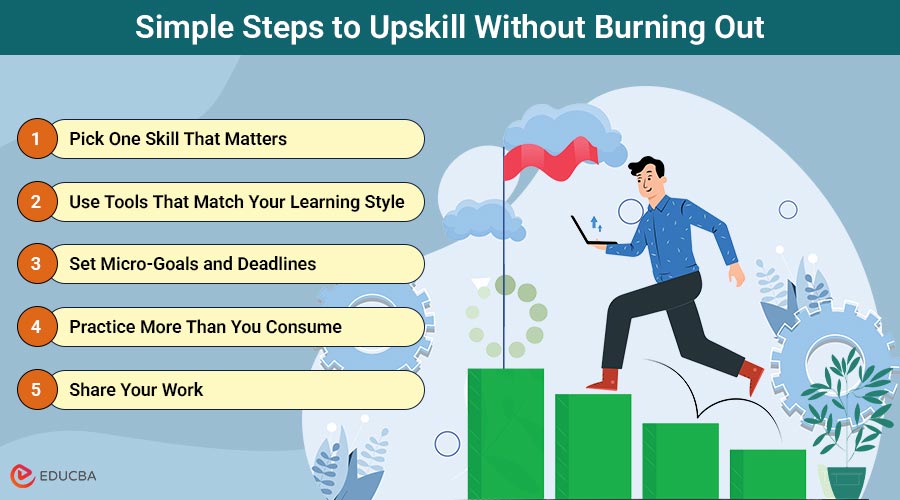
Simple Steps to Upskill Without Burning Out
Follow these practical, stress-free tips to build new skills at your own pace without feeling overwhelmed or exhausted.
1. Pick One Skill That Matters
Begin by selecting a skill that aligns with your current objectives. Do not learn for the sake of it. Pick something that solves a problem or unlocks a new opportunity. Ask yourself:
- What do people in your target job or industry know that you don’t?
- What keeps coming up in job listings?
- What is the one thing that would make your current job easier?
A software tester in Leeds said, “I kept hearing about API testing in interviews. I finally sat down with Postman tutorials, practiced for a few weeks, and now I can handle API calls like second nature.” Pick one skill. Stick to it. That focus builds confidence fast.
2. Use Tools That Match Your Learning Style
Some people like watching videos. Others prefer reading or doing. Match your tool to your style. Try:
- YouTube for walkthroughs
- Coursera or Udemy for guided courses
- Books or blogs for deeper reading
- Practice platforms like Codecademy, Figma, or Canva
Do not fall for the trap of signing up for five courses at once. Pick one and finish it. Completion matters more than collection.
3. Set Micro-Goals and Deadlines
Big goals like “learn to code” or “become a better public speaker” are too vague. Break them down. Make goals small and measurable. For example:
- Watch one lesson per day
- Build one sample project per week.
- Record one 3-minute video to practice your speaking skills.
Use a calendar or habit tracker to keep it visible. Small wins stack up over time.
One junior designer said, “I gave myself a 30-day rule. If I did not use a tool in 30 days, I would stop learning it. It kept me honest and focused.”
4. Practice More Than You Consume
Do not just watch videos or read articles; instead, engage with them. Apply what you learn right away. If you are learning to write, start by publishing blog posts. For Excel, rebuild real spreadsheets; for data, create charts using public datasets.
Repetition builds real skill. Passive learning gives you confidence, but active doing gives you results. A manager from Glasgow said, “I thought I knew Power BI after a course. But I did not get it until I built dashboards for my team’s weekly numbers.”
5. Share Your Work (Even If It Is Not Perfect)
Start a blog. Post to LinkedIn. Build a mini-portfolio. Share small wins and what you are learning. You do not need to go viral. Just put your progress out there. People will notice consistency more than polish.
And if something goes wrong — like a project gets copied or misused — remember, you can clean things up. Sometimes people even ask, Can you ask a newspaper to remove an article that misquotes them? The answer is yes, and the same goes for other content platforms. Just stay professional in your approach.
6. Make Room for Rest and Reflection
Learning too much at once can cause burnout. Your brain needs rest to process new information. Take breaks between sessions. Walk. Journal. Talk about what you learned with a friend or co-worker. Once a week, ask yourself:
- What did I learn?
- What was hard?
- What felt exciting?
- What’s next?
This reflection keeps you motivated and prevents you from drifting. A tech recruiter from Bristol said, “I take Sunday nights to list what I learned that week. It reminds me how far I have come. That habit got me through my Python course without quitting.”
7. Do Not Compare Yourself to Internet Experts
Some people on social media make it look easy. They post perfect projects and fast progress. But they do not show the boring middle. Focus on your own pace. Everyone starts somewhere. And the people who keep showing up usually win in the long run.
One UX designer from London said, “I used to feel behind because I was not posting every day. Then I realised my best work happened offline. When I finally shared it, I had real proof of skill.” Use others for inspiration, not pressure.
8. Build a Support System
Learning can be lonely. Find a study buddy, join a course group, or discuss your progress with peers. Accountability helps you stay on track. It also makes the process more fun.
Slack groups, Reddit threads, and Discord communities are good places to start. Just avoid getting stuck in endless discussions. Learn, share, and move.
Final Thoughts
Upskill without burning out by choosing one skill, setting clear goals, practicing actively, and resting regularly. Remember, learning is a journey — start small, stay consistent, and adjust as you go. In the fast-changing world, your ability to learn steadily is your greatest asset. So do not wait. Begin your upskilling journey today without the burnout.
Recommended Articles
We hope this guide on how to upskill without burning out helps you enhance your skills sustainably and maintain your well-being. Check out these recommended articles for practical tips and strategies to keep learning enjoyable and effective.


