


What is Upselling?
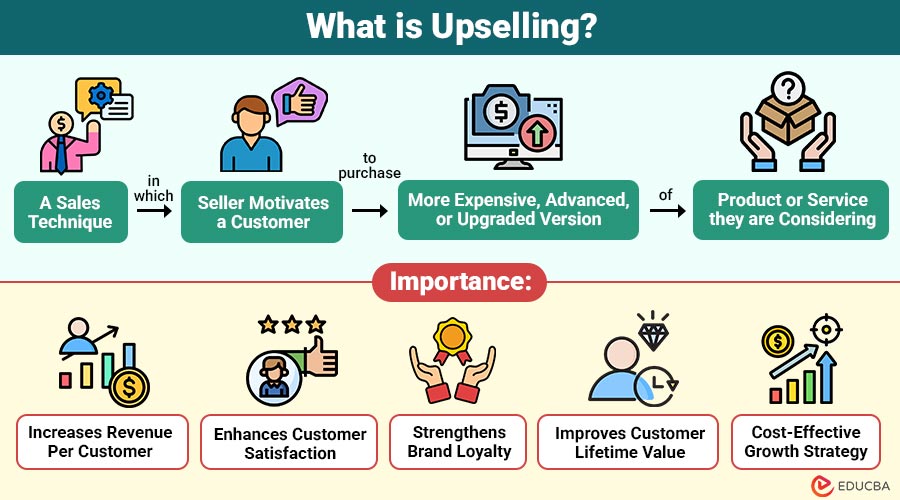
Upselling is sales technique in which a seller motivates a customer to purchase a more expensive, advanced, or upgraded version of the product or service they are considering. The primary objective is to increase average order value (AOV) and enhance the overall customer lifetime value (CLV).
For example:
- A smartphone retailer recommends upgrading from a 64GB model to a 128GB model for improved storage capacity.
- A restaurant recommends adding a side dish or premium beverage to complement the main course
Table of Contents:
- Meaning
- Importance
- Working
- Strategies
- Benefits
- Challenges
- Real-World Examples
- Upselling in Digital Platforms
Key Takeaways:
- Upselling boosts sales by offering customers premium options that genuinely enhance the value of the product or service.
- Successful upselling relies on understanding customer needs and presenting logical, benefit-focused upgrade suggestions.
- Ethical and personalized upselling builds long-term trust, satisfaction, and stronger customer-brand relationships.
- Technology-driven insights and timely offers make upselling more efficient, resulting in significantly higher conversion rates.
Why Upselling is Important?
Upselling is not just about sales—it is about customer experience and relationship building. When done ethically and strategically, it benefits both sides.
1. Increases Revenue Per Customer
Encouraging customers to upgrade products or services raises average order values, improving overall sales and long-term profitability.
2. Enhances Customer Satisfaction
Upselling helps customers discover better-quality options, enhancing their experience and ensuring they feel valued and well-informed.
3. Strengthens Brand Loyalty
When customers recognize genuine value in premium offerings, they trust your brand more and remain loyal over time.
4. Improves Customer Lifetime Value
Satisfied customers who trust your recommendations are more likely to return, purchase frequently, and spend more consistently.
5. Cost-Effective Growth Strategy
Retaining and upselling to existing customers is less costly than acquiring new ones, resulting in a higher ROI and sustainable growth.
How Upselling Works?
The upselling process typically follows these steps:
1. Understand Customer Needs
Identify what matters most to the customer by analyzing their preferences, challenges, and motivations to offer genuinely relevant upgrade options.
2. Offer a Logical Upgrade
Present a well-matched upgrade that enhances customer goals—like better performance, added convenience, or long-term value—aligned with their existing purchase intent.
3. Communicate Value Clearly
Highlight the upgrade’s real benefits, not just technical features, focusing on how it improves the customer’s experience and fulfills their specific needs.
4. Use Timing Wisely
Introduce the upsell when the customer is most engaged—typically during checkout or immediately after they have shown strong buying interest or intent.
5. Avoid Pressure
Ensure the upselling approach is ethical and customer-centric, guiding buyers toward better options without creating discomfort or unnecessary sales pressure.
Effective Upselling Strategies
Here are some proven strategies to help businesses maximize sales and enhance customer satisfaction through smart, value-driven upselling techniques.
1. Understand Customer Behavior
Analyze customer preferences, purchase patterns, and past transactions to tailor upgrade suggestions that match their unique needs and interests.
2. Highlight Value, Not Just Price
Emphasize benefits over cost by clearly showing how the upgrade improves performance, durability, or convenience for a small extra investment.
3. Use Product Comparisons
Display side-by-side comparisons to help customers easily see the added benefits, quality, and value of premium options or upgrades.
4. Bundle Premium Features
Create bundled packages combining upgrades at discounted rates to increase perceived value and encourage customers to choose higher-tier plans.
5. Train Sales Teams
Equip sales teams to identify upselling opportunities naturally through meaningful conversations rather than relying on generic, scripted pitches.
6. Leverage Technology
Utilize CRM systems, analytics, and AI-driven insights to recommend the most relevant and personalized upgrade offers for every customer.
7. Offer Limited-Time Promotions
Use urgency-based offers, such as “Upgrade now and save 10%,” to encourage faster decisions and increase conversion rates effectively.
8. Post-Purchase Upselling
Send personalized follow-up emails suggesting complementary upgrades, premium features, or service enhancements to customers after their initial purchase.
Benefits of Upselling
Here are the benefits that upselling offers for both businesses and customers, driving profitability and long-term satisfaction.
For Businesses:
1. Higher Profit Margins
Selling premium or upgraded versions increases revenue per sale, offering better profit margins and overall financial growth opportunities.
2. Improved Customer Retention
Customers who see genuine value and satisfaction from upgrades are more likely to return and remain loyal to your brand.
3. Efficient Sales Process
Upselling to existing customers is faster, easier, and more cost-effective than acquiring entirely new customers for similar profits.
4. Better Inventory Management
Encouraging sales of high-value or slow-moving items helps balance inventory levels and optimize stock utilization efficiently.
For Customers:
1. Better Experience
Upgraded products or services provide enhanced features, improved performance, and a more satisfying overall user experience.
2. Long-Term Savings
Premium-quality items typically last longer, reduce maintenance costs, and offer better value for money over time.
3. Increased Satisfaction
Customers feel happier and more confident knowing they’ve chosen products that deliver superior quality, comfort, and long-term benefits.
4. Timing the Offer Correctly
An upsell presented too early may seem pushy, while offering it too late can result in a missed opportunity.
Challenges of Upselling
Despite its advantages, upselling requires careful handling.
1. Risk of Overwhelming Customers
Offering too many upgrade options at once can confuse or frustrate customers, leading them to abandon the purchase altogether.
2. Balancing Value and Profit
Focusing too much on profit without demonstrating real customer value can make upselling appear manipulative or insincere.
3. Timing the Offer Correctly
Presenting an upsell too early or too late in the buying journey can reduce its effectiveness and annoy potential buyers.
4. Lack of Personalization
Generic upsell recommendations fail to connect with customer needs, lowering the chances of conversion and customer satisfaction.
5. Insufficient Sales Training
If sales teams are not trained to upsell ethically and naturally, they may come across as pushy or inauthentic to customers.
Real-World Examples of Successful Upselling
Here are some notable examples of how top brands effectively use upselling to boost sales, enhance customer satisfaction, and strengthen brand loyalty.
1. Apple
Apple’s upselling strategy is subtle yet powerful. When buying an iPhone, Apple highlights the advantages of the next higher model (e.g., a better camera, longer battery life, or a faster processor). Their website uses comparison tables to encourage upgrades.
2. Starbucks
Starbucks baristas often suggest upgrading drink sizes or adding flavors—simple yet highly profitable upsells that enhance the customer experience.
3. SaaS Companies
Platforms like HubSpot or Canva use tiered pricing (Basic, Pro, Enterprise) to encourage users to upgrade to premium subscriptions that offer automation or advanced analytics.
Upselling in Digital Platforms
Here are some common ways digital businesses successfully apply upselling strategies to enhance user experience and boost revenue.
1. E-commerce
Online stores utilize algorithms to recommend higher-value products or premium shipping options during the checkout process.
2. Subscription Services
Music, streaming, and software subscriptions upsell through added features such as ad-free viewing, offline downloads, or extended storage.
3. Hospitality
Hotels often upsell by offering room upgrades, late checkouts, or additional amenities during the booking process.
Final Thoughts
Upselling is far more than a revenue-boosting technique—it is a relationship-building tool that enhances customer experience and brand trust. When executed thoughtfully, it leads to mutual value creation: businesses achieve higher profitability while customers enjoy better products and services. In a customer-first era, ethical and data-driven upselling is the key to sustainable growth.
Frequently Asked Questions (FAQs)
Q1. Is upselling manipulative?
Answer: Not if done ethically. True upselling focuses on helping customers find a better solution, not tricking them.
Q2. How does upselling benefit customers?
Answer: It introduces them to options that provide more value, convenience, or satisfaction in the long term.
Q3. What is the best time to upsell?
Answer: During checkout, at renewal, or after the customer has identified satisfaction with the initial purchase.
Q4. How can technology improve upselling?
Answer: Technology like AI and CRM tools personalizes recommendations, tracks customer behavior, and boosts relevance, satisfaction, and conversion rates.
Recommended Articles
We hope that this EDUCBA information on “Upselling” was beneficial to you. You can view EDUCBA’s recommended articles for more information.

