


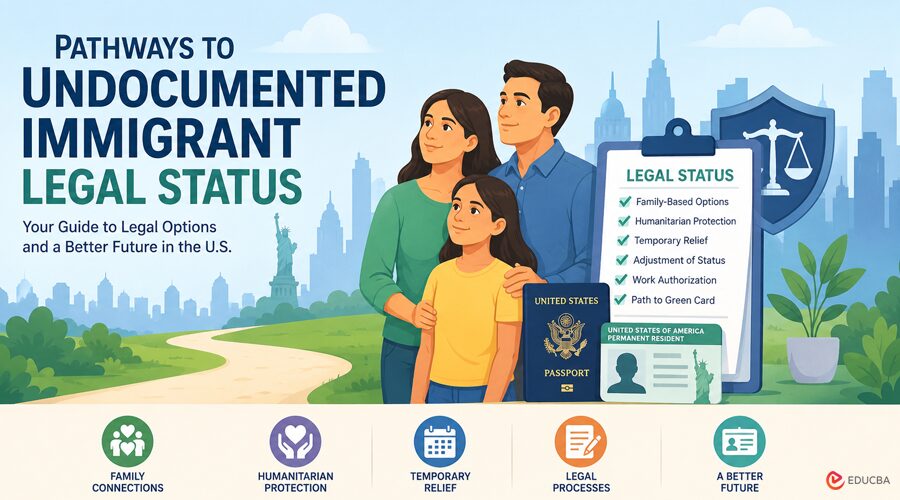
If you are living in the United States without legal status, you are probably feeling some uncertainty about what comes next. You may have built a life here, raised children, worked, and gone to school here. At the same time, you may worry about what could happen if you are stopped, if immigration rules change, or if you try to fix your status and make a mistake. The first thing to understand is that there is no single path to Undocumented Immigrant Legal Status that works for every undocumented immigrant. Your options depend on many details, including how you entered the United States, how long you have been here, and whether you have family members who are U.S. citizens.
Then there are additional factors, such as whether you have been a victim of certain crimes or fear returning to your home country. All of this feels overwhelming. It also means you may have options for obtaining Undocumented Immigrant Legal Status. Some people really do have a path to lawful status, while others may have a more difficult road. It is helpful to turn over every stone in the process.
Start With Your Immigration History
Before you can know what options may exist, you need to understand your own immigration history as clearly as possible. That means looking at all of the following:
- How you entered the country
- Whether you were inspected at the border
- Whether you have ever had a visa
- Whether you overstayed
- Whether you were ever placed in removal proceedings.
Immigration law treats different situations differently. Someone who entered the U.S. with a visa and stayed longer than allowed may have different options than someone who entered the country without going through immigration checks. Likewise, someone who has a prior deportation order may face different risks than someone who has never been in immigration court. Understanding these details is an essential first step toward Undocumented Immigrant Legal Status.
Talk With an Immigration Attorney
Because the rules are so detailed, you will want to speak with an immigration attorney before you submit forms or pay fees. It may seem easier to search online or listen to someone who faced a similar situation. The problem is that “similar” is not the same as “the same.” One small difference in your history can change the safest path forward.
A good immigration attorney can review your full situation and explain your options for obtaining Undocumented Immigrant Legal Status. This is important, as applying for the wrong benefit can sometimes put you on the government’s radar. In other cases, you may need to fix one issue before moving forward with another.
Family-Based Options
For many people, family is the first place to look for a possible path. Having a spouse, parent, or adult child who is a U.S. citizen or lawful permanent resident may give you a path to legal status. However, having a qualifying family member does not always mean the process will be easy. Some people may be able to apply for a green card through adjustment of status from inside the United States.
“For many individuals already living in the U.S., adjustment of status provides a pathway to lawful permanent residency without leaving the country,” attorney Robert M. Bell explains. “These cases require careful planning, precise filings, and attention to timing.”
Adjustment of status can be a powerful route to Undocumented Immigrant Legal Status when it is available, but not everyone qualifies. If you are not eligible to adjust status inside the United States, you may need to explore other options, which can sometimes include consular processing and waiver planning.
Qualifying for Humanitarian Protection
Family-based immigration is not the only possible path. Some undocumented immigrants may qualify for humanitarian forms of protection, depending on their experiences. Examples include:
- People who fear persecution in their home country may need to ask about asylum or related protections.
- People who were victims of certain crimes may qualify for a U visa if they helped law enforcement.
- Victims of human trafficking may need to ask about a T visa.
- Some survivors of abuse by certain U.S. citizens or lawful permanent resident family members may have options under VAWA.
These cases can be deeply personal, and they often require strong evidence. You may need police reports, medical records, court records, personal statements, country condition information, letters from counselors, etc.
Temporary Protection While Pursuing Undocumented Immigrant Legal Status
Some people may not have a direct path to a green card right away, but they may qualify for temporary protection or permission to remain in the United States. Temporary Protected Status (TPS) may be available to people from certain countries during specific periods if conditions in those countries meet the legal requirements. DACA has also helped some people who came to the United States as children, though rules and availability can change.
It is worth mentioning that temporary protection is not the same as permanent residence. It may not solve everything, and it may depend on government decisions outside your control. Still, it can sometimes provide work authorization and give you time to plan for the future.
Final Thoughts
Becoming legal in the United States as an undocumented immigrant depends on your specific situation. The most important thing is not to make assumptions or rush. Your future is too important to rely on guesses. With the right legal guidance, you can understand your options for Undocumented Immigrant Legal Status and take the right steps for yourself and your family.
Recommended Articles
We hope this guide on Undocumented Immigrant Legal Status helps you understand the available pathways to lawful status in the United States. Explore these recommended articles for more insights on U.S. immigration, green cards, visas, asylum, and adjustment of status.

