
What is UGC Marketing?
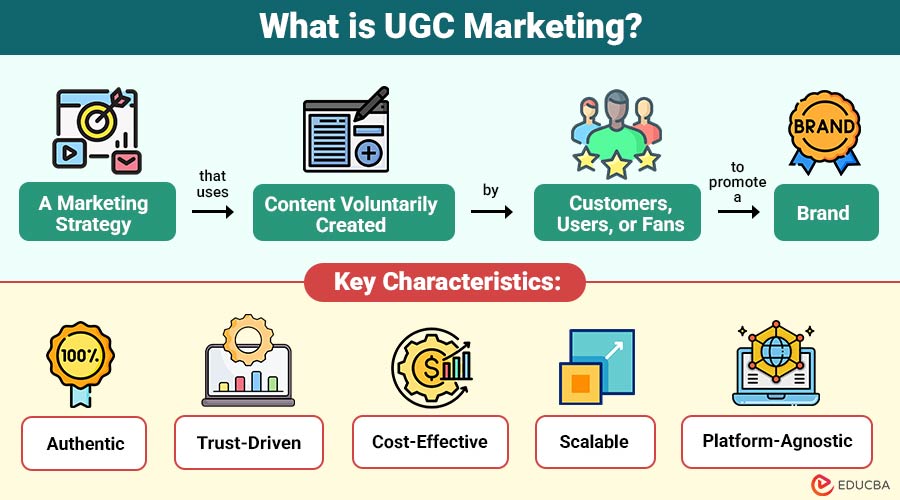
UGC (User-Generated Content) marketing is a marketing strategy that uses content voluntarily created by customers, users, or fans to promote a brand. Instead of brands producing all promotional material themselves, they encourage audiences to share experiences, opinions, photos, videos, and reviews related to their offerings.
This content is then shared across digital platforms such as websites, social media, email campaigns, and advertisements to build trust and authenticity.
Table of Contents:
- Meaning
- Key Characteristics
- Types
- Why UGC Marketing Matters?
- Benefits
- Working
- Strategies
- Use Cases
- Real-World Examples
- Challenges
- Metrics to Measure UGC Marketing Success
Key Takeaways:
- UGC marketing builds strong trust by leveraging authentic customer voices that influence decisions more effectively than traditional advertising.
- It is a highly cost-effective strategy that enables brands to scale content creation without heavy production investments.
- Strategic UGC distribution across platforms boosts engagement, conversions, brand loyalty, and long-term community growth.
- Measuring engagement, conversions, sentiment, and participation ensures continuous optimization and sustainable UGC marketing success.
Key Characteristics of UGC Marketing
Here are the key characteristics that define UGC marketing and make it highly effective for modern brands.
1. Authentic
Created by real users rather than brands, delivering genuine content that feels relatable, honest, and more emotionally engaging for audiences.
2. Trust-Driven
Builds credibility by showcasing real customer experiences, peer recommendations, and social proof that strongly influence purchasing decisions.
3. Cost-Effective
Reduces marketing expenses by leveraging customer-generated content instead of investing heavily in professional production resources.
4. Scalable
Grows organically as more users contribute content, increasing reach, visibility, and engagement without significant additional effort.
5. Platform-Agnostic
Functions effectively across social media platforms, websites, email campaigns, and paid advertisements without losing impact.
Types of User-Generated Content
UGC comes in many formats, each serving a unique marketing purpose.
1. Social Media Posts
Photos, videos, reels, and stories shared by users showcase real brand experiences across platforms like Instagram, TikTok, Facebook, and Twitter.
2. Customer Reviews and Ratings
Customer feedback on platforms such as Google, Amazon, TripAdvisor, and app stores influences buyer trust and purchase decisions.
3. Video Testimonials
Customer-created videos where users describe authentic experiences, satisfaction levels, and benefits after using a product or service are available on public online platforms.
4. Unboxing and Product Demos
Videos showcasing product packaging, features, and usage are commonly shared by influencers and customers on YouTube and Instagram to support brand discovery.
5. Blog Posts and Case Studies
Long-form written content where users share detailed experiences, results, and opinions on blogs or community websites for deeper brand insights.
6. Community Q&A and Discussions
User-driven conversations where people ask questions, share advice, and solve problems together in online communities like Reddit, Quora, Discord, and forums.
Why UGC Marketing Matters?
Here are the key reasons why user-generated content plays a crucial role in building trust, engagement, and long-term brand success.
1. Higher Consumer Trust
Consumers trust peer recommendations more than brand ads, perceiving real experiences as credible, unbiased, and relatable across platforms today.
2. Stronger Engagement
Authentic content drives higher engagement by resonating emotionally, sparking conversations, encouraging sharing, and sustaining attention longer across channels online consistently.
3. Better Conversions
UGC improves conversion rates and purchase confidence by reducing uncertainty, validating value, addressing objections, and clearly and effectively showcasing real usage.
4. Brand Loyalty Growth
User-generated stories build long-term brand loyalty by fostering trust, emotional bonds, recognition, and ongoing advocacy beyond transactions with customers worldwide.
5. Community Building
UGC encourages community participation by inviting contributions, rewarding creators, amplifying voices, strengthening belonging, and co-creating brand culture together organically and sustainably.
Benefits of UGC Marketing
Below are the key benefits of UGC marketing that help brands build trust, drive engagement, and achieve sustainable growth.
1. Builds Trust and Credibility
UGC builds trust and credibility by reflecting real customer experiences, making brand messaging feel authentic, transparent, and believable.
2. Increases Engagement
User-generated content increases engagement as audiences relate to real stories, interact more frequently, and actively share content across platforms.
3. Improves Conversion Rates
Seeing real customers use products reduces hesitation, answers doubts, builds confidence, and motivates prospects to complete purchases.
4. Cost-Effective Content Creation
UGC reduces content creation costs by leveraging customer contributions, saving brands time, resources, and ongoing production expenses.
5. Strengthens Brand Community
UGC strengthens brand community by encouraging participation, recognition, advocacy, and emotional connections between users and brands.
6. Enhances SEO and Social Reach
Fresh, keyword-rich UGC boosts SEO rankings, increases social reach, improves discoverability, and drives organic traffic consistently.
How does UGC Marketing Work?
Here is a step-by-step overview of how UGC marketing functions, from encouraging creation to measuring performance and impact.
Step 1: Encourage Content Creation
Brands encourage content creation using hashtags, challenges, contests, reviews, incentives, and rewards to motivate users to share experiences.
Step 2: Collect and Curate Content
User-generated content is collected, reviewed for quality, approved for relevance, and organized by campaign or platform.
Step 3: Obtain Usage Rights
Brands secure legal usage rights by requesting permissions, ensuring compliance, and protecting intellectual property before reuse.
Step 4: Distribute Across Channels
UGC is distributed across social media, websites, advertisements, emails, landing pages, and other digital marketing touchpoints.
Step 5: Measure Performance
Performance is measured by tracking engagement, reach, conversions, sentiment, and ROI to optimize future UGC strategies.
UGC Marketing Strategies
Below are proven UGC marketing strategies that help brands encourage participation, amplify reach, and drive authentic customer engagement.
1. Hashtag Campaigns
Hashtag campaigns encourage users to share branded content, increase discoverability, build community participation, and amplify organic social reach.
2. Social Media Challenges
Social media challenges gamify participation, spark creativity, boost virality, and motivate users to create shareable, trend-driven content.
3. Customer Review Programs
Customer review programs incentivize honest feedback through rewards, boosting credibility, trust, and purchase decisions across platforms.
4. Influencer-Assisted UGC
Influencer-assisted UGC leverages micro-influencers to create relatable, authentic content that resonates strongly with niche audiences.
5. Community Features
Community features showcase customer stories on websites and product pages, building trust, engagement, and social proof.
6. UGC-Powered Ads
UGC-powered ads repurpose high-performing user content into paid campaigns, improving ad authenticity, engagement, and conversion rates.
Use Cases of UGC Marketing
Here are common use cases where UGC marketing delivers a strong impact by showcasing real experiences across different industries.
1. E-commerce
Product reviews, customer photos, unboxing videos, and real usage demonstrations that build trust and influence purchase decisions.
2. Travel & Hospitality
Guest photos, travel reels, testimonials, and experience stories that showcase authenticity and inspire future bookings.
3. SaaS
User testimonials, success stories, case studies, and review snippets highlighting real-world results and product value.
4. Fashion & Beauty
Try-on videos, tutorials, before-and-after content, and styling posts created by real customers and creators.
5. Mobile Apps
App store reviews, screen recordings, feature walkthroughs, and user feedback demonstrating usability and benefits.
Real-World Examples
Below are notable real-world examples that show how leading brands successfully use user-generated content to build trust and engagement.
1. Starbucks
Starbucks encourages customers to share branded hashtag photos, featuring authentic UGC on social channels to strengthen community engagement.
2. GoPro
GoPro builds marketing around user-shot adventure videos, showcasing real performance, durability, creativity, and inspiring action-packed storytelling globally.
3. Airbnb
Airbnb uses guest-generated photos and reviews to build trust, highlight authentic stays, and inspire confident travel decisions.
4. Nike
Nike leverages athlete- and customer-created content to promote motivation, inclusivity, performance, and a strong global brand community.
Challenges of UGC Marketing
Below are the key challenges brands face when implementing UGC marketing, along with the considerations needed to manage them effectively.
1. Quality Control
UGC quality varies widely, making it challenging for brands to maintain consistency, professionalism, and visual standards across campaigns.
2. Legal and Copyright Issues
Brands must obtain proper permissions before reusing UGC to avoid copyright violations, legal disputes, and compliance risks.
3. Brand Alignment
Not all user content aligns with brand values, tone, or messaging, requiring careful selection and thoughtful curation.
4. Negative Content
To preserve consumer trust and safeguard brand reputation, negative reviews and criticism need to be handled professionally.
5. Content Moderation
Effective moderation processes are required to filter inappropriate, misleading, or harmful content before public distribution.
Metrics to Measure UGC Marketing Success
Here are the key metrics used to evaluate the effectiveness, engagement, and overall impact of UGC marketing campaigns.
1. Engagement Rate
Engagement rate measures likes, shares, and comments to evaluate how actively audiences interact with user-generated content.
2. Conversion Rate
Conversion rate measures how well user-generated content (UGC) persuades users to take desired actions, such as joining or making purchases.
3. Click-Through Rate
CTR measures how often users click UGC-based links, indicating the relevance, appeal, and effectiveness of the call to action.
4. Cost Per Acquisition
CPA evaluates the cost-efficiency of UGC campaigns by measuring the cost per customer acquisition.
5. Brand Sentiment Analysis
Brand sentiment analysis assesses audience emotions and perceptions expressed through comments, reviews, and conversations around UGC.
6. User Participation Volume
User participation volume tracks the number of contributors, submissions, and interactions, reflecting overall community involvement and campaign success.
Final Thoughts
UGC marketing is a powerful, trust-driven strategy that aligns perfectly with modern consumer behavior. By amplifying real voices, brands can create authentic connections, drive engagement, and achieve sustainable growth. When implemented strategically and ethically, UGC marketing transforms customers into advocates and communities into long-term assets.
Frequently Asked Questions (FAQs)
Q1. Is UGC marketing suitable for small businesses?
Answer: Yes, it is highly cost-effective and ideal for small brands with limited marketing budgets.
Q2. Do brands need permission to use UGC?
Answer: Yes, explicit consent is required to legally reuse user content.
Q3. Can UGC be used in paid advertising?
Answer: Yes, with proper permissions, UGC often outperforms traditional ad creatives.
Q4. Which platforms are best for UGC marketing?
Answer: Instagram, TikTok, YouTube, review platforms, and brand websites are most effective.
Recommended Articles
We hope that this EDUCBA information on “UGC Marketing” was beneficial to you. You can view EDUCBA’s recommended articles for more information.

