
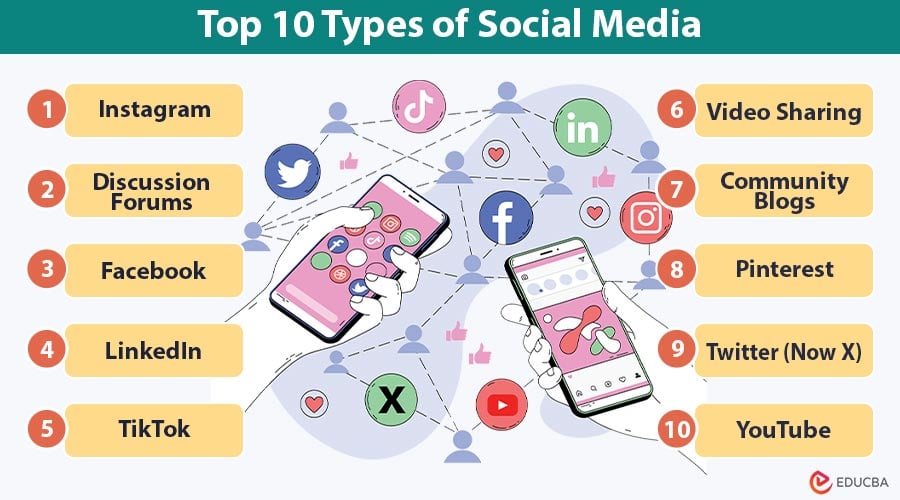
Introduction to Types of Social Media
Types of social media classify platforms based on their primary purpose, content format, and user interaction style. They range from visual sharing apps like Instagram to professional networks like LinkedIn, discussion forums, video platforms, and community blogs. Each type serves unique communication, marketing, and engagement needs, helping individuals and businesses connect, share information, and build online presence effectively.
Top 10 Types of Social Media
Here are the top 10 types of social media platforms, their key features, use cases, pros and cons, and real-world examples to help you understand how each works.
1. Instagram
Instagram is an aesthetically motivated social media platform centered on photo and video sharing. Known for Stories, Reels, and e-commerce integration, it is popular for lifestyle storytelling, personal branding, and influencer marketing across diverse industries.
Key Features:
- Image and video posts with captions and hashtags
- Instagram Stories (24-hour disappearing content)
- Reels for short-form video content
Use Cases:
- Personal branding
- Influencer marketing
- Visual product promotion
Pros:
- High visual engagement
- Strong influencer ecosystem
- Integrates e-commerce
Cons:
- Algorithm changes can limit reach
- Highly competitive space
- Time-consuming content creation
2. Discussion Forums
Discussion forums are online communities enabling users to post questions, share experiences, and exchange ideas in topic-specific threads. Platforms like Reddit and Quora foster deep engagement, collaborative problem-solving, and long-form knowledge sharing for niche interests.
Key Features:
- Threaded conversations
- Voting or ranking systems for answers
- Topic-specific categories
Use Cases:
- Technical support and troubleshooting
- Hobby and interest-based communities
- Product reviews and recommendations
Pros:
- Deep, topic-focused engagement
- Long-form knowledge sharing
- Community-driven problem-solving
Cons:
- Limited multimedia integration
- Discussions can become outdated
- Quality varies
3. Facebook
Facebook is a versatile platform blending personal networking, community groups, events, marketplace features, and business pages. It connects diverse audiences globally, supporting marketing campaigns, social interaction, and brand engagement through multimedia posts, targeted ads, and live streaming. Effective Facebook ad design is also key to capturing attention and driving engagement, ensuring your campaigns reach the right audience.
Key Features:
- Status updates, photos, and videos
- Groups and events
- Marketplace for buying and selling
- Facebook Live streaming
Use Cases:
- Brand marketing campaigns
- Community building
- Event promotion
Pros:
- Large, diverse user base
- Strong advertising targeting options
- Multiple content formats for engagement (text, video, live)
Cons:
- Declining organic reach
- Privacy concerns
- High competition for user attention
4. LinkedIn
LinkedIn is the premier professional networking site designed for career growth, B2B marketing, and industry insights. It enables professionals to connect, share expertise, and explore job opportunities while fostering thought leadership through posts, articles, and company pages.
Key Features:
- Professional profiles and resumes
- Company pages
- Articles and posts sharing
- Job listings and recruitment tools
Use Cases:
- Networking and recruitment
- B2B marketing
- Thought leadership
Pros:
- High-value professional audience
- Strong B2B reach
- Effective platform for thought leadership and industry authority
Cons:
- Less effective for casual consumer brands
- Content engagement can be slower
- Paid advertising can be costly for small businesses
5. TikTok
TikTok is a short-form video platform driven by trends, challenges, and creative storytelling. Its algorithm promotes rapid content discovery, making it ideal for viral marketing, brand engagement, and reaching younger demographics with entertaining, fast-paced visual content.
Key Features:
- 15 to 60-second videos (now up to 10 minutes in some cases)
- Extensive music and effects library
- For You Page (FYP) algorithm for content discovery
Use Cases:
- Viral marketing
- Brand storytelling through trends
- Engaging Gen Z audiences
Pros:
- High organic reach potential
- Trend-driven engagement
- Strong creative tools for highly engaging visual storytelling
Cons:
- Short content lifespan
- Requires constant trend adaptation
- Limited appeal for some older demographics and niche industries
6. Video Sharing
General video-sharing platforms like Vimeo, Dailymotion, and Twitch offer hosting, live streaming, and category-based viewing. They cater to creative professionals, educators, and entertainers seeking to share tutorials, films, and live broadcasts with diverse online audiences.
Key Features:
- Video hosting and embedding
- Categories for various topics
- Live streaming options
Use Cases:
- Content marketing
- Tutorials and educational videos
- Entertainment streaming
Pros:
- Versatile content formats
- Broad audience reach
- Opportunities for monetization through ads, subscriptions, or donations
Cons:
- High production time for quality content
- Competition with major platforms
- Bandwidth and storage costs for hosting large video libraries
7. Community Blogs
Community blogs are collaborative publishing platforms where multiple authors share content on shared domains. Sites like Medium encourage diverse perspectives, niche community growth, and interactive knowledge sharing through articles, stories, and topic-specific discussions.
Key Features:
- Multiple author contributions
- Categorized topics
- Comment sections for reader interaction
Use Cases:
- Knowledge sharing
- Collaborative journalism
- Niche community building
Pros:
- Shared audience growth
- Diverse perspectives
- Opportunities for networking and collaboration
Cons:
- Quality control challenges
- Requires moderation
- Content inconsistency due to varied writing style
8. Pinterest
Pinterest is a visual discovery tool for inspiration, planning, and idea organization. With pinboards, searchable content, and shoppable links, it is a favorite for lifestyle, design, DIY projects, and driving traffic to e-commerce sites.
Key Features:
- Pinboards for organizing ideas
- Searchable visual content
- Shoppable Pins for e-commerce
Use Cases:
- Product discovery
- Event planning inspiration
- Driving website traffic
Pros:
- Strong search-based traffic potential
- Long content lifespan
- Highly targeted audience for niche markets
Cons:
- Less suited for real-time engagement
- Requires high-quality visuals
- Limited interaction formats beyond likes, comments, and saves
9. Twitter (Now X)
Twitter is a microblogging network known for real-time updates, trending topics, and concise communication. It facilitates instant engagement, breaking news dissemination, and thought leadership through short posts, hashtags, and interactive live audio sessions.
Key Features:
- 280-character posts (tweets)
- Hashtags and trending topics
- Spaces for live audio conversations
Use Cases:
- Real-time news sharing
- Customer service interactions
- Brand announcements
Pros:
- Fast-paced engagement
- Great for thought leadership
- Strong potential for viral reach through retweets and trends
Cons:
- Limited character space
- Short content lifespan
- Risk of negative publicity due to rapid information spread
10. YouTube
YouTube is the largest global video-sharing platform, functioning as both a search engine and an entertainment hub. It supports long-form content, monetization, tutorials, and brand storytelling, offering vast audience reach and long-term discoverability for creators.
Key Features:
- Channel subscriptions
- Video monetization via ads
- Playlists and live streaming
Use Cases:
- Educational tutorials
- Entertainment channels
- Brand video marketing
Pros:
- Massive audience reach
- Long-term discoverability
- Multiple monetization opportunities
Cons:
- High competition
- Requires consistent uploads
- Time-intensive production process for quality content
Final Thoughts
Social media has diversified into distinct categories, each catering to specific audience behaviors, content formats, and marketing goals. From Instagram’s visual appeal to LinkedIn’s professional edge, the right platform depends on your objectives and target audience. A smart digital strategy often blends multiple types for maximum reach and engagement.
Frequently Asked Questions (FAQs)
Q1. Which type of social media is best for brand awareness?
Answer: Instagram, TikTok, and YouTube excel in brand awareness due to high engagement and visual appeal.
Q2. Which platform is best for professional networking?
Answer: LinkedIn remains the leading platform for professional networking and B2B marketing.
Q3. Which social media platform has the longest content lifespan?
Answer: Pinterest and YouTube offer the longest visibility for content compared to fast-paced networks like Twitter or TikTok.
Q4. Which platform is most cost-effective for small businesses?
Answer: TikTok and Instagram can be cost-effective due to their potential for high organic reach, while Facebook Ads allow precise targeting with flexible budget control.
Recommended Articles
We hope that this EDUCBA information on “Types of Social Media” was beneficial to you. You can view EDUCBA’s recommended articles for more information.


