
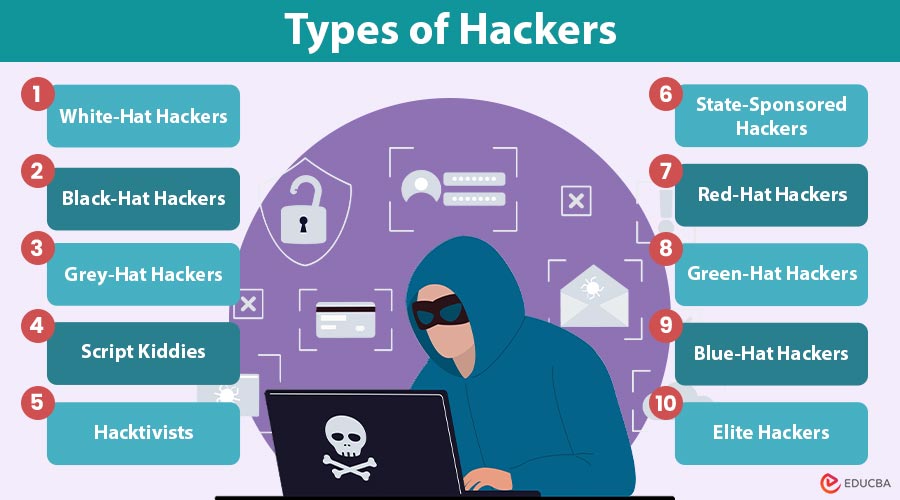
Introduction to Types of Hackers
Types of hackers refer to the various categories of individuals skilled in breaking into computer systems, each with different intentions and expertise. While some hackers, like white-hats, focus on strengthening cybersecurity, others, like black-hats, exploit vulnerabilities for malicious purposes. Understanding the types of hackers is crucial for enhancing digital security, identifying potential threats, and recognizing the importance of ethical hacking in protecting data and networks.
Different Types of Hackers
Mentioned below are the different types of hackers, each defined by their intent, skills, and approach to cybersecurity.
#1. White-Hat Hackers
White-hat hackers are authorized cybersecurity professionals who detect and fix system vulnerabilities to prevent cyberattacks. They perform penetration testing, adhere to strict ethical guidelines, and are often certified, such as CEH (Certified Ethical Hacker).
Characteristics:
- Collaborate with organizations to test and enhance their cybersecurity systems.
- Utilize resources such as vulnerability scanning and penetration testing.
- Operate under strict ethical and legal guidelines.
#2. Black-Hat Hackers
Black-hat hackers are cybercriminals who exploit security flaws for malicious purposes, including data theft, financial fraud, or selling stolen information. They engage in illicit activities, including phishing, ransomware, and data breaches, for personal or monetary gain.
Characteristics:
- Operate illegally and often for financial gain.
- Utilize techniques such as ransomware attacks, data breaches, and phishing scams.
- Sell stolen data on dark web markets.
#3. Grey-Hat Hackers
Grey-hat hackers operate between the realms of ethical and malicious hacking. They discover and exploit vulnerabilities without permission, but usually without harmful intent. Although often seeking recognition or rewards, their activities can still be considered illegal or unauthorized.
Characteristics:
- May expose security flaws to the public without causing harm.
- Seek recognition or financial rewards by reporting vulnerabilities to companies.
- Their actions can still be considered illegal.
#4. Script Kiddies
Script kiddies are inexperienced hackers using pre-built hacking tools or scripts to perform attacks without understanding the underlying code. They target websites or systems for entertainment, mischief, or recognition, rather than with serious criminal intent.
Characteristics:
- Lack advanced programming skills.
- Depending on the tools created by professional hackers.
- Target websites or small systems for personal satisfaction.
#5. Hacktivists
Hacktivists are hackers driven by political, ideological, or social causes. They disrupt organizations or governments using defacement, DDoS attacks, and data leaks to promote activism, often associated with groups like Anonymous or similar cyber collectives.
Characteristics:
- Often target corporations, media, or government agencies.
- Use website defacements, data leaks, and DDoS attacks.
- Operate as part of activist groups.
#6. State-Sponsored Hackers
State-sponsored hackers are government-backed cyber operatives conducting espionage, sabotage, or surveillance. They target rival nations, corporations, or military systems, leveraging advanced resources, funding, and expertise to carry out cyberwarfare and intelligence-gathering operations.
Characteristics:
- Highly skilled and well-funded.
- Engage in cyberwarfare or intelligence gathering.
- Focus on targeting critical infrastructure, military systems, or corporations.
#7. Red-Hat Hackers
Characteristics:
- Act like vigilantes in cyberspace.
- May hack black-hat hackers’ systems to destroy their malware.
- Operate without formal authorization.
#8. Green-Hat Hackers
Green-hat hackers are beginners who are learning about hacking and cybersecurity tools. They spend time experimenting, joining online groups, and following tutorials to improve their skills. Since they are still learning, they usually do not cause much harm.
Characteristics:
- Spend time learning coding, networking, and hacking techniques.
- Often join online communities for guidance.
- Usually harmless due to limited knowledge.
#9. Blue-Hat Hackers
Organizations invite blue-hat hackers, who are external cybersecurity specialists, to test their software or systems for vulnerabilities. Often hired on a project basis, they participate in bug bounty programs and security audits before official product launches.
Characteristics:
- Similar to white-hats but work on a project basis.
- Often participate in bug bounty programs.
- Help organizations improve security before product release by providing detailed vulnerability reports.
#10. Elite Hackers
Elite hackers are very skilled computer experts who find unknown security flaws (zero-day bugs) and create advanced hacking tools. Other hackers, like black-hats or beginners (script kiddies), often use these tools. Elite hackers are considered top experts and usually stay ahead of normal cybersecurity protections.
Characteristics:
- Discover zero-day vulnerabilities.
- Develop tools later used by script kiddies or black-hats.
- Possess advanced knowledge that allows them to bypass even the most sophisticated security systems.
Real-World Implications of Hackers
Here are the key ways hackers impact cybersecurity, organizations, and society:
1. Cybersecurity Threats
2. Bug Bounties
3. Hacktivism and Awareness
Hacktivists use hacking to reveal wrongdoings, draw attention to social or political issues, and push organizations or governments to act fairly.
Final Thoughts
Understanding the different types of hackers is important for identifying cybersecurity threats and implementing robust defenses. While white-hats and blue-hats focus on protecting systems, black-hats and other malicious actors pose serious risks. Organizations and individuals can protect their data, implement ethical hacking techniques, and stay one step ahead of cybercriminals in the constantly evolving digital landscape by being aware of these categories.
Recommended Articles
We hope that this EDUCBA information on “Types of Hackers” was beneficial to you. You can view EDUCBA’s recommended articles for more information.


