


How to Transform Your Child’s Science Learning: From Confusion to Mastery with Simplified Teaching Methods
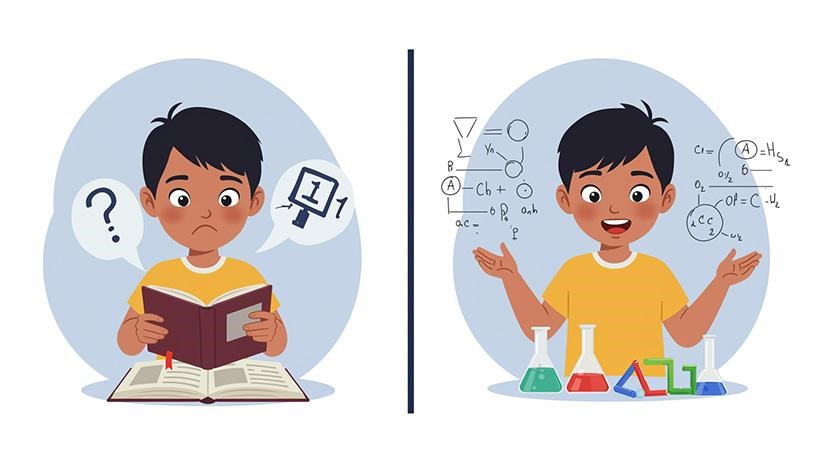
Picture this: Your 10-year-old child comes home from school, throws their science textbook on the table, and declares, “I hate science! Nothing makes sense!” Sound familiar? If you are nodding your head, you are not alone. Thousands of parents across Singapore witness this frustration daily, watching their bright children struggle with science concepts that seem unnecessarily complex.
The truth is, science does not have to be the academic mountain that many students perceive it to be. When we simplify complex concepts and build genuine understanding, any child can transform from a confused science student into a confident problem-solver ready to tackle even the most challenging exam questions. This article will show you how to transform your child’s science learning with proven, simplified teaching methods.
The Real Problem: Why Traditional Science Teaching Falls Short

Most students do not struggle with science because they lack intelligence or capability. They struggle because traditional teaching methods often present concepts in ways that feel disconnected from their everyday experiences. When a Primary 5 student learns about “gravitational force” but cannot connect it to why their ball falls when they drop it, the concept remains abstract and forgettable.
The disconnect becomes even more apparent during exams. Students might understand a concept when explained verbally, but they often struggle with open-ended questions that require applying their knowledge using specific scientific keywords and structured thinking.
Research from the National Institute of Education Singapore shows that students perform significantly better when they connect science concepts to real-world applications they can observe and experience themselves.
This finding aligns with what educators have discovered through teaching over 5,000 students: simplification and real-life connection are the keys to transform your child’s science learning.
The Simplified Science Framework: Breaking Down Complexity

To transform your child’s science learning, start by breaking down complex concepts into simple, connected, and digestible parts. Here is how this methodology works in practice:
Step 1: Start with the “Why”
Before diving into any concept, establish relevance. When teaching about photosynthesis, do not start with chemical equations. Start with: “Why do plants need sunlight to survive, and why should you care?” This immediately connects the abstract concept to observable reality.
Step 2: Use the Bridge Method
Connect new concepts to familiar experiences. For instance, when explaining electrical circuits, relate them to water flowing through pipes—something every child has observed. This creates a mental framework that makes the new information “stick.”
Step 3: Emphasize Scientific Keywords
Help students understand that science has its language, and using the correct terminology is not just about sounding smart—it is about communicating precisely. Instead of saying “plants make food,” teach them to say “plants produce glucose through photosynthesis.” This precision becomes crucial during examinations.
Real-Life Applications to Transform Your Child’s Science Learning
One of the most powerful ways to transform your child’s science learning is by making it visible in everyday life. Here are practical strategies that work:
Kitchen Science Laboratory
Your kitchen is a treasure trove of science concepts. When cooking with your child, point out:
- States of matter: Ice melting, water boiling, oil staying separate from water
- Chemical changes: Bread rising, eggs cooking, milk curdling
- Physical changes: Chopping vegetables, dissolving sugar.
Playground Physics
Transform playtime into learning opportunities:
- Forces in action: Swings demonstrating pendulum motion, slides showing friction
- Energy transfer: Potential to kinetic energy on see-saws
- Simple machines: Levers, ramps, and pulleys in playground equipment.
Garden Biology
Use plants and outdoor spaces to explore:
- Life cycles: Observing seed germination and plant growth
- Adaptation: Why do different plants have different leaf shapes
- Ecosystems: Food chains in your garden.
How Parents Can Help Transform Their Child’s Science Learning?

Parents often feel helpless when it comes to supporting their children’s science learning, especially if they do not have a strong science background themselves. However, you do not need to be a scientist to transform your child’s science learning. You need to be a learning partner.
Ask the Right Questions
Instead of providing answers, guide discovery:
- “What do you think would happen if…?”
- “How is this similar to something we’ve seen before?”
- “What evidence supports that idea?”
Create a Learning Environment
Establish routines that support science learning:
- Daily observation time: Spend 10 minutes discussing something scientific you have both noticed.
- Question journal: Keep a notebook of science questions that arise naturally.
- Experiment mindset: Approach household problems as opportunities to test hypotheses.
Exam Success Through Understanding
When students truly understand concepts rather than memorize facts, exam performance improves dramatically. Here is how simplified learning translates to exam success:
Answering Technique Mastery
Students who understand concepts can:
- Identify what the question is asking
- Use appropriate scientific vocabulary
- Structure answers logically
- Apply knowledge to unfamiliar situations.
Confidence Building
Understanding breeds confidence. When students know they can figure out answers rather than recall them, they approach exams with a problem-solving mindset rather than test anxiety.
Science Shifu’s science tuition programs specifically bridge the gap between confusion and mastery by using simplified teaching approaches, giving families both immediate homework support and long-term conceptual understanding.
The Technology Integration Factor
Modern science learning benefits significantly from technological tools that make abstract concepts visual and interactive. Research shows that students retain information 65% better when they can see, touch, and manipulate representations of scientific concepts.
However, technology should enhance, not replace, fundamental understanding. The goal remains the same: helping students develop scientific thinking skills that they can apply across various contexts.
Measuring Progress and Success
Transformation takes time, but you can notice real progress by observing:
Behavioral Changes
- Increased curiosity about everyday phenomena
- Willingness to attempt science homework independently
- Using scientific vocabulary in casual conversation
- Asking “why” and “how” questions spontaneously
Academic Improvements
- More detailed and accurate answers to assignments
- Improved performance on open-ended questions
- Better retention of concepts over time
- Increased confidence during science discussions.
Building Long-Term Science Success
The ultimate goal is not just improved test scores—it is developing students who think scientifically about the world around them. This means:
- Fostering Curiosity: Encourage questions even when you do not know the answers. The process of wondering and investigating is more valuable than having immediate answers.
- Developing Critical Thinking: Help students evaluate information, identify patterns, and make connections between different concepts.
- Building Resilience: Science learning involves trial and error. Normalize mistakes as part of the learning process and celebrate the persistence required for genuine understanding.
Action Plan to Transform Your Child’s Science Learning
Transforming your child’s science learning starts with small, consistent steps:
- This Week: Choose one daily activity (cooking, traveling, playing) and identify the science concepts present
- This Month: Establish a routine of asking one science question daily and exploring the answer together
- This Term: Connect school science topics to real-world observations and experiences
- Long-term: Maintain curiosity and wonder as the foundation of all science learning
Every child can excel in science when teachers present concepts in ways that connect to their world and learning style. The key is finding approaches that simplify complexity without losing accuracy, build understanding rather than memorization, and foster genuine excitement about discovering how our world works.
Science education does not have to be a struggle. With the right methodology, supportive environment, and patient guidance, your child can move from confusion to mastery, developing both academic success and a lifelong appreciation for scientific thinking. The transformation begins with recognizing that science is all around us. We need to help our children see it, understand it, and apply it with confidence.
Recommended Articles
We hope this guide on how to transform your child’s science learning was helpful. Explore related articles on effective study habits, exam strategies, and simplified learning techniques.

