


How Cybersecurity Teams Use Threat Intelligence to Stay Ahead?
Within today’s interconnected digital environment, cybersecurity teams are no longer simply reacting to isolated incidents. Instead, they are confronting sophisticated, continuous, and highly adaptive adversaries. With the rising complexity and prevalence of cyber threats, conventional security approaches often fall short, underscoring the importance of threat intelligence in cybersecurity for developing a proactive defense framework.
Beyond cyber threats, regulatory readiness also depends on the accuracy of organizational data used in audits, communications, and compliance reporting. Ensuring that operational data, such as customer, vendor, or stakeholder contact details, is correct reduces downstream risk and operational errors. Using an address checker API helps organizations validate and standardize address data before it is used in compliance documentation, official notifications, or risk communications, supporting both data integrity and regulatory confidence alongside threat intelligence in cybersecurity initiatives.
Organizations can anticipate, understand, and counter cyber attacks before they cause harm. Instead of reacting after a breach, security teams leverage intelligence-driven insights to stay ahead of threats, minimize risk, and enhance overall resilience.
What Is Threat Intelligence in Cybersecurity?
Threat intelligence in cybersecurity refers to analyzed information about potential or existing cyber threats that helps organizations make informed security decisions. It goes beyond raw data such as IP addresses or malware hashes and focuses on context, intent, and relevance.
Effective cybersecurity threat intelligence answers critical questions:
- Who is attacking?
- What techniques are they using?
- Why are specific systems targeted?
- How can attacks be prevented or mitigated?
When properly integrated, threat intelligence in cybersecurity transforms security operations from a reactive posture into a proactive, intelligence-led discipline.
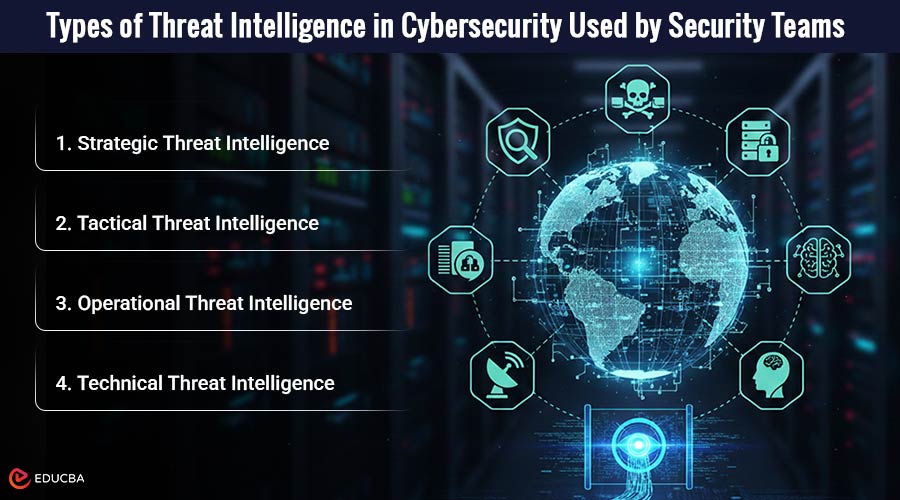
Types of Threat Intelligence in Cybersecurity Used by Security Teams
Cybersecurity teams rely on multiple layers of threat intelligence, each serving a distinct operational purpose.
1. Strategic Threat Intelligence
This high-level form of threat intelligence in cybersecurity focuses on long-term trends, emerging threat actors, and industry-specific or geopolitical risks. It supports executive decision-making, security investments, and policy planning.
2. Tactical Threat Intelligence
Tactical cybersecurity threat intelligence examines the tactics, techniques, and procedures (TTPs) of attackers. It helps teams understand how adversaries operate and which vulnerabilities they are most likely to exploit.
3. Operational Threat Intelligence
Operational threat intelligence in cybersecurity provides insight into active or imminent attacks. It includes details about ongoing campaigns, malware variants, and threat actor infrastructure, enabling faster response.
4. Technical Threat Intelligence
At its most granular level, this layer of cybersecurity threat intelligence consists of indicators like malicious domains, file hashes, and command-and-control patterns, which are directly leveraged by security tools for detection and blocking to identify and prevent threats.
The Threat Intelligence in Cybersecurity Lifecycle
To deliver measurable value, threat intelligence in cybersecurity follows a structured lifecycle:
Direction
Security teams define intelligence requirements based on business risk, industry exposure, and regulatory needs.
Collection
Data is gathered from internal logs, network traffic, and external sources such as Open Intelligence, Dark Web Monitoring, and industry-sharing groups.
Processing
Raw data is normalized, filtered, and enriched to improve accuracy and eliminate noise.
Analysis
Analysts correlate data, identify patterns, and assess relevance to the organization’s environment using cybersecurity threat intelligence methodologies.
Dissemination
Actionable threat intelligence in cybersecurity is shared with SOC analysts, incident responders, and leadership in usable formats.
Feedback
Continuous feedback refines future intelligence requirements and improves overall effectiveness.
How Cybersecurity Teams Use Threat Intelligence in Cybersecurity in Practice?
Threat intelligence helps security teams detect problems early by spotting unusual behavior that matches known attack patterns. This allows systems to alert teams before attackers succeed. During a security incident, intelligence provides critical information, helping teams quickly identify the scope, cause, and potential impact. Instead of fixing every vulnerability, teams focus on the ones attackers are actually using, reducing risk more efficiently.
It also supports proactive threat hunting, finding hidden threats that automated tools might miss. Insights from intelligence help train employees to recognize phishing emails, social engineering, and other current attack methods, making cyber security training a critical complement to intelligence-led defenses. DMARC adds extra protection by showing attempts to fake company domains through phishing or spoofing. By checking DMARC reports, teams can identify fake senders, failed authentication attempts, and abuse patterns. This turns email into a monitored environment, strengthening overall security.
Measurable Impact on Security Performance
| Metric (2025) | Average Improvement |
| Incident Response Time Reduction | 35% |
| High-Risk Vulnerability Remediation | 42% Faster |
| False Positive Alert Reduction | 30% |
| Early-Stage Attack Detection Rate | 38% increase |
These metrics show how organizations adopting threat intelligence in cybersecurity outperform traditional reactive security models.
Benefits of Threat Intelligence in Cybersecurity
Organizations that effectively implement threat intelligence in cybersecurity gain:
- Reduced attacker dwell time
- Improved alert accuracy and fewer false positives
- Better compliance with rules and standards set by the government and business
- Stronger regulatory and compliance posture
- Enhanced collaboration between executives and technical teams
Challenges in Implementation
Despite its benefits, threat intelligence in cybersecurity presents challenges. Data overload is common when intelligence sources are not properly filtered or analyzed. Integration with existing tools and workflows is another obstacle.
Skilled analysts are essential. Without human expertise, cybersecurity threat intelligence can be misinterpreted, leading to poor decisions or missed threats.
The Future of Threat Intelligence in Cybersecurity
As cloud adoption, remote work, and connected devices expand, threat intelligence in cybersecurity will become even more critical. Automation, AI-driven analytics, and cross-industry collaboration are accelerating intelligence processing and strengthening collective defense.
Organizations that develop and maintain mature threat intelligence programs today can face tomorrow’s threats with confidence.
Regulatory Readiness and Compliance
Compliance requirements increasingly demand proof of continuous risk awareness. Threat intelligence in cybersecurity helps organizations track threat trends, justify security controls, and support audit requirements with real-world evidence.
By aligning security actions with current threats, companies demonstrate risk-based compliance, improve reporting accuracy, and ensure security investments support both regulatory and business objectives.
Final Thoughts
The fast-changing digital landscape makes threat intelligence a critical pillar of an effective cybersecurity strategy. As cyberattacks become increasingly sophisticated and widespread, traditional reactive measures are no longer sufficient to protect organizations.
By leveraging intelligence-driven insights, security teams can not only detect threats earlier but also respond more quickly, prioritize vulnerabilities more effectively, and strengthen collaboration between technical teams and leadership. Furthermore, when implemented properly, threat intelligence in cybersecurity transforms security from a reactive necessity into a proactive, strategic capability. As a result, organizations can stay ahead of adversaries with greater confidence and clarity.
Recommended Articles
We hope this guide on threat intelligence in cybersecurity helps you build a proactive security strategy. Explore these recommended articles for additional insights and strategies to strengthen your cyber defense.


