


Therapeutic Skills Development
Therapy is both an art and a science, requiring theoretical knowledge, clinical judgment, interpersonal finesse, and creativity. The difference between facilitating true growth and providing surface-level support often lies in the deliberate cultivation of therapeutic skills. These skills empower mental health professionals to be more effective, empathetic, and resilient when working with clients across diverse experiences. This article explores essential therapeutic skills every mental health professional should develop: from foundational competencies like active listening and ethical reasoning to creative modalities such as coloring therapy and expressive arts.
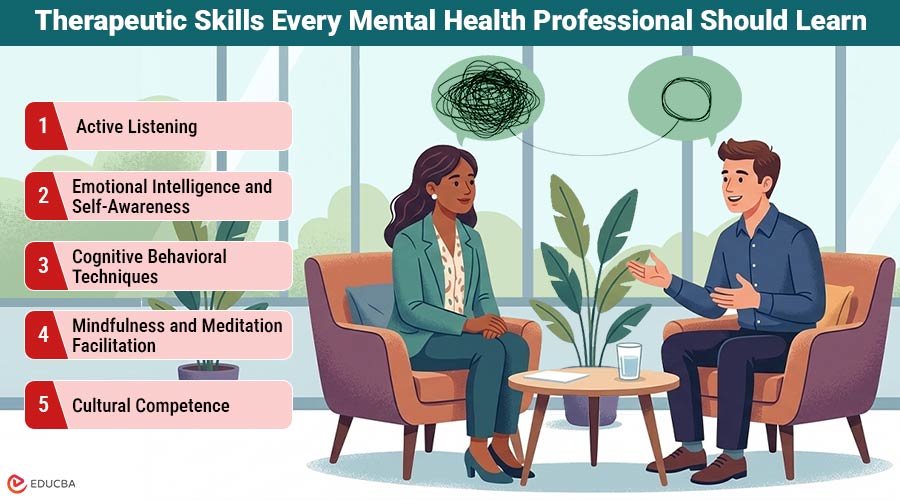
Therapeutic Skills Every Mental Health Professional Should Learn
The following key therapeutic skills are essential for effective, empathetic, and impactful practice.
1. Active Listening: The Foundation of Therapy
The first and most fundamental skill every therapist must master is active listening. It sounds simple: hear what a client says. But true listening is much deeper. Active listening involves:
- Full attention: Observing not only words but tone, pacing, and nonverbal cues.
- Empathy: Connecting emotionally with what is said without judgment.
- Reflection: Restating or summarizing to ensure understanding.
When a client says, “I feel overwhelmed,” active listening helps us hear what lies beneath: fear, exhaustion, perhaps guilt. Only with this depth of understanding can therapy become meaningful.
2. Emotional Intelligence and Self-Awareness
A therapist’s ability to recognize and manage their own emotional responses is critical. Emotional intelligence includes:
- Awareness of one’s triggers
- Ability to regulate personal emotions during sessions
- Recognition of how a therapist’s presence affects the therapeutic space
Clients often unconsciously mirror or react to the therapist’s emotional state. When therapists remain grounded, stable, and self-aware, they provide a safe space for clients to explore difficult emotions without fear of judgment.
3. Cognitive Behavioral Techniques
Cognitive Behavioral Therapy (CBT) skills are among the most widely used in practice. Therapists trained in CBT can help clients:
- Identify automatic negative thoughts
- Challenge cognitive distortions
- Develop alternative, healthier thinking patterns
These skills are especially useful for clients struggling with anxiety, depression, or intrusive thoughts, common challenges in modern therapeutic settings.
4. Mindfulness and Meditation Facilitation
In our fast-paced, hyperconnected world, many clients struggle with chronic stress, burnout, and rumination. Mindfulness-based skills offer tools to help clients:
- Stay anchored in the present moment
- Reduce stress responses
- Observe thoughts without judgment
Therapists who can guide mindfulness exercises or incorporate meditative techniques give clients practical tools they can use outside the therapy room.
5. Cultural Competence
Therapy does not happen in a vacuum. Clients come from diverse cultures, identities, and belief systems. Cultural competence means:
- Understanding how cultural factors shape one’s worldview
- Avoiding assumptions based on stereotypes
- Engaging in ongoing learning about cultures different from your own
This skill ensures that therapy respects and affirms each person’s unique background.
6. Crisis and Risk Assessment
Every therapist must identify and respond to crises, especially suicidality, self-harm, or volatile behavior. This includes:
- Recognizing warning signs
- Asking direct questions about intentions and plans
- Knowing when and how to take immediate action to ensure safety
Therapeutic skill without the ability to assess risk is incomplete. Safety always comes first.
7. Narrative and Storytelling Techniques
Humans think in stories, and so much of therapy involves helping clients rewrite their internal narratives. Narrative therapy skills include:
- Helping clients externalize problems (e.g., “the anxiety” instead of “I am anxiety”)
- Identifying patterns across life stories
- Supporting clients in crafting alternative, empowering self-stories
This approach helps clients shift from feeling stuck to gaining perspective and agency.
8. Expressive Arts Therapies: Beyond Words
Not all healing happens through words alone. Many clients, especially those who struggle with verbal emotional expression, benefit from creative modalities. One powerful example is adult coloring therapy.
Coloring Therapy as a Therapeutic Skill
Coloring therapy uses structured coloring activities, such as mandalas, patterns, and expressive design, to:
- Promote mindfulness
- Reduce anxiety
- Increase emotional awareness
- Offer nonverbal means of expression
Clients who resist traditional talk therapy open up as they choose colors and patterns that reflect their inner state. The simple act of coloring provides focus, reduces rumination, and honors creativity as part of emotional healing.
9. Art Therapy and Drawing
With art therapy, clients use drawing, painting, or sculpting to externalize feelings and symbols. Unlike coloring books, art therapy encourages:
- Original creation
- Symbolic exploration
- Use of different media (clay, paint, collage)
Art therapy is powerful for trauma work, identity exploration, and emotional processing.
10. Music Therapy Basics
Music affects mood, rhythm, and emotional memory. Even if you are not a music therapist, basic skills in using music therapeutically can support clients, for example:
- Playing music to induce relaxation
- Using music for emotional exploration
- Helping clients create playlists that support emotional goals
Sound and rhythm work uniquely with the nervous system, freeing expression when words fail.
11. Body-Based Approaches: Somatic Awareness
Therapy engages not just the mind and emotions but also the body. Somatic skills help clients notice how stress and emotions show up physically, such as:
- Tension in the shoulders
- Shallow breathing
- Tightness in the chest
Therapists who guide clients through somatic exercises help them safely feel and release emotions.
12. Solution-Focused Skills
Not all therapy is about deep excavation. Some cases benefit from solution-focused brief therapy (SFBT), a technique that emphasizes:
- Clarifying client goals
- Identifying exceptions to pain
- Applying immediate, actionable steps
This approach empowers clients by helping them see what works and build on it.
13. Ethical Decision-Making and Boundaries
Therapeutic skill is not only clinical but also ethical. Therapists must navigate:
- Confidentiality and privacy
- Dual relationships
- Informed consent
- Professional boundaries
These skills protect clients and preserve the integrity of the therapeutic relationship.
14. Technological Adaptability
Modern therapy often includes telehealth, online resources, apps, and digital worksheets. Therapists who can:
- Use teletherapy platforms
- Integrate digital tools responsibly
- Evaluate mental health apps or resources
It will be more accessible and effective in an increasingly digital world.
15. Personal Resilience and Self-Care
Therapists are humans too. Building the following skills is essential:
- Stress management
- Peer support
- Supervision and reflective practice
- Personal therapy when needed
Resilient therapists can show up fully, without burnout or emotional depletion.
Final Thoughts
Therapy evolves with client needs and cultural contexts. While theoretical knowledge provides a foundation, the intentional cultivation of therapeutic skills ensures that mental health professionals meet each client with empathy, adaptability, and creativity. Creative modalities such as coloring therapy, art, music, and somatic work underscore that healing is multifaceted. Versatility, paired with curiosity and presence, allows therapists to facilitate transformative change, helping clients thrive in ways that resonate uniquely with them.
Recommended Articles
We hope this comprehensive guide to therapeutic skills helps you enhance your effectiveness as a mental health professional. Check out these recommended articles for more insights and strategies to further develop your expertise.

