


How Temporary Services Are Shaping the Future of Work in a Tech-Driven World?
With rapid digital transformation and changing workforce needs, the demand for temporary services is higher than ever. Whether it is filling roles during peak seasons, managing project-based workloads, or accessing specialized technical expertise, temporary staffing solutions have become a strategic asset for companies across nearly every industry.
From startups launching new products to Fortune 500 enterprises scaling digital infrastructure, businesses are increasingly leveraging temporary services to stay competitive, agile, and cost-effective. At the same time, professionals are embracing the flexibility and variety offered by temporary employment, particularly within the rapidly evolving tech sector.
Understanding Temporary Services in the Tech Industry
Temporary services provide short-term employment solutions by hiring workers for a limited duration. This can range from a few days to several months, depending on the project, business needs, or industry demands.
Staffing agencies or talent platforms typically facilitate these services by connecting employers with pre-screened candidates. What once began as a way to fill clerical or seasonal positions has now expanded into high-skill, high-impact roles in IT, engineering, digital marketing, healthcare, logistics, and more, fueling the rise of temporary services in the tech industry.
The Tech Industry’s Role in Redefining Temporary Work
The explosion of the digital economy has made technical expertise a priority for nearly every business. Companies now rely on software developers, cloud engineers, cybersecurity specialists, data analysts, and DevOps professionals to run and secure digital operations.
However, the demand for these skills is often project-based, urgent, and time-sensitive, making permanent hires both costly and inefficient. Enter temporary services in the tech industry, which offer a scalable, flexible solution for acquiring top-tier tech talent without long-term commitments.
Common Tech Roles Filled via Temporary Services
- Software developers: Temporary developers assist in building custom applications, maintaining codebases, or supporting product launches.
- Cloud engineers: Temporary experts handle migrations to cloud platforms, including AWS, Azure, and Google Cloud.
- Cybersecurity consultants: Short-term hires perform risk assessments, compliance checks, or incident response.
- Data scientists: For analytics projects, campaign insights, or machine learning model development.
- UI/UX designers: Essential during app redesigns, digital campaigns, or new feature rollouts.
- QA testers: To ensure performance, security, and usability before major product launches.
These examples highlight how temporary services in the tech industry are redefining workforce solutions in the digital economy.
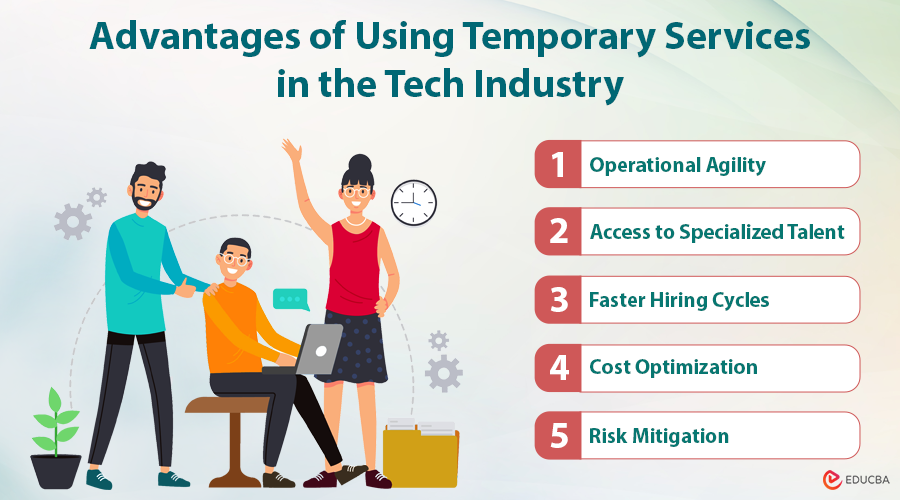
Advantages of Using Temporary Services in the Tech Industry
1. Operational Agility
In an era of constant disruption, the ability to scale your workforce up or down is critical. Temporary services in the tech industry enable businesses to respond quickly to shifting priorities without the overhead associated with permanent hires.
2. Access to Specialized Talent
Whether a company needs a front-end developer familiar with React or a data engineer who can optimize SQL queries, temporary services offer access to professionals with highly targeted skills.
3. Faster Hiring Cycles
Time is often the most valuable resource. Temporary services streamline recruitment through automated systems and ready-to-deploy talent pools, reducing the traditional hiring process by weeks.
4. Cost Optimization
With temporary talent, businesses avoid costs related to benefits, training, severance, and long-term compensation. They pay for what they need, when they need it.
5. Risk Mitigation
Hiring the wrong person can be costly. Temporary placements reduce that risk by serving as trial runs. If the fit is right, there is often an opportunity to convert temporary workers into full-time employees.
The Role of Technology in Enhancing Temporary Staffing
Temporary services have evolved far beyond paper resumes and phone interviews. Technology is driving the transformation of how companies and candidates connect, collaborate, and work.
AI & Machine Learning
AI helps modern staffing platforms connect candidates to jobs that fit their skills, experience, and availability. This enhances placement accuracy and speeds up the process.
Cloud-Based Collaboration Tools
Temporary workers often contribute remotely. Thanks to tools like Slack, Zoom, Asana, and Trello, they can integrate seamlessly into distributed teams from day one.
Digital Onboarding & Compliance
Temporary services now include fully digital onboarding platforms that automate everything from background checks to document verification and e-signatures, reducing friction and improving compliance.
Real-Time Data & Workforce Analytics
Employers gain access to real-time data on contractor performance, project milestones, and cost-effectiveness, allowing for smarter, data-driven staffing decisions.
Industries Benefiting from Temporary Services
While tech plays a major role, temporary services have broad applications across numerous industries:
- Healthcare: Nurses, lab technicians, and medical coders are in high demand for short-term assignments, especially during public health events or flu seasons.
- Logistics and e-commerce: Warehousing staff, delivery drivers, and order fulfillment personnel are often hired temporarily to handle holiday surges or flash sales.
- Finance & accounting: Temporary CPAs and auditors assist during tax season or financial audits.
- Marketing and creative: Companies often hire digital marketing strategists, copywriters, and video editors to support campaigns or rebranding projects.
- Manufacturing: Manufacturers commonly hire machine operators and line workers for large orders or product launches.
Still, the fastest-growing demand remains within temporary services in the tech industry, where companies consistently require specialized talent.
Benefits for Temporary Workers
Temporary services are not just beneficial for businesses; they are also increasingly attractive to modern professionals, particularly digital nomads, tech freelancers, and those exploring new career paths.
1. Skill Development
Short-term roles expose professionals to various tools, industries, and challenges, enabling them to build versatile, future-ready skill sets.
2. Flexible Schedules
Temporary workers can choose assignments that align with their lifestyle, location preferences, or availability.
3. Quick Entry into the Job Market
Temp roles often have shorter onboarding processes, allowing candidates to start working and earning faster.
4. Pathway to Permanent Positions
Many companies use temporary contracts as a stepping stone to full-time employment. It is a low-risk way for both sides to test compatibility.
5. Expanded Professional Networks
Temporary roles expose workers to diverse teams and organizations, broadening their career opportunities and industry connections.
Future Trends in Temporary Services in the Tech Industry
The future of temporary staffing will continue to be shaped by technological advancements, the rise of remote work, and evolving business needs. Here are some trends to watch:
- Growth of remote temp roles: Expect an increase in remote project-based opportunities across tech, customer support, and digital marketing.
- Integration of blockchain for credential verification: Employers may soon utilize blockchain technology to securely and transparently verify employment histories and certifications.
- On-demand hiring platforms: Mobile-first apps enable employers to post jobs and connect with talent instantly, and they are gaining popularity.
- Gig-plus models: Hybrid roles that blend gig work with benefits or long-term potential are becoming more common.
Final Thoughts
Temporary services are no longer a last-minute fix or a stopgap solution. They are a strategic tool in the modern workforce, helping businesses stay lean and responsive while providing skilled professionals with meaningful and flexible opportunities.
In a world where digital transformation is constant and project timelines are tighter than ever, temporary services in the tech industry offer the right talent, at the right time, with the right tools. Whether you are a business seeking to optimize your workforce or a professional looking for your next big opportunity, temporary staffing may hold the key to future success.
Recommended Articles
We hope this guide on temporary services in the tech industry was helpful. Explore related articles on workforce trends, staffing strategies, and digital transformation to stay ahead in a tech-driven world.

