


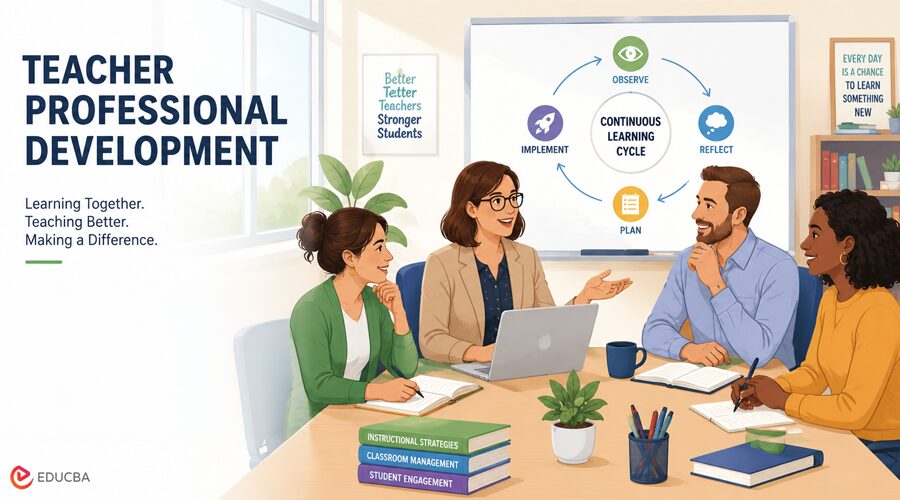
Every educator has sat through teacher professional development that felt disconnected from their classroom reality. A consultant flies in, delivers a polished presentation on a new instructional framework, and leaves teachers to implement it on their own. Months later, when classroom demands surge and time becomes scarce, that initiative vanishes. The problem is not that educators do not want to improve, but that most teacher professional development programs are designed without considering how people actually change their practice. Effective teacher development requires ongoing support, peer collaboration, and connection to what teachers are already trying to accomplish.
The Mentoring Model: Learning Through Relationship
Mentoring remains one of the most powerful drivers of teacher professional development, yet many schools approach it haphazardly. A new teacher gets paired with a veteran; they chat occasionally, and everyone assumes the process is working. Real mentoring is far more intentional. Effective mentors observe their mentees’ teaching, offer specific feedback rooted in what they actually saw, discuss teaching challenges together, and model strategies in their own classrooms.
The most successful mentoring programs build time into the schedule for mentor-mentee interaction. Teachers visit each other’s classrooms. They debrief after observations, discussing what worked, what fell flat, and what the teacher might try next. This happens in real classrooms with real students, not in the abstract. A mentor might notice that a teacher struggled with transitions between activities and suggest specific techniques to try. The mentee implements the strategy, observes the results together, and adjusts from there. This cycle of observation, feedback, implementation, and reflection is a cornerstone of effective teacher professional development.
Mentoring also works when mentors have some training in coaching skills. Asking good questions matters more than having all the answers. A mentor who says “Here is what I do” is less effective than one who asks “What do you think happened when you gave those instructions?” This coaching approach helps teachers develop their own problem-solving skills rather than simply implementing someone else’s solutions.
Instructional Coaching: Targeted, Ongoing Support
Instructional coaching is distinct from mentoring, though the two are often confused. Coaches focus specifically on instructional practice rather than general onboarding. A coach might work with a teacher on classroom management, writing instruction, math fact fluency, or student engagement. The coach brings expertise in that specific area and partners with the teacher to implement changes.
Effective coaching follows a cycle: the coach observes lessons and gathers data on what is actually happening, meets with the teacher to discuss observations and identify a focus, models strategies or co-plans lessons, observes again to see how implementation went, and reflects on progress. This is not one-off advice; it has sustained partnership over weeks or months. Teachers who work with instructional coaches often continue to use the skills they learn even after coaching ends, making it one of the most effective ways to support teacher professional development.
Coaching works because it is personalized and ongoing. A teacher struggling with small-group instruction receives targeted support on that specific challenge. Someone else working on student engagement gets different coaching. Teachers do not have to figure out how to apply generic principles to their unique context; the coach helps them do that work together.
Building a Continuous Learning Culture
Schools that develop strong teacher professional development cultures do not rely on one-shot workshops. Instead, they build structures that enable teachers to learn together regularly. This might include grade-level or department meetings where teachers bring student work samples and analyze them together. In these peer observations, teachers watch each other and discuss what they noticed, or study groups that dig into education research or new curricular approaches.
These peer-centered learning structures work because they are grounded in the work teachers actually do. When teachers examine student work together, they are solving real problems they face in their classrooms. When they observe peers, they see possibilities they can implement immediately. When they study research together, they connect theory to their specific context rather than trying to make sense of abstract ideas on their own.
Leadership’s Role in Supporting Teacher Professional Development
Teachers cannot build strong professional development cultures on their own. School leaders and district administrators set conditions that either support or undermine these efforts. Leaders decide whether teachers have time for observation, collaboration, and reflection. They determine whether the school will invest in coaches or mentors. They model continuous learning by engaging in their own professional development.
Leaders who understand how to build teacher development systems benefit from formal training in educational strategy and change management. An educational leadership degree online covers how school leaders design and implement professional development that actually moves the needle on educator effectiveness. Leaders learn to carefully select initiatives, align resources for sustained implementation, and assess whether professional development translates into improved instructional practice.
The reality is straightforward: teachers improve when they have ongoing support, meaningful feedback, and opportunities to learn from colleagues. Schools that prioritize teacher professional development through mentoring, instructional coaching, collaborative learning, and strong leadership see stronger instruction, higher teacher retention, and better student outcomes. It is not glamorous or trendy, but it works.
Recommended Articles
We hope this guide on teacher professional development helps you build effective teaching practices through mentoring, coaching, and continuous learning. Explore these recommended articles for more insights on teacher training, educational leadership, and classroom success.

