
What is a Target Market?
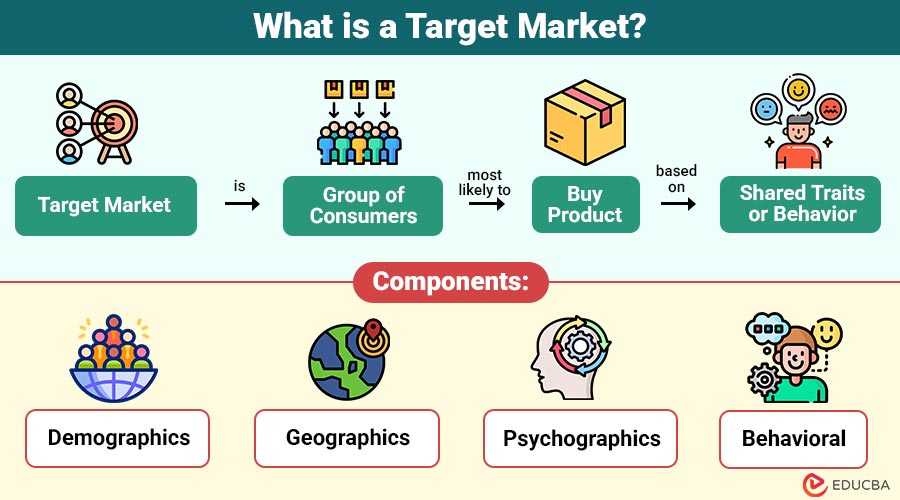
A Target market is group of consumers most likely to buy product, based on shared traits or behavior. Identifying this group helps businesses focus their marketing efforts and create products that meet specific needs.
For example:
- A luxury car brand may target high-income professionals aged 30 to 55.
- A baby food company may target new parents in urban areas.
By focusing marketing efforts on right audience, businesses increase efficiency, reduce wasted advertising, and build stronger customer loyalty.
Table of Contents:
- Meaning
- Importance
- Components
- How to Identify your Target Market?
- Strategies
- Benefits
- Challenges
- Real-World Examples
Key Takeaways:
- Target Market identification enables businesses to focus marketing efforts, improve relevance, and maximize resource efficiency.
- Understanding demographics, psychographics, behavior, and location helps tailor products, messaging, and campaigns to customer needs.
- Clear targeting boosts engagement, builds customer loyalty, and increases conversion rates for measurable business growth.
- Regularly analyzing and updating ensures alignment with changing trends, preferences, and competitive landscapes.
Why is the Target Market Important?
Knowing your target market goes beyond identifying customers—it involves tailoring your products, services, and communication to meet their unique needs.
1. Effective Allocation of Resources
Businesses can effectively boost campaign efficiency, minimize wasteful spending, and optimize budgets by concentrating marketing efforts on the appropriate audience.
2. Improved Messaging
Understanding the target market allows brands to create campaigns addressing specific pain points, desires, and motivations of their customers accurately.
3. Higher ROI
Targeting customers most likely to buy improves conversion rates, maximizes sales, and ensures marketing investments generate measurable returns efficiently.
4. Customer Loyalty
Customers build trust and an emotional bond when they feel appreciated and understood, which greatly boosts repeat business and enduring brand loyalty.
Components of a Target Market
A well-defined target market includes several dimensions. Let us break them down:
1. Demographics
Based on demographic characteristics like age, gender, income, education, and occupation, customers are divided into groups and targeted.
2. Geographics
The study of customers’ locations, such as country, city, region, climate, or population density, influences buying preferences and behavior.
3. Psychographics
Attributes relating to lifestyle, values, personality, interests, and attitudes that help brands understand consumer motivations and create tailored marketing strategies.
4. Behavioral
Patterns of consumer behavior, including purchasing habits, product usage, brand loyalty, and benefits sought, effectively guide marketing and engagement strategies.
How to Identify your Target Market?
Businesses must follow a structured process.
Step 1: Analyze Your Product/Service
Ask what problem it solves? Who benefits most from it?
Step 2: Conduct Market Research
Use surveys, focus groups, and industry reports to gather insights about potential customers.
Step 3: Segment the Audience
Divide consumers into demographic, geographic, psychographic, or behavioral groups to tailor marketing strategies.
Step 4: Evaluate Market Potential
Assess each segment’s size, growth potential, and profitability to prioritize marketing efforts.
Step 5: Create Buyer Personas
Develop detailed profiles including age, occupation, lifestyle, purchasing behavior, and preferences.
Strategies to Reach a Target Market
Once identified, businesses need effective strategies to connect with their target audience.
1. Personalized Marketing
Customize advertisements, emails, and content based on individual customer preferences, behavior, and past interactions to increase engagement and conversions effectively.
2. Content Marketing
Develop blogs, videos, guides, or other educational materials that address the target audience pain points and provide value consistently.
3. Social Media Targeting
To improve campaign precision, target particular demographics, interests, and geographic areas with social media advertising platforms.
4. Influencer Marketing
Partner with influencers who already resonate, leveraging their credibility and audience trust to promote products.
5. Email Campaigns
Segment email lists based on customer attributes, behavior, or preferences to send tailored, relevant, and timely promotional messages.
Benefits of Having a Clear Target Market
When businesses define their target market effectively, they enjoy:
1. Cost Savings
Focusing marketing campaigns on a clearly defined audience reduces wasted resources, maximizes budget efficiency, and improves overall return on investment.
2. Higher Engagement Rates
Delivering relevant messaging tailored to the target market captures attention, encourages interaction, and strengthens customer interest and participation.
3. Increased Brand Loyalty
Understanding customer needs and preferences builds trust, emotional connection, and long-term loyalty, encouraging repeat purchases consistently.
4. Faster Growth
Prioritizing profitable and high-potential segments allows businesses to scale efficiently, increase market share, and achieve accelerated growth.
Challenges in Defining a Target Market
Businesses often face hurdles in defining their audience.
1. Over-Segmentation
Dividing customers into too many small groups can overwhelm resources, complicate marketing efforts, and reduce overall campaign effectiveness significantly.
2. Changing Trends
Rapidly evolving customer preferences and market trends require continuous research, adaptation, and agile strategies to stay relevant and competitive.
3. Market Saturation
Highly competitive markets may already have established players dominating the target segment, making it difficult for new entrants to gain traction.
4. Assumptions vs. Data
Relying on assumptions rather than accurate data can lead to misguided marketing strategies and ineffective targeting decisions.
Real-World Examples
Here are some real-world examples:
1. Nike
- Target Market: Athletes, fitness enthusiasts, and young adults.
- Strategy: Motivational campaigns that promote performance, lifestyle, and empowerment.
2. Apple
- Target Market: Tech-savvy professionals and premium buyers.
- Strategy: Premium branding, sleek designs, and exclusive features.
3. Tesla
- Target Market: Environmentally conscious, high-income professionals.
- Strategy: Electric vehicles with cutting-edge technology and sustainable branding.
4. Coca-Cola
- Target Market: Global consumers across age groups seeking refreshment.
- Strategy: Universal advertising focusing on happiness and togetherness.
Final Thoughts
A target market is the foundation of successful marketing. Businesses may create more efficient goods, provide more focused communications, and increase revenue by recognizing and comprehending their ideal clients. Identifying your target market is now crucial rather than optional in the current digital era, when interaction is driven by personalization.
Frequently Asked Questions (FAQs)
Q1. Can a company have multiple target markets?
Answer: Yes, companies often have multiple segments (e.g., Nike serves both athletes and lifestyle consumers).
Q2. How often should businesses reassess their target market?
Answer: Regularly—at least once a year or whenever major industry or customer shifts occur.
Q3. What happens if you do not define a target market?
Answer: Without one, businesses waste resources, attract unqualified leads, and risk weak brand identity.
Recommended Articles
We hope that this EDUCBA information on “Target Market” was beneficial to you. You can view EDUCBA’s recommended articles for more information.


