
What is Talent Screening?
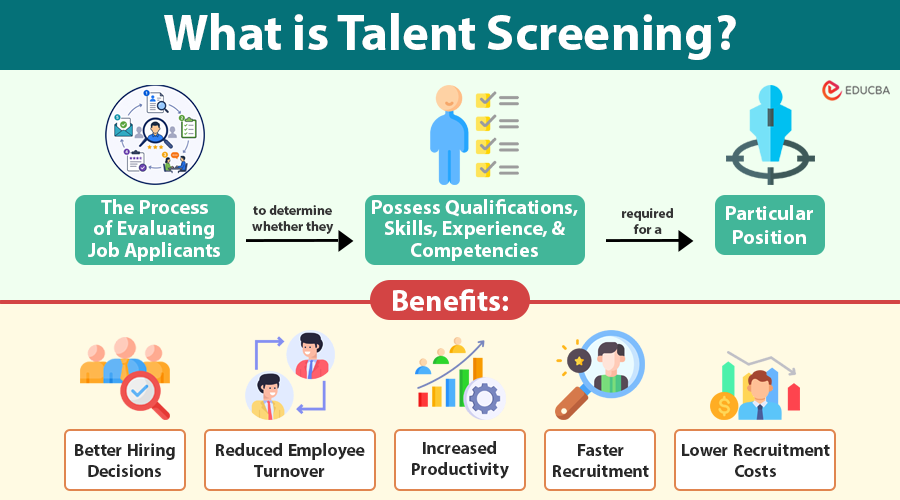
Talent screening is process of evaluating job applicants to determine whether they possess the qualifications, skills, experience, and competencies required for a particular position. It serves as the initial assessment stage in recruitment, helping employers shortlist candidates who are most suitable for further evaluation.
Talent screening may involve reviewing resumes, conducting phone interviews, administering skills assessments, verifying credentials, and using automated screening tools.
For example, when hiring a software developer, a company may screen candidates by reviewing their resumes, assessing coding skills, and conducting preliminary interviews before inviting them to final interviews.
Table of Contents:
Key Takeaways:
- Talent screening identifies qualified candidates by evaluating skills, experience, qualifications, and job suitability.
- Effective screening improves hiring quality, reduces turnover, and strengthens overall workforce productivity.
- Organizations use resumes, interviews, assessments, and verification methods to evaluate applicants effectively.
- Structured and fair screening methods reduce hiring risks and make the recruitment process more efficient.
Importance of Talent Screening
Effective talent screening plays a critical role in organizational success.
1. Improves Employee Performance
Effective talent screening identifies skilled candidates who perform better, contribute positively, and achieve organizational objectives.
2. Reduces Employee Turnover
Selecting suitable candidates through screening minimizes mismatched hires, increasing retention and reducing voluntary departures.
3. Saves Recruitment Costs
Accurate screening prevents costly hiring mistakes, reducing expenses associated with rehiring, onboarding, and training replacements.
4. Enhances Workforce Quality
Talent screening ensures organizations hire qualified individuals, creating a highly competent and productive workforce overall.
5. Increases Hiring Efficiency
Structured screening processes help organizations quickly identify the best candidates, speeding up hiring and improving recruitment decisions.
6. Supports Diversity and Inclusion Initiatives
Standardized screening methods reduce bias, promote fair hiring practices, and foster diverse workplace representation.
Objectives of Talent Screening
Organizations implement talent screening to achieve several important objectives:
1. Identify Qualified Candidates
The primary objective is to identify applicants whose qualifications align with job requirements.
2. Improve Hiring Quality
Screening ensures that only competent and suitable candidates move forward in the recruitment process.
3. Reduce Hiring Costs
Early identification of unsuitable applicants reduces time and expenses associated with prolonged recruitment.
4. Enhance Recruitment Efficiency
A structured screening process helps shortlist candidates faster and supports quicker hiring decisions.
5. Minimize Hiring Risks
Screening helps organizations avoid poor hiring decisions by thoroughly assessing candidates.
6. Support Compliance
Talent screening helps organizations comply with employment regulations and internal hiring policies.
Talent Screening Process
The talent screening process generally involves multiple stages.
Step 1: Define Job Requirements
Recruiters begin by clearly identifying:
- Required skills
- Educational qualifications
- Experience level
- Technical competencies
- Behavioral traits
- Certifications
- Role responsibilities
Well-defined job criteria establish the foundation for effective screening.
Step 2: Review Applications and Resumes
Recruiters analyze applications to determine whether candidates meet minimum qualifications.
Typical evaluation criteria include the following:
| Screening Criteria | Examples |
| Education | Degree, certification |
| Experience | Years in similar roles |
| Skills | Technical and soft skills |
| Industry Background | Relevant sector experience |
| Achievements | Performance accomplishments |
Applicants failing to meet essential requirements may be eliminated at this stage.
Step 3: Conduct Preliminary Interviews
Initial interviews help recruiters assess:
- Communication skills
- Career goals
- Salary expectations
- Availability
- Interest in the role
These interviews are usually conducted via phone or video conferencing.
Step 4: Administer Assessments
Employers often use assessments to evaluate candidate competencies.
Common assessments include:
- Technical tests
- Aptitude tests
- Cognitive ability tests
- Personality assessments
- Situational judgment tests
- Language proficiency tests
Step 5: Verify Credentials
Organizations verify candidate information, including:
- Educational qualifications
- Employment history
- Professional certifications
- References
- Background information
Verification ensures authenticity and reduces recruitment risks.
Step 6: Shortlist Candidates
Based on screening outcomes, recruiters create a shortlist of candidates for detailed interviews and final selection.
Methods of Talent Screening
Organizations use various screening methods depending on job requirements.
1. Resume Screening
Resume screening involves evaluating applicant resumes against predefined job criteria.
2. Application Form Screening
Structured application forms collect standardized candidate information, making comparisons easier.
Employers can evaluate the following:
- Qualifications
- Employment history
- Skills
- Certifications
- Work preferences
3. Telephone Screening
Recruiters conduct brief phone interviews to assess candidate suitability.
Typical questions cover the following:
- Work experience
- Career aspirations
- Notice period
- Compensation expectations
- Communication skills
4. Video Screening
Video interviews enable employers to evaluate candidates remotely. A One-way video interview platform like ScreeningHive can make this screening stage more flexible by allowing candidates to record structured responses asynchronously. Recruiters can then review and compare applicants at their convenience before deciding which candidates should move forward to detailed interviews.
Benefits include:
- Greater flexibility
- Reduced travel expenses
- Faster hiring decisions
- Wider geographic reach
5. Skills Assessments
Skills assessments objectively measure candidate capabilities.
Examples include:
| Role | Assessment Type |
| Programmer | Coding tests |
| Accountant | Financial analysis tasks |
| Writer | Writing assignments |
| Designer | Portfolio evaluation |
| Sales Executive | Role-play exercises |
6. Psychometric Testing
Psychometric assessments evaluate the following:
- Personality traits
- Behavioral tendencies
- Cognitive abilities
- Problem-solving skills
These tests help predict job performance and cultural fit.
7. Artificial Intelligence (AI) Screening
Many organizations use AI-powered recruitment tools to automate screening activities.
AI systems can:
- Parse resumes
- Match skills with job descriptions
- Rank candidates
- Identify suitable applicants
- Schedule interviews
AI significantly improves recruitment efficiency, particularly for high-volume hiring.
Types of Talent Screening
Below are the major types of talent screening organizations use to evaluate candidates and identify the most suitable individuals for a role.
1. Pre-Employment Screening
Conducted before hiring decisions to evaluate candidates’ qualifications, experience, and overall suitability for specific roles.
2. Background Screening
Verifies employment history, educational credentials, criminal records, and other information to ensure candidate authenticity.
3. Skills Screening
Measures job-specific knowledge, technical abilities, and competencies required to perform tasks effectively and successfully.
4. Behavioral Screening
Assesses personality traits, communication styles, and workplace behaviors to predict job performance and team compatibility.
5. Cultural Fit Screening
Determines whether candidates align with organizational values, culture, mission, and preferred working environment.
Benefits of Talent Screening
Implementing effective talent screening practices offers numerous benefits that help organizations improve hiring quality, optimize recruitment processes, and build a stronger workforce.
1. Better Hiring Decisions
Structured evaluation methods improve candidate assessment, increasing the likelihood of selecting highly qualified employees.
2. Reduced Employee Turnover
Hiring suitable candidates enhances job satisfaction, strengthens retention, and significantly reduces voluntary employee departures.
3. Increased Productivity
Competent employees perform tasks efficiently, contribute effectively, and support the achievement of organizational objectives.
4. Faster Recruitment
Talent screening streamlines candidate evaluation, enabling recruiters to quickly identify and shortlist top applicants.
5. Lower Recruitment Costs
Efficient screening minimizes costly hiring mistakes, reducing expenses related to rehiring and employee replacement.
Challenges of Talent Screening
Despite its advantages, talent screening presents several challenges.
1. High Volume of Applications
Recruiters often receive numerous applications, making candidate evaluation time-consuming and increasing administrative workload significantly.
2. Unconscious Bias
Personal assumptions and unconscious biases can influence evaluations, potentially leading to unfair hiring decisions.
3. Inaccurate Candidate Information
Some applicants may exaggerate qualifications, skills, or experience, making accurate candidate assessment challenging.
4. Overreliance on Technology
Automated screening systems may unintentionally eliminate qualified candidates because of rigid criteria or algorithms.
5. Lengthy Hiring Processes
Complex screening procedures can prolong recruitment timelines, causing organizations to lose high-quality candidates.
6. Ensuring Fairness
Organizations must maintain consistent evaluation standards to ensure equal opportunities and legally compliant hiring practices.
Examples of Talent Screening
The following examples illustrate how different organizations use talent screening methods to identify candidates who best match their job requirements and organizational needs.
1. IT Company
An IT organization screens software developer candidates using:
- Resume analysis
- Coding assessments
- Technical interviews
- Behavioral interviews
- Reference checks
2. Retail Organization
A retail company screens customer service representatives by evaluating:
- Communication skills
- Customer service aptitude
- Availability
- Personality assessments
3. Manufacturing Firm
A manufacturing company conducts:
- Skills testing
- Safety assessments
- Background verification
- Medical examinations
Final Thoughts
Talent screening is a critical component of modern recruitment and talent acquisition strategies. It enables organizations to identify qualified candidates, reduce hiring risks, improve workforce quality, and enhance overall recruitment efficiency. By using structured screening methods, leveraging technology appropriately, and maintaining fair evaluation practices, organizations can make better hiring decisions and build high-performing teams.
Frequently Asked Questions (FAQs)
Q1. When does talent screening occur in the recruitment process?
Answer: Talent screening typically occurs during the early stages of recruitment, before detailed interviews and final hiring decisions.
Q2. How does talent screening improve hiring quality?
Answer: By systematically evaluating qualifications, skills, and competencies, talent screening helps employers select the most suitable candidates.
Q3. Can talent screening reduce employee turnover?
Answer: Yes. Effective screening improves candidate-job fit, which increases employee satisfaction and reduces turnover rates.
Q4. How long does the talent screening process typically take?
Answer: The duration varies depending on the role, organization, and screening methods used, ranging from a few days to several weeks.
Recommended Articles
We hope that this EDUCBA information on “Talent Screening” was beneficial to you. You can view EDUCBA’s recommended articles for more information.

