
What is a Pulse Survey?
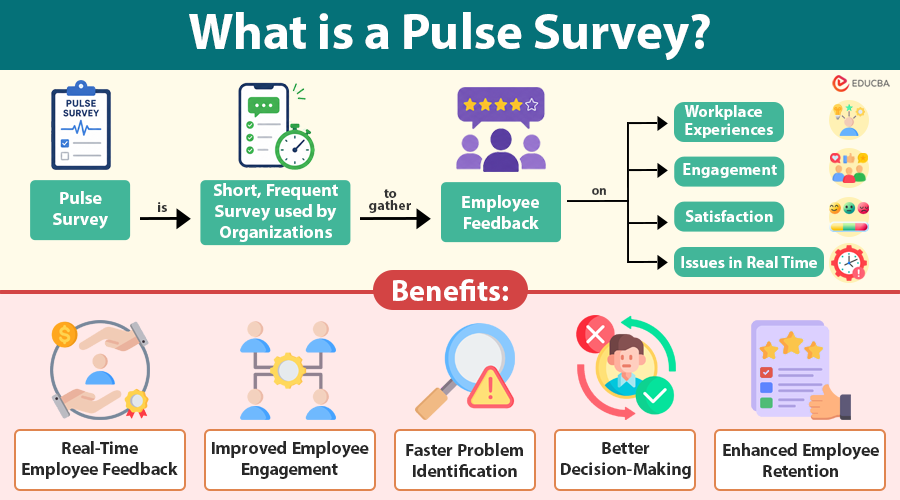
A pulse survey is short, frequent survey used by organizations to gather employee feedback on workplace experiences, engagement, satisfaction, and issues in real time. Unlike traditional annual employee surveys, pulse surveys are conducted regularly—weekly, monthly, or quarterly—to help organizations quickly identify concerns, measure employee sentiment, and take timely action.
For example, a company may send a five-question pulse survey each month to understand employee morale, workload challenges, and satisfaction with management communication.
Table of Contents:
Key Takeaways:
- Pulse surveys provide real-time employee feedback, enabling organizations to address workplace concerns proactively.
- Short, frequent surveys help consistently measure engagement, satisfaction, morale, and organizational effectiveness.
- Effective pulse surveys require continuous actionable follow-through, transparent communication, and employee trust.
- Regular pulse surveys support better decision-making, stronger culture, and improved employee retention.
Objectives of a Pulse Survey
The primary purpose is to gain timely insights into employee experiences and workplace conditions. Key objectives include:
1. Measuring Employee Engagement Levels
Assess employee motivation, commitment, productivity, and emotional connection to organizational goals and workplace success.
2. Identifying Workplace Challenges and Concerns
Detect emerging issues, obstacles, conflicts, and concerns affecting employee performance, morale, and satisfaction.
3. Assessing Employee Satisfaction
Evaluate employee satisfaction with job roles, benefits, work environment, growth opportunities, and management.
4. Evaluating Leadership Effectiveness
Gather employee feedback to assess leadership performance, decision-making, communication skills, and managerial support.
5. Monitoring Organizational Changes
Track employees’ perceptions and responses to organizational changes to ensure smoother transitions and adaptation.
6. Improving Communication Between Employees and Management
Strengthen communication channels by collecting feedback and encouraging transparent dialogue across organizational levels.
7. Supporting Employee Retention Initiatives
Identify retention risks and employee expectations to develop strategies that effectively reduce turnover.
How Does a Pulse Survey Work?
It follows a simple process to efficiently collect and analyze employee feedback.
Step 1: Define Survey Goals
Organizations determine the purpose of the survey, such as measuring engagement, assessing morale, or evaluating a new policy.
Step 2: Create Short Questionnaires
Typically, they contain between 5 and 15 questions to encourage higher participation rates.
Step 3: Distribute the Survey
Surveys are distributed through email, employee portals, mobile applications, or survey software.
Step 4: Collect Responses
Employees provide anonymous or identified feedback depending on organizational requirements.
Step 5: Analyze Results
HR teams and managers review survey responses to identify trends, strengths, and areas for improvement.
Step 6: Take Action
Organizations implement changes based on feedback and communicate improvements to employees.
Step 7: Monitor Progress
Future pulse surveys measure whether implemented actions have improved employee experiences.
Types of Pulse Surveys
Organizations use different types depending on their objectives.
1. Employee Engagement Pulse Survey
Measures employee motivation, commitment, involvement, and emotional connection toward organizational goals and success.
2. Employee Satisfaction Pulse Survey
Evaluates employee satisfaction regarding job roles, compensation, benefits, workplace environment, and overall experience.
3. Organizational Change Pulse Survey
Assesses employee perceptions, concerns, and adaptability during organizational changes, restructuring, or new initiatives.
4. Leadership Feedback Pulse Survey
Collects employee feedback on leadership effectiveness, communication, decision-making, support, and management practices.
5. Diversity and Inclusion Pulse Survey
Measures employee perceptions of diversity, equity, inclusion, belonging, fairness, and workplace respect.
6. Well-Being Pulse Survey
Evaluates employee stress levels, work-life balance, mental health, workload, and overall well-being.
Common Pulse Survey Questions
Organizations often use questions such as the following:
- How satisfied are you with your current role?
- Do you feel valued by the organization?
- Are you satisfied with communication from management?
- Do you have the resources needed to perform your job effectively?
- Would you recommend this organization as a great place to work?
- Do you feel your feedback is heard and acted upon?
- How would you rate your work-life balance?
- Do you understand the organization’s goals and priorities?
These questions provide valuable insights into employee experiences and workplace conditions.
Benefits of Pulse Survey
Below are the key benefits that help organizations gather timely employee feedback, improve engagement, and drive continuous workplace improvement.
1. Real-Time Employee Feedback
Provides immediate insights into employee opinions, concerns, experiences, and workplace conditions for improvement.
2. Improved Employee Engagement
Encourages employee participation by ensuring that feedback is consistently valued, recognized, and acted upon.
3. Faster Problem Identification
Helps organizations identify emerging workplace issues early, before they escalate into significant organizational challenges.
4. Better Decision-Making
Supports informed leadership decisions through accurate, timely, and relevant employee feedback and insights.
5. Enhanced Employee Retention
Addresses employee concerns proactively, improving satisfaction, loyalty, commitment, and long-term retention rates.
Challenges of Pulse Survey
Despite their benefits, they may present certain challenges.
1. Survey Fatigue
Frequent surveys may overwhelm employees, reducing participation, engagement, response quality, and overall effectiveness.
2. Low Response Rates
Employees may ignore surveys when feedback appears undervalued, unacknowledged, or ineffective in practice.
3. Incomplete Feedback
Brief surveys may overlook the detailed insights needed to fully understand complex workplace issues.
4. Data Interpretation Issues
Survey results may be misunderstood without proper analysis, context, expertise, and objective evaluation.
5. Lack of Follow-Through
Failing to address survey findings can reduce employee trust, engagement, and future participation.
6. Confidentiality Concerns
Employees may withhold honest feedback if anonymity, privacy, and data security seem uncertain.
Pulse Survey Example
A technology company notices increasing employee turnover and decides to conduct monthly pulse surveys.
The survey asks employees about:
- Job satisfaction
- Workload management
- Leadership communication
- Career development opportunities
- Work-life balance
Survey results reveal that employees are concerned about limited growth opportunities. In response, the company introduces training programs, mentorship initiatives, and internal promotion pathways.
Subsequent pulse surveys show improved employee engagement and reduced turnover, demonstrating how continuous feedback can drive positive organizational change.
Final Thoughts
A pulse survey is a powerful employee feedback tool that helps organizations monitor workplace sentiment, engagement, and satisfaction through short, frequent surveys. By providing real-time insights, pulse surveys enable leaders to identify issues quickly, make informed decisions, and improve the overall employee experience. When organizations actively listen to feedback and take meaningful action, pulse surveys can strengthen employee engagement, enhance workplace culture, and support long-term organizational success.
Frequently Asked Questions (FAQs)
Q1. How often should pulse surveys be conducted?
Answer: Organizations commonly conduct pulse surveys weekly, monthly, quarterly, or after significant organizational events.
Q2. Who is responsible for reviewing pulse survey results?
Answer: Human Resources (HR) teams, managers, department leaders, and senior executives usually review pulse survey results to identify trends, address concerns, and implement improvements.
Q3. Why are pulse surveys important?
Answer: They provide timely insights into employee engagement, satisfaction, and workplace issues, enabling faster action and continuous improvement.
Q4. What makes a pulse survey successful?
Answer: A successful pulse survey is short, relevant, confidential, consistently conducted, and followed by meaningful action based on employee feedback.
Recommended Articles
We hope that this EDUCBA information on “Pulse Survey” was beneficial to you. You can view EDUCBA’s recommended articles for more information.


