
What is a Stay Interview?
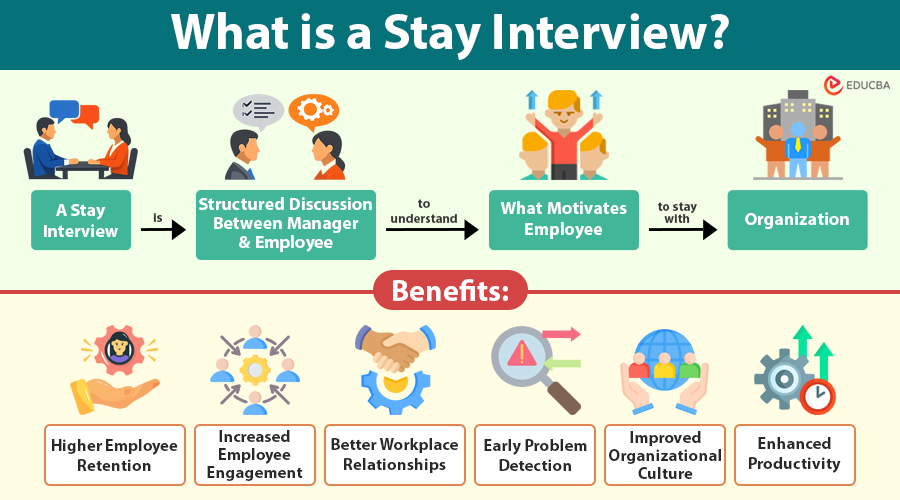
A stay interview is a structured discussion between a manager and an employee to understand what motivates the employee to stay with organization. Unlike performance reviews, which focus on evaluating job performance, stay interviews focus on employee satisfaction, engagement, motivation, and retention.
The primary aim is to gather the insights about what employees value in their work environment and identify any concerns that may affect their long-term commitment to the company. Stay interviews are typically conducted with high-performing employees, critical talent, or even the entire workforce as part of an employee retention strategy.
Table of Contents:
- Meaning
- Importance
- Working
- Key Objectives
- Common Stay Interview Questions
- Benefits
- Difference
- Challenges
- Examples
Key Takeaways:
- Stay interviews proactively identify employee motivations and concerns to improve retention and workplace satisfaction.
- Open communication during stay interviews significantly strengthens trust, engagement, and employee-manager relationships.
- Organizations can address workplace issues early, preventing turnover and reducing recruitment costs effectively.
- Successful stay interviews require active listening, meaningful action, and consistent follow-up on feedback.
Why are Stay Interviews Important?
Employee turnover can be costly and disruptive. Replacing an employee often requires significant investments in recruitment, onboarding, and training. Stay interviews help organizations address potential issues before employees begin searching for other opportunities.
They are important because they:
1. Improve Employee Retention
Identify employee concerns early and address them to increase satisfaction and reduce voluntary turnover.
2. Strengthen Employee-Manager Relationships
Encourage open communication, build trust, and create stronger working relationships between employees and managers.
3. Increase Employee Engagement
Understand employees’ needs and motivations to help create a more engaging and supportive workplace.
4. Identify Workplace Concerns Early
Identify any problems before they become serious, enabling prompt intervention and efficient problem-solving.
5. Provide Valuable Feedback for Organizational Improvement
Gather employee insights that help improve policies, processes, culture, and overall workplace experience.
6. Help Managers Understand Employee Motivations
Discover what employees value most to enable better support, recognition, and development opportunities.
7. Reduce Recruitment and Training Costs associated with Turnover
Lower replacement expenses by retaining experienced employees and minimizing frequent hiring needs.
How Does a Stay Interview Work?
A stay interview is usually conducted as a one-on-one discussion between a manager and employee. The conversation is informal yet structured, focusing on open communication rather than evaluation.
Step 1: Schedule the Interview
Managers arrange a dedicated meeting with employees in a comfortable and private setting.
Step 2: Ask Open-Ended Questions
Questions encourage employees to discuss their experiences, challenges, career aspirations, and workplace preferences.
Step 3: Listen Actively
Managers should focus on understanding employee perspectives without becoming defensive or judgmental.
Step 4: Document Key Insights
Important feedback and recurring themes should be recorded for analysis and action.
Step 5: Take Action
Organizations must address valid concerns and implement improvements where possible.
Step 6: Follow Up
Managers should periodically revisit discussions to demonstrate their commitment to employee feedback.
Key Objectives of a Stay Interview
Stay interviews serve several important objectives within an organization.
1. Understand Retention Drivers
Identify the factors that motivate employees to stay committed and satisfied within the organization.
2. Discover Potential Risks
Recognize concerns or challenges that could eventually influence employees to seek opportunities elsewhere.
3. Improve Employee Experience
Collect feedback to enhance workplace culture, job satisfaction, and overall employee well-being.
4. Strengthen Communication
Promote open, honest conversations that improve understanding between managers and employees.
5. Support Career Development
Understand employees’ career aspirations and provide opportunities for professional growth and advancement.
6. Build Employee Trust
Show employees their opinions matter, fostering trust, loyalty, and stronger organizational commitment.
Common Stay Interview Questions
The effectiveness of a stay interview depends heavily on asking the right questions.
Some commonly used questions include:
- What do you enjoy most about your job?
- What motivates you to come to work each day?
- What aspects of your role are most satisfying?
- What would make your work experience better?
- Do you feel recognized for your contributions?
- What challenges or frustrations do you face?
- Are there skills you would like to develop?
- How can your manager support your success?
- What might cause you to consider leaving?
- What keeps you working here instead of elsewhere?
These questions help uncover both positive experiences and areas needing improvement.
Benefits of Stay Interviews
Below are the key benefits of stay interviews that help improve employee retention, engagement, and workplace satisfaction.
1. Higher Employee Retention
Stay interviews identify employee concerns early, helping organizations improve satisfaction and significantly reduce voluntary turnover.
2. Increased Employee Engagement
Employees who consistently feel heard and valued demonstrate greater engagement, commitment, motivation, and workplace participation.
3. Better Workplace Relationships
Open conversations effectively strengthen trust, improve communication, and foster positive relationships between employees and managers.
4. Early Problem Detection
Organizations can uncover workplace issues early, enabling timely solutions before concerns become major challenges.
5. Improved Organizational Culture
Employee feedback supports meaningful workplace improvements, creating a stronger culture and enhancing overall satisfaction.
6. Enhanced Productivity
Satisfied and engaged employees often perform better, contributing to higher productivity, efficiency, and organizational success.
Difference Between Stay Interview and Exit Interview
The table below highlights the key differences between stay interview and exit interview:
| Feature | Stay Interview | Exit Interview |
| Timing | Conducted while the employee is still employed | Conducted after resignation |
| Purpose | Improve retention | Understand the reasons for leaving |
| Focus | Employee satisfaction and engagement | Employee departure reasons |
| Outcome | Prevent turnover | Learn from turnover |
| Actionability | Immediate corrective action possible | Limited opportunity to retain an employee |
| Nature | Proactive | Reactive |
Challenges of Stay Interviews
While stay interviews offer many benefits, organizations may face certain challenges.
1. Employee Hesitation
Employees may hesitate to share honest feedback due to fear of consequences or negative perceptions.
2. Managerial Bias
Managers may unintentionally influence responses through personal assumptions, reactions, or ineffective questioning techniques.
3. Lack of Follow-Through
Ignoring employee feedback or concerns can reduce trust and weaken confidence in the process.
4. Inconsistent Implementation
Differences in manager skills and approaches can lead to uneven interview quality and outcomes.
5. Unrealistic Expectations
Employees may expect immediate changes, requiring organizations to communicate limitations and manage expectations effectively.
Examples of Stay Interviews
The following examples illustrate how stay interviews help organizations identify employee needs and improve retention.
1. Career Growth Discussion
An employee expresses interest in leadership opportunities. The manager arranges mentorship and leadership training, increasing the employee’s engagement and commitment.
2. Workload Concerns
A team member reports feeling overwhelmed by workload demands. Management redistributes responsibilities and provides additional support, preventing burnout.
3. Recognition Feedback
An employee mentions a lack of recognition for achievements. The company introduces a formal employee recognition program, improving morale and motivation.
4. Flexible Work Preferences
An employee values work-life balance and requests more flexibility. The organization implements hybrid work options, increasing retention.
Final Thoughts
A stay interview is proactive retention tool that helps organizations understand employee motivations, improve engagement, and address concerns before they lead to turnover. By encouraging open communication and acting on feedback, companies can strengthen workplace culture, enhance employee satisfaction, and retain valuable talent more effectively.
Frequently Asked Questions (FAQs)
Q1. How often should stay interviews be conducted?
Answer: Most organizations conduct stay interviews annually or semi-annually, though critical employees may benefit from more frequent discussions.
Q2. Who should conduct a stay interview?
Answer: Typically, the employee’s direct manager conducts the interview because they have the greatest influence on the employee’s daily work experience.
Q3. Are stay interviews confidential?
Answer: While complete confidentiality may not always be possible, organizations should ensure feedback is handled respectfully and used constructively.
Recommended Articles
We hope that this EDUCBA information on “Stay Interview” was beneficial to you. You can view EDUCBA’s recommended articles for more information.


