


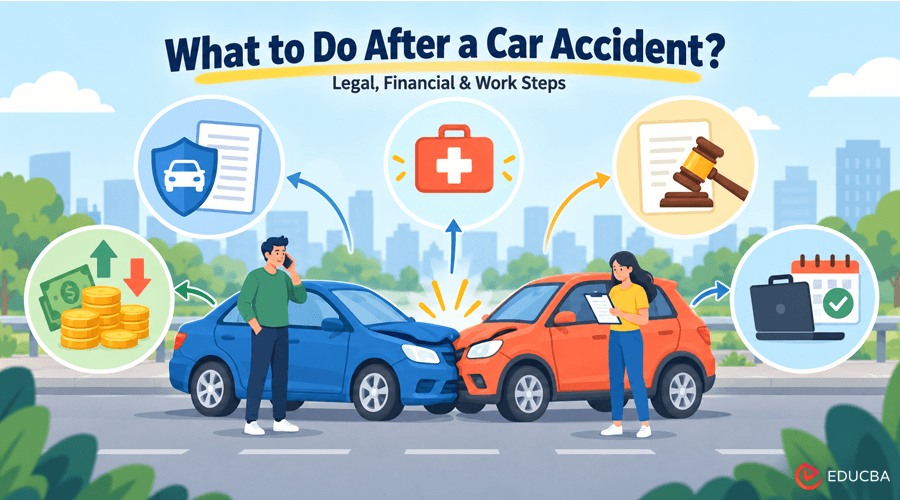
A car accident does not end when the tow truck leaves. We asked a personal injury lawyer, a notary, a career coach, and a job search founder to walk through what actually needs to happen next, legally, financially, and professionally.
The first hour after a crash is instinct: check for injuries, call 911, exchange information. The weeks after that trip people up. Medical bills start arriving before the insurance settlement does. Missed shifts turn into missed paychecks. Somewhere in between, a stack of forms needs to be filled out correctly, signed, and often notarized, or a claim can stall for months.
Knowing the steps to take after a car accident can help you protect your health, understand your legal rights, manage your finances, and make informed decisions about work and recovery. We asked four professionals who deal with the aftermath of accidents from four different angles- personal injury law, notarization, career transitions, and remote job hunting- to lay out what actually needs to happen once the adrenaline wears off.
Report The Accident, But Be Careful What You Say to the Insurance Company
Most people call their insurer within hours of a crash, which is the right instinct. The mistake, according to David E. Preszler, M.A., LL.B., Personal Injury Lawyer and Practice Leader at Preszler Injury Lawyers, happens in that first conversation.
“People assume they have to answer every question an adjuster asks right away, including ones about fault or how they are feeling physically. You do not. A recorded statement given in the first 48 hours, before you have even seen a doctor, can end up limiting a claim that later turns out to be far more serious than it looked at the scene,” Preszler says.
His advice: Report the accident promptly to meet your policy’s notice requirements, but stick to the basic facts: when, where, and who was involved. Wait to give a recorded statement or sign anything until you understand what you are agreeing to.
After a car accident, report the accident and communicate carefully with your insurer, especially if you have injuries or face questions about fault.
See a Doctor Immediately, Even if You Feel “Fine”
Adrenaline masks pain. Soft tissue injuries, concussions, and whiplash routinely do not show symptoms for 24 to 72 hours. Beyond the medical reasons to get checked out, there is a legal one: a gap between the accident date and your first medical visit is one of the most common reasons insurers dispute a claim later, arguing the injury was not caused by the crash at all.
Understand What Your Claim Can Actually Cover
Preszler’s second piece of advice deals with a misconception he says comes up constantly.
“People think a personal injury claim is just about the car repair and the ER bill. It is usually much broader than that. Depending on the province and the severity of the injury, a claim can factor in lost income, the cost of future treatment, and non-economic losses like pain and suffering. Most people undervalue their own claim before they have even spoken to a lawyer, simply because they do not know what is supposed to be included,” he says.
He adds that the timeline matters too: in Alberta, strict limitation periods apply to personal injury claims, and they start running from the date of the accident, not when you decide you are ready to deal with it.
Understanding what may be included in a claim is one of the most important steps to take after a car accident, especially if your injuries affect your ability to work or require ongoing treatment.
Get the Right Documents Notarized, Especially if the Claim Crosses State or Provincial Lines
In the claims process, paperwork needs an official signature witness, whether that is an affidavit, a power of attorney if a family member is handling the claim on your behalf, or documentation for an out-of-country insurance dispute. Aziz Bekishov, founder of DC Mobile Notary, says this step gets overlooked until it causes a delay.
“We get calls from people mid-claim who did not realize a document needed to be notarized until their insurer or their lawyer’s office kicked it back. If you are not mobile because of your injuries, or the person you need is out of state, a mobile notary can come to you, a hospital room, a house, wherever, instead of the claim sitting on someone’s desk for another two weeks,” Bekishov says.
He notes that this comes up especially often with apostille or embassy legalization requirements when the injured party is a foreign national, or the claim involves an accident that happened while traveling.
If You Cannot Return to Work Right Away, Know Your Options Before Your Leave Runs Out
Missed income is often the most disruptive part of a serious accident, and it rarely works out as cleanly as people expect. Claude Hamilton, CEO of HMG Careers, says the biggest mistake he sees is people staying quiet with their employer for too long.
“The instinct is not to say anything until you are sure how long recovery will take, but that usually backfires. Employers have more flexibility than people assume: they can offer short-term modified duties, a phased return, or unpaid leave that still protects the employee’s position. However, HR cannot offer these options unless employees explain their situation. The earlier that conversation happens, the more options are still on the table,” Hamilton says.
If you expect your recovery to affect your schedule or ability to perform your regular duties, communicate with your employer and HR as early as reasonably possible. Ask about modified duties, flexible schedules, leave policies, or a gradual return to work.
Managing lost income and workplace changes should also be part of the steps to take after a car accident, particularly when an injury affects your ability to continue working normally.
If a Full Return to Your Old Role Is not Realistic, Remote Work Can Be a Practical Bridge
For some injuries, the physical demands of a previous job- standing for a shift, a long commute, driving itself- are not realistic for months. Tim, founder of Remote Job Assistant, says this is a more common reason people start looking at remote roles than most job boards account for.
“We see a real spike in people searching for remote roles after an injury or a medical leave, not because they want a lifestyle change, but because commuting or physical strain just is not possible right now. The problem is most job boards are not built for someone trying to job search around doctor’s appointments and limited energy. That is really what auto-apply and AI job matching are useful for in that situation, cutting down the hours spent scrolling so there is more left over for actually recovering,” Tim says.
Know When it is Time Actually to Call a Lawyer
Not every fender bender needs legal representation. However, Preszler says a few clear signals mean it is time to stop handling a claim alone.
“If the insurance company has denied part of your claim, if there is any dispute about who was at fault, or if your injuries are serious enough that you are not sure they have fully healed yet, that is when you want someone reviewing the file before you sign a final settlement. Once you accept a settlement, that is it; you cannot go back later if it turns out the injury was worse than anyone realized,” he says.
A free consultation, which most personal injury firms offer, costs nothing to find out where you stand.
Knowing when to seek professional legal advice is another important step after a car accident. If your accident involves significant injuries, disputed liability, denied benefits, or a potentially complex claim, getting advice early may help you understand your options before agreeing to a settlement.
The aftermath of a car accident can involve far more than repairing a vehicle. Medical care, insurance claims, legal deadlines, documentation, lost income, and changes at work can all become part of the recovery process. Taking the right steps early after a car accident can help you stay organized and make better-informed decisions as your situation develops.
Recommended Articles
We hope this guide helps you understand the important steps to take after a car accident and handle the legal, financial, and career challenges that may follow. Explore these recommended articles for more insights on car accident claims, personal injury, insurance, lost wages, legal rights, and recovery.

