
What is Stealth Marketing?
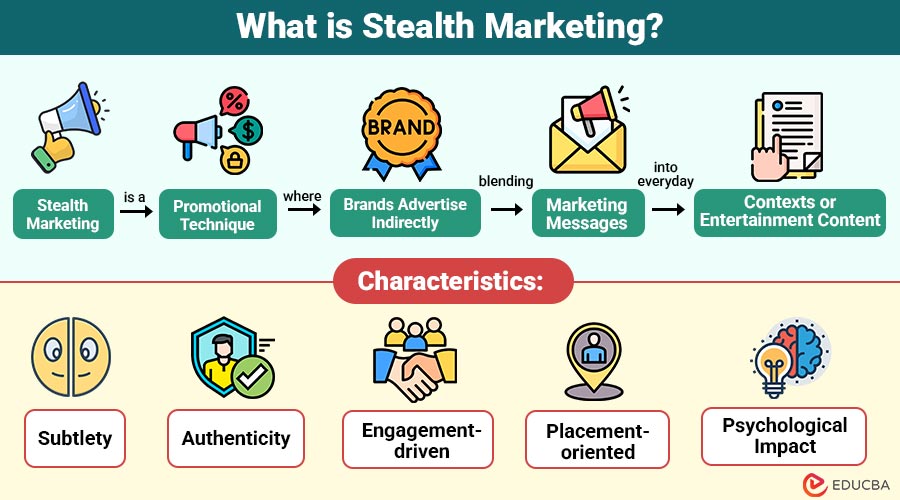
Stealth marketing is a promotional technique where brands advertise indirectly, blending marketing messages into everyday contexts or entertainment content. Unlike traditional ads, it avoids explicit calls-to-action, instead relying on subtlety and natural integration.
For example, when a character in a movie casually drinks a branded soda, or when an influencer mentions a product in conversation without labeling it as a paid promotion, that’s stealth marketing at work.
Table of Contents:
- Meaning
- Why Stealth Marketing Matters?
- Types
- Characteristics
- Strategies
- Advantages and Disadvantages
- Real-World Examples
- Use Cases
Key Takeaways:
- Stealth marketing subtly integrates products into everyday experiences, creating memorable impressions without overt advertising tactics.
- This approach fosters organic consumer engagement by sparking curiosity, conversations, and natural word-of-mouth promotion.
- Ethical transparency is crucial, as hidden promotions risk misleading audiences and potentially damaging brand credibility.
- Effective campaigns require creative placement, influencer integration, and experiential strategies to maximize long-term brand awareness.
Why Stealth Marketing Matters?
Stealth marketing has become an essential strategy in modern advertising because today’s consumers are highly aware of—and often resistant to—traditional marketing, instead of loud, direct promotions, stealth marketing slips into everyday life and entertainment, shaping perceptions without triggering resistance.
1. Overcomes Ad Fatigue
Advertisers bombard audiences daily with ads, from TV commercials to social media banners. Stealth marketing bypasses this fatigue by presenting brand messages in subtle, engaging ways.
2. Builds Authentic Connections
Consumers are more likely to trust brands when promotions feel natural and authentic. Stealth marketing makes the message part of an experience rather than an obvious sales pitch.
3. Encourages Organic Engagement
Rather than pushing for direct conversions, stealth campaigns spark curiosity and conversations. This leads to word-of-mouth promotion, which is often more powerful than traditional advertising.
4. Enhances Brand Recall
When products are woven into entertainment or real-life scenarios, they stick in consumers’ minds. Viewers remember the context, and by association, they remember the brand.
Types of Stealth Marketing
Stealth marketing is versatile and can take multiple forms. Here are some of the most common types:
1. Product Placement
Brands subtly feature products within films, TV shows, or music videos. This seamless integration creates natural exposure without disrupting the viewer’s entertainment experience.
2. Influencer Stealth Marketing
Influencers incorporate products into content without revealing paid partnerships. Audiences perceive it as genuine lifestyle sharing, increasing trust while disguising the promotional intent.
3. Street Marketing
Actors or marketers interact with the public, posing as everyday people. Their staged enthusiasm and conversations discreetly promote products in highly visible, natural settings.
4. Buzz Marketing
Brands generate intrigue through teasers, rumors, or mysterious campaigns. Curiosity fuels conversation, leading audiences to spread the message organically before official product launches.
5. Covert Online Marketing
Companies secretly post reviews, comments, or discussions on forums and social platforms. This hidden promotion builds credibility and influences opinions without obvious branding.
Characteristics of Stealth Marketing
Here are the key characteristics that define stealth marketing strategies:
1. Subtlety
Stealth marketing thrives on indirect promotion, ensuring the message is hidden within natural contexts. The audience receives the brand exposure without feeling consciously targeted or sold to.
2. Authenticity
Campaigns are designed to blend seamlessly into real-life experiences. The approach feels genuine and organic, making consumers more receptive compared to overt or aggressive advertisements.
3. Engagement-driven
Instead of pushing sales directly, stealth marketing encourages curiosity, sparking discussions and word-of-mouth. Audiences engage voluntarily, building trust and amplifying the brand’s message through social interactions.
4. Placement-oriented
Marketers carefully place messages within movies, shows, events, or everyday settings.This contextual integration makes the brand part of the environment rather than a disruptive external promotion.
5. Psychological Impact
The strategy subtly shapes consumer perceptions, emotions, and attitudes. Rather than focusing on immediate conversions, it builds subconscious familiarity and long-term affinity toward the brand.
Stealth Marketing Strategies
To implement stealth marketing effectively, businesses can adopt the following strategies:
1. Product Placement in Media
Collaborate with filmmakers, TV creators, or digital influencers to weave products naturally into narratives, ensuring exposure feels seamless and non-disruptive.
2. Influencer Integration
Encourage influencers to showcase products authentically in everyday content. This approach avoids forced promotions, making the brand appear as part of their lifestyle.
3. Word-of-Mouth Seeding
Use brand ambassadors or micro-influencers to casually recommend products in conversations, online communities, or real-life gatherings, driving trust and organic audience-driven engagement.
4. Event-based Stealth
Subtly integrate products within live events or sports activities without traditional advertisements, allowing audiences to engage naturally and remember the brand contextually.
5. Experiential Marketing
Design immersive, real-world interactions where consumers unknowingly experience a product, such as disguised free trials, creating authentic impressions without obvious promotional messaging.
Advantages and Disadvantages of Stealth Marketing
Like any strategy, stealth marketing comes with advantages and disadvantages.
Advantages:
- High Engagement: Captures audience attention subtly, making interactions feel natural, avoiding pushy or intrusive advertising approaches.
- Memorable: Creative, unique campaigns leave lasting impressions, ensuring audiences remember the brand long after initial exposure.
- Cost-Effective: Requires fewer resources than large-scale traditional campaigns while achieving meaningful visibility and engagement.
- Viral Potential: Sparks conversations and word-of-mouth, allowing campaigns to spread organically through social networks.
- Builds Curiosity: Encourages consumers to explore and discover the brand themselves, fostering deeper interest and connection.
Disadvantages:
- Ethical Concerns: Lack of transparency may mislead consumers, potentially harming trust and brand credibility if discovered
- Short-term Impact: Primarily generates buzz; may not directly result in immediate sales or measurable conversions.
- Risk of Backlash: If audiences realize hidden promotion, campaigns can provoke negative reactions and damage reputation.
- Legal Issues: Some regions mandate disclosure of paid promotions, making stealth marketing potentially non-compliant with regulations.
- Hard to Measure: Tracking ROI and campaign effectiveness is challenging compared to conventional advertising metrics and analytics.
Real-World Examples
Here are some notable examples of stealth marketing in action:
1. Sony Ericsson
Sony hired actors to pose as tourists and ask strangers to take photos with a new phone model. The goal was to spark curiosity without revealing it was a marketing stunt.
2. The Blair Witch Project
The horror film used stealth marketing by spreading rumors online and through forums, making audiences believe the story was real. This generated massive hype and box office success.
3. Red Bull Stunts
Red Bull sponsors extreme sports events where the brand is subtly visible, reinforcing its adventurous brand image.
Use Cases of Stealth Marketing
Here are some practical ways stealth marketing is applied:
1. New Product Launches
Generate curiosity and anticipation before an official release, allowing consumers to discover the product organically.
2. Entertainment Partnerships
Integrate products or brands with popular characters, movies, or stories, creating subtle exposure through enjoyable content.
3. Brand Revitalization
Refresh consumer interest by placing the brand in unexpected contexts, renewing attention and positive associations.
4. Youth Marketing
Reach younger audiences who often ignore traditional advertising, using subtle, relatable, and engaging methods they naturally interact with.
5. Event Promotions
Promote products or services during events without overt sponsorship, sparking conversations and organic buzz around the brand.
Final Thoughts
Stealth marketing is a powerful and subtle approach that enables brands to reach their audiences in unexpected ways. By blending into entertainment, events, and daily experiences, it avoids the pitfalls of traditional advertising while sparking curiosity and engagement. However, brands must carefully navigate ethical boundaries, ensuring their tactics do not mislead consumers. When executed thoughtfully, stealth marketing can be a game-changer in building brand awareness and creating memorable consumer experiences.
Frequently Asked Questions (FAQs)
Q1. Is stealth marketing legal?
Answer: Yes, but transparency laws require disclosure in many regions, especially for influencer promotions.
Q2. Why do companies use stealth marketing?
Answer: To avoid ad fatigue, spark curiosity, and create memorable impressions without direct promotion.
Q3. Can stealth marketing be measured effectively?
Answer: Measuring ROI can be challenging, but tracking engagement, social buzz, influencer reach, and long-term brand awareness helps assess effectiveness.
Recommended Articles
We hope that this EDUCBA information on “Stealth Marketing” was beneficial to you. You can view EDUCBA’s recommended articles for more information.

