
What is Solvency?
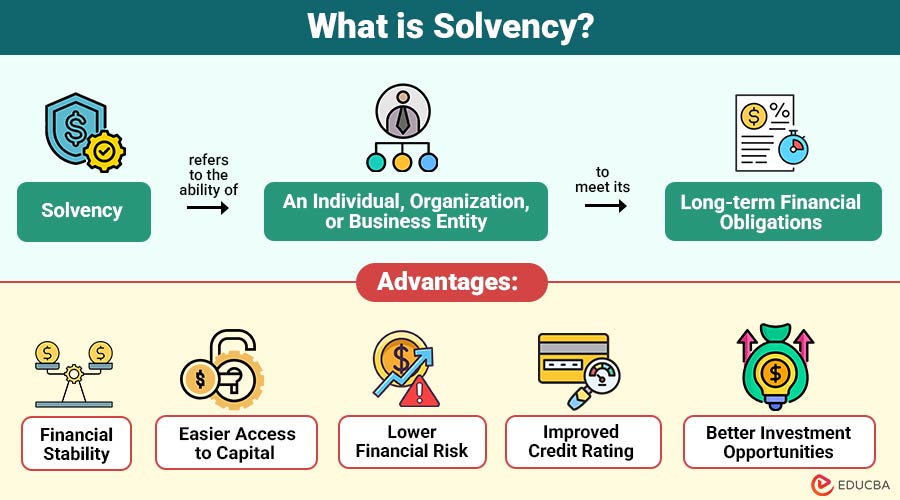
Solvency refers to the ability of an individual, organization, or business entity to meet its long-term financial obligations. In simple terms, it measures whether a business has enough assets to cover its liabilities over an extended period. It is critical measure of financial health because even lucrative businesses can fail if they are not solvent, that is, if they cannot manage their long-term debt.
Mathematically, solvency can be assessed using the formula:

A higher solvency ratio indicates greater financial stability, while a lower ratio suggests potential financial risk.
Table of Contents:
- Meaning
- Key Characteristics
- Importance
- Factors
- Advantages
- Disadvantages
- Real-World Examples
- How do Businesses Improve Solvency?
Key Takeaways:
- Solvency ensures long-term financial stability by enabling businesses to meet obligations and sustain operations effectively.
- Strong solvency builds investor confidence, reduces financial risk, and improves access to loans or investment opportunities.
- Factors such as debt level, profitability, cash flow, asset management, and economic conditions directly affect solvency.
- Businesses improve solvency by reducing debt, increasing profitability, improving asset management, building cash reserves, and implementing strategic financial planning.
Key Characteristics of Solvency
Here are the main characteristics that define a company’s solvency:
1. Long-Term Financial Stability
Measures a business’s long-term ability to meet obligations, ensuring it survives financially over multiple years.
2. Balance Between Assets and Liabilities
A solvent company always keeps total assets higher than liabilities, ensuring sufficient resources to pay all debts.
3. Debt Management
Solvent businesses manage debts carefully, borrowing within capacity, preventing over-leverage, and maintaining healthy financial operations consistently.
4. Investor Confidence
Investor confidence is boosted by strong solvency, which shows that the business is solid, dependable, and able to generate long-term financial returns.
5. Business Continuity
Good solvency ensures companies continue operations during downturns, economic challenges, or unexpected market disruptions without risking collapse.
Importance of Solvency
Here are the key reasons why it is crucial for businesses:
1. Ensures Business Survival
Companies with a strong financial foundation can withstand economic fluctuations, market uncertainties, and financial crises, ensuring long-term survival and operational stability.
2. Builds Investor Trust
Investors prefer businesses that demonstrate financial strength because it signals lower risk, stability, and a reliable potential for long-term returns.
3. Helps in Loan Approval
Banks and financial institutions assess solvency carefully before approving loans, credit facilities, or financial assistance to ensure repayment capability.
4. Supports Business Expansion
Solvent companies can raise capital efficiently for expansion, research, or new projects without facing difficulties securing funding or investor support.
5. Reduces Bankruptcy Risk
Maintaining solvency reduces the risk of insolvency, bankruptcy, or financial distress, allowing companies to operate sustainably and manage obligations.
Factors Affecting Solvency
Several factors influence a company’s solvency.
1. Level of Debt
Excessive borrowing weakens a company’s solvency because high debt increases financial obligations, interest payments, and repayment pressure consistently.
2. Profitability
Consistent profits improve by increasing retained earnings, strengthening financial resources, and enabling the company to meet obligations reliably.
3. Asset Management
Efficient and effective use of assets enhances financial stability, supports debt repayment, and maintains overall solvency.
4. Economic Conditions
Economic downturns reduce revenue, disrupt operations, and impair the company’s ability to manage long-term financial obligations.
5. Cash Flow Management
Stable, predictable, and well-managed cash flow ensures the timely payment of commitments, directly supporting solvency and financial sustainability.
Advantages of Strong Solvency
Here are the advantages of maintaining strong solvency in a business:
1. Financial Stability
Companies with strong solvency maintain long-term financial security, operational stability, and the ability to consistently meet obligations.
2. Easier Access to Capital
Lenders and investors prefer solvent companies, providing easier access to loans, funding, or investment opportunities for growth initiatives.
3. Lower Financial Risk
Good solvency reduces bankruptcy risk, financial distress, and instability, ensuring reliable operations and effectively protecting stakeholder interests.
4. Improved Credit Rating
Better credit ratings for financially sound businesses allow for better lending terms, reduced interest rates, and more institutional trust.
5. Better Investment Opportunities
Solvent companies can pursue strategic investments, research, expansion projects, and innovation without financial constraints or excessive reliance on external funding.
Disadvantages of Solvency
Here are some potential disadvantages:
1. Excessive Debt Can Harm Solvency
If a company borrows excessively, it may struggle to repay its loans, leading to financial distress and reduced solvency.
2. Poor Financial Planning
Weak budgeting, poor investment decisions, or mismanagement of resources can negatively affect a company’s solvency over time.
3. Economic Uncertainty
Market downturns, inflation, or global crises can reduce revenue and adversely impact a company’s long-term solvency.
4. Asset Devaluation
If company assets lose significant value while liabilities remain, solvency declines, threatening financial stability and operational continuity.
5. Overconfidence in Financial Health
Excessive financial strength may lead management to become overconfident, taking unnecessary risks that could threaten long-term stability.
Real-World Examples
Here are some practical examples in different contexts:
1. Corporate
Large multinational companies maintain strong solvency through diversified assets, stable revenue streams, effective debt management, and consistent financial planning.
2. Banking Sector
Banks follow strict regulatory solvency requirements to ensure sufficient capital, absorb potential losses, and reliably protect depositors’ funds.
3. Personal Finance
An individual with property, savings, and investments while keeping debts low is considered solvent, whereas excessive debt may cause insolvency.
How do Businesses Improve Solvency?
Businesses can strengthen through several financial strategies.
1. Reduce Debt Levels
Companies should avoid excessive borrowing, repay existing loans gradually, and maintain manageable debt to strengthen long-term solvency effectively.
2. Increase Profitability
Retained earnings, overall firm solvency, and financial health are all continuously improved by increasing revenue, reducing expenses, and improving operating efficiency.
3. Manage Assets Efficiently
Businesses should invest in productive, income-generating assets, optimize utilization, and ensure they contribute to long-term financial stability and solvency.
4. Maintain Cash Reserves
Strong and sufficient cash reserves enable businesses to reliably meet financial obligations, handle emergencies, and maintain solvency during difficult periods.
5. Strategic Financial Planning
Proper budgeting, forecasting, and strategic financial planning help businesses maintain sound solvency, support growth, and mitigate financial risks effectively.
Final Thoughts
Solvency indicates long-term financial stability, measuring the ability to meet obligations and sustain operations without distress. Strongly solvent companies balance assets and liabilities, manage debt effectively, and maintain consistent profitability. Understanding helps investors, lenders, and business owners assess financial risk. Responsible debt management, efficient use of assets, and strategic planning ensure long-term success and sustainable financial health.
Frequently Asked Questions (FAQs)
Q1. What happens if a company becomes insolvent?
Answer: If a company becomes insolvent, it cannot meet its financial obligations and may face restructuring, liquidation, or bankruptcy.
Q2. Can a company be profitable but still insolvent?
Answer: Yes. A company may earn profits but have long-term debts exceeding its assets, making it insolvent despite short-term profitability.
Q3. Why is maintaining solvency important for investors?
Answer: Maintaining solvency signals financial stability, reduces investment risk, and assures investors that the company can deliver long-term returns reliably.
Q4. How is solvency different from liquidity?
Answer: Solvency is the ability to meet long-term debts, while liquidity is about paying short-term obligations.
Recommended Articles
We hope that this EDUCBA information on “Solvency” was beneficial to you. You can view EDUCBA’s recommended articles for more information.


