


What Makes a Software Engineering Company Competitive in Global Technology Trends?
In the fast-paced digital world, software engineering company competitiveness is no longer determined solely by technical skill. Developers rarely build systems for a single market or a clearly defined user group, and they rarely remain that way for long. Requirements change, regulations shift, and usage patterns evolve in ways that are difficult to predict at the design stage. For the software engineering company Crunch, competitiveness increasingly comes down to how these changes are handled over time. The company has taken a leading role in the market by delivering applications based on modern engineering principles to ensure its production is fast, reliable, and scalable.
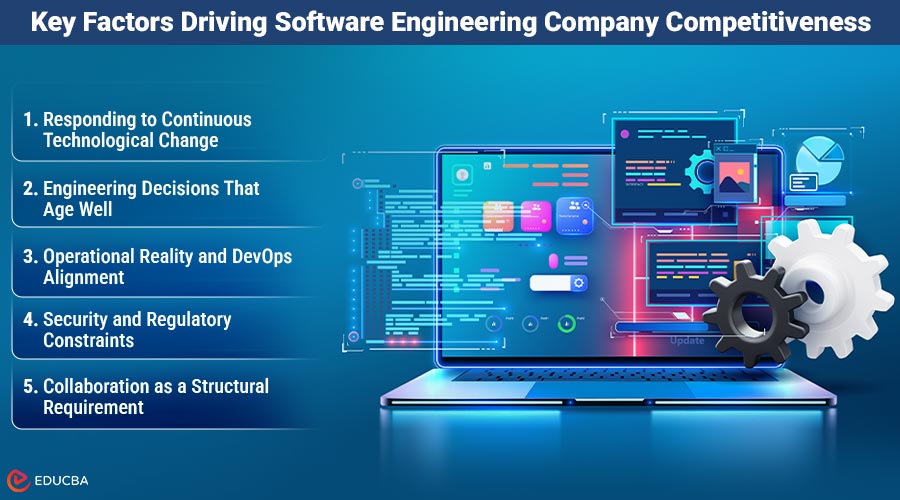
Key Factors Driving Software Engineering Company Competitiveness
Here are the key factors that contribute to the competitiveness of software engineering companies.
1. Responding to Continuous Technological Change
Technological change in software engineering does not arrive as a single disruptive moment it accumulates gradually. Artificial intelligence, cloud platforms, automation frameworks, and data-oriented architectures evolve at different speeds, often creating uneven pressure on existing systems, forcing engineers to decide how to adapt them to improve the endurance and flexibility of already working systems, while also building new ones from scratch. Competitive companies do not treat every new technology as an immediate opportunity. Instead, they evaluate whether it is possible to integrate, maintain, and support without actually reshaping the entire system. This selective approach reduces fragmentation and helps ensure that innovation strengthens system stability rather than increasing operational burden.
2. Engineering Decisions That Age Well
As systems expand over time, early architectural shortcuts often reveal their limitations. Even if it initially speeds up development, that can later restrict flexibility and complicate changes. It is why competitive engineering teams favor clear boundaries, explicit interfaces, and shared conventions, accepting slower early progress in exchange for long-term stability. In distributed systems, independent scaling brings flexibility, but it also requires active oversight to prevent unnecessary complexity.
3. Operational Reality and DevOps Alignment
Operational reliability remains one of the clearest differences between engineering organizations. DevOps practices address this by narrowing the gap between development and operational responsibility. CI/CD pipelines reduce friction around releases, but their primary value lies in predictability rather than speed. Automation across system components further supports this predictability. Infrastructure definitions, testing workflows, and monitoring systems provide different levels of visibility into the system’s workflow. With them, engineers no longer have to make assumptions when problems arise; they receive concrete evidence and can take adequate measures.
4. Security and Regulatory Constraints
Worldwide distributed systems rarely operate under a single set of security or compliance expectations. Companies that address this complexity early by embedding security into development workflows, rather than treating it as an afterthought, position themselves to deliver a more stable final product. Automated vulnerability analysis, dependency tracking, and continuous testing help reduce risk exposure, while awareness of regional regulatory requirements enables systems to adapt without creating legal or operational blind spots. Over time, this integration supports trust as much as technical stability.
5. Collaboration as a Structural Requirement
Modern engineering teams often work across time zones, organizations, and cultural contexts. Documentation, shared knowledge, and transparent workflows reduce reliance on individual contributors and support continuity as teams change, while minimising the risk that differences affect the work process. Organizations that invest in learning and knowledge exchange tend to adapt more smoothly to evolving technologies, and shared understanding helps preserve system coherence even as tools and processes evolve.
6. Innovation Without Erosion
Sustained competitiveness depends on restraint as much as on experimentation. Rapid adoption of innovations without architectural grounding may actually increase technical debt, limiting future change rather than improving the process. Companies that implement new trends add new capabilities gradually, aligning them with existing system constraints. When approaching technological change as an ongoing adjustment, rather than a series of breakthroughs, engineers remain responsive to global trends while maintaining long-term system integrity.
Final Thoughts
Software engineering company competitiveness relies on continuous adaptation, strategic innovation, and operational excellence. By integrating new technologies thoughtfully, enforcing strong architectural practices, and fostering collaboration, companies can respond to global trends while ensuring long-term stability and reliability.
Recommended Articles
We hope this guide on software engineering company competitiveness helps you understand key strategies for staying ahead. Check out these recommended articles for more insights and best practices.

