
What is Social Selling?
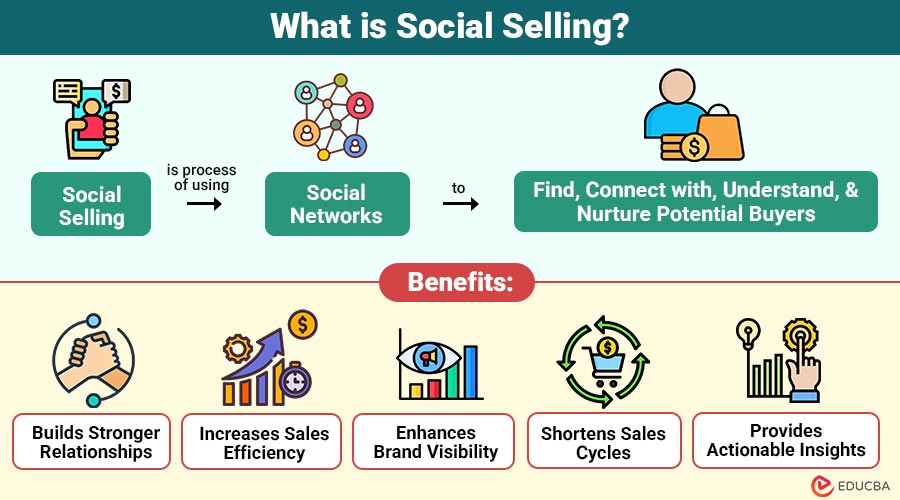
Social selling is the process of using social networks to find, connect with, understand, and nurture potential buyers. The goal is to leverage online platforms to engage with prospects in a meaningful way, offering valuable insights and building credibility that naturally leads to sales opportunities.
Unlike traditional sales, which often rely on aggressive pitches or cold outreach, social selling emphasizes:
- Relationship-building: Establishing trust and authority with prospects.
- Personalization: Modifying communications to speak to the unique requirements and preferences of possible customers.
- Thought leadership: Sharing relevant, insightful content to educate and influence buyers.
Table of Contents:
- Meaning
- Key Elements
- Benefits
- Top Platforms
- Steps to Implement Social Selling
- Tools
- Challenges
- Real-World Examples
- Best Practices
Key Takeaways:
- Social selling builds trust by engaging prospects with personalized, insightful content, fostering long-term professional relationships effectively.
- Optimizing profiles, sharing valuable content, and consistent engagement enhance credibility and attract high-quality leads online.
- Monitoring social conversations and analyzing metrics enables businesses to refine their strategies, thereby improving sales efficiency and conversion rates.
- Leveraging multiple platforms strategically empowers companies to educate, influence, and nurture buyers, shortening the sales cycle.
Key Elements of Social Selling
A successful social selling strategy involves several core elements:
1. Profile Optimization
A professional social media profile builds trust, showcasing expertise, a high-quality image, a compelling headline, a detailed bio, and service highlights.
2. Social Listening
Monitor industry conversations, mentions, and trends to identify prospects’ needs, pain points, and engagement opportunities for targeted relationship-building.
3. Content Sharing and Thought Leadership
Share insightful articles, videos, and infographics to demonstrate expertise, educate your audience, and establish credibility as an industry thought leader.
4. Engagement and Relationship Building
Interact genuinely with prospects via comments, likes, and shares; personalized messaging and timely responses strengthen trust and rapport.
5. Lead Identification and Qualification
Utilize analytics and filters to identify high-potential prospects, concentrating efforts on qualified leads that are likely to convert into loyal customers.
6. Performance Measurement
Track engagement rates, content reach, response times, and conversion metrics to optimize social selling strategies and improve overall sales effectiveness.
Benefits of Social Selling
Here are the benefits of social selling that help businesses build relationships, improve efficiency, and drive growth:
1. Builds Stronger Relationships
Social selling emphasizes trust and rapport, resulting in higher-quality leads and long-term customer loyalty.
2. Increases Sales Efficiency
By targeting prospects who are already engaging with your content or industry topics, sales teams can focus their efforts on high-potential leads rather than making cold calls to random contacts.
3. Enhances Brand Visibility
Active social engagement increases your professional visibility, positioning your brand or personal profile as a go-to resource in your niche.
4. Shortens Sales Cycles
Engaged and educated prospects are more likely to make faster purchasing decisions.
5. Provides Actionable Insights
Interactions on social media provide valuable insights into consumer preferences, behavior, and feedback, enabling informed sales tactics.
Top Platforms for Social Selling
While social selling can occur across any social platform, certain channels are more effective depending on your industry and audience:
1. LinkedIn
Ideal for B2B sales, LinkedIn allows professionals to showcase expertise, connect with decision-makers, and share thought leadership content.
2. Twitter/X
Twitter is excellent for engaging in industry conversations, monitoring trends, and providing timely responses to prospects’ questions.
3. Facebook & Instagram
Particularly effective for B2C sales, these platforms allow brands to share visually compelling content and engage directly with consumers.
4. TikTok
Emerging as a platform for brand storytelling, TikTok is ideal for creative engagement with younger audiences.
Steps to Implement Social Selling
Here is a structured approach to effectively use social selling for building relationships and driving sales:
Step 1: Optimize Your Profile
Ensure your social media profiles convey professionalism, credibility, and expertise.
Step 2: Identify Your Target Audience
Establish your ideal client profile and segment your audience into groups based on roles, industries, and pain points.
Step 3: Listen and Research
Monitor industry conversations, competitor activities, and potential client interactions to discover opportunities for engagement.
Step 4: Share Valuable Content
Publish content that addresses your audience’s challenges, educates them, and provides actionable insights.
Step 5: Engage with Prospects
Comment on posts, participate in discussions, and send personalized messages to initiate relationships.
Step 6: Measure and Refine
Track engagement metrics, response rates, and conversion data to continuously refine your social selling approach.
Tools to Enhance Social Selling
Here are some essential tools to improve efficiency, engagement, and results in your social selling strategy:
1. LinkedIn Sales Navigator
Advanced platform for lead search, providing personalized insights, CRM integration, and prospect recommendations to improve social selling effectiveness and sales outcomes.
2. Hootsuite or Buffer
Social media management tools enable efficient scheduling of posts, monitoring of activity, and consistent engagement with prospects across multiple platforms.
3. HubSpot
A CRM platform integrating social interactions, tracking leads, managing customer relationships, automating workflows, and improving sales team productivity.
4. Sprout Social
Provides analytics, social listening, and reporting tools to monitor engagement, measure performance, and optimize social selling strategies effectively.
5. BuzzSumo
Content research platform analyzing trends, identifying popular topics, and helping create targeted, high-performing content to engage prospects strategically.
Challenges in Social Selling
Despite its advantages, social selling comes with challenges:
1. Time Investment
Building meaningful relationships and establishing credibility requires significant time, and measurable results from social selling may take months to materialize.
2. Content Quality
Consistently creating valuable and engaging content requires creativity, effort, resources, and strategic planning to maintain audience interest and demonstrate expertise.
3. Platform Dynamics
Regular modifications to social media algorithms can impact the reach and engagement of content; therefore, social selling tactics must be continuously adjusted for maximum efficacy.
4. Training Needs
Sales teams require training in social media skills, communication, and relationship-building to engage prospects and optimize social selling outcomes effectively.
Real-World Examples
Here are notable companies successfully using social selling to drive engagement, leads, and revenue:
1. IBM
IBM leveraged LinkedIn, sharing thought leadership content, engaging prospects, and generating qualified leads, significantly boosting brand credibility and revenue growth.
2. Adobe
Adobe utilizes social listening and active engagement to identify potential customers, delivering personalized product demos, insights, and solutions to drive higher conversions.
3. HubSpot
HubSpot’s sales teams engage prospects on social media by sharing educational content, nurturing relationships, and building trust before presenting their product offerings.
Best Practices for Social Selling
Here are the essential best practices to maximize the effectiveness of your social selling strategy:
1. Be Authentic
Avoid scripted sales pitches; focus on genuine engagement that resonates with prospects, builds trust, and fosters long-term professional relationships effectively.
2. Focus on Value
Share content that educates, informs, or solves problems for prospects, rather than pushing products, to enhance credibility and audience engagement consistently.
3. Personalize Interactions
Tailor messages to each prospect’s unique interests, needs, and challenges to increase engagement, build rapport, and improve conversion likelihood.
4. Engage Consistently
Maintain regular interactions on social media, commenting, sharing, and responding to strengthen relationships, improve visibility, and reinforce thought leadership.
5. Measure Results
Utilize analytics to track engagement, reach, and conversions, identifying effective strategies while continually refining social selling tactics for improved performance.
Final Thoughts
Social selling transforms sales by prioritizing relationships, trust, and value, turning prospects into loyal customers. It strategically leverages digital channels to build meaningful connections, boost engagement, and drive revenue. Businesses that utilize social selling position themselves for long-term growth and success in today’s competitive digital market by fostering stronger customer relationships, shorter sales cycles, and enhanced brand credibility.
Frequently Asked Questions (FAQs)
Q1. How long does it take to see results from social selling?
Answer: Results vary, but consistent engagement and relationship-building can show measurable outcomes in 3–6 months.
Q2. Is social selling only for B2B companies?
Answer: No. While LinkedIn is effective for B2B, platforms like Instagram, Facebook, and TikTok are excellent for B2C engagement.
Q3. Can social selling replace traditional sales entirely?
Answer: Not entirely. It complements traditional methods by providing more targeted, relationship-driven approaches to sales.
Q4. What metrics should I track in social selling?
Answer: Key indicators include engagement rates, response rates, lead conversion, content reach, and social influence metrics.
Recommended Articles
We hope that this EDUCBA information on “Social Selling” was beneficial to you. You can view EDUCBA’s recommended articles for more information.


