


Social Proof in Digital Marketing: Overview
In the digital world, social proof in digital marketing has become one of the most powerful forces influencing online decisions. Simply put, people trust other people more than logos, ads, or brand slogans. Consider your own habits: before booking a hotel, you likely check reviews on Booking or TripAdvisor. Before buying on Amazon, you look at star ratings and read customer feedback. Even on social media, a short testimonial video or an Instagram story from someone you follow often carries more weight than a polished commercial.
Consumers crave validation from real experiences, and this trend is growing stronger. Traditional advertising alone is no longer enough to persuade buyers. Instead, authentic voices—such as those of other customers, communities, and creators—guide our choices. This is why social proof has become essential in digital marketing, not just optional. The rise of user-generated content (UGC) and technologies that manage it at scale makes this shift even more powerful.
Why Social Proof in Digital Marketing Matters?
The modern buyer’s journey has undergone significant changes. No longer linear, it is now full of touchpoints, including search engines, social media feeds, influencer shoutouts, and peer recommendations. At each stage, social proof plays a decisive role:
- Increased Trust: 79% of people report that user-generated content strongly influences their buying decisions.
- Reduced Risk: Reviews, testimonials, and real customer stories help minimize doubts and increase confidence before making a purchase.
- Higher Conversions: Studies show landing pages with testimonials convert up to 34% better than those without.
Social proof is no longer just a tactic—it has become a necessity for brands that want to thrive in an age of skepticism.
The Evolution of Social Proof in Digital Marketing
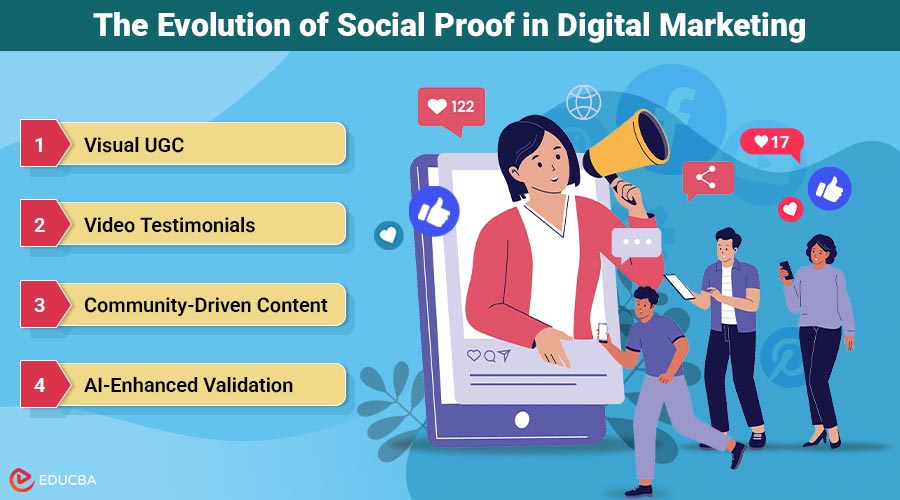
Traditionally, social proof came in the form of star ratings and written testimonials. While still relevant, they are no longer enough. Consumers are more sophisticated, and they expect richer, more interactive content that mirrors real experiences. Here is how social proof is evolving:
- Visual UGC: Customers now share unboxing videos, product tutorials, and lifestyle photos, providing authentic storytelling that brands can not replicate.
- Video Testimonials: Video offers tone, emotion, and nuance that text reviews can not capture. Seeing a real customer discuss their experience feels like word-of-mouth marketing on a massive scale.
- Community-Driven Content: Online groups, Discord servers, and brand communities enable customers to validate one another in real-time.
- AI-Enhanced Validation: Emerging AI systems help curate, highlight, and distribute the most impactful social proof automatically, streamlining the process.
This shift signals a future where content created by real users becomes the central marketing asset, not just an add-on.
How UGC Tools Are Shaping the Future?
To scale this new wave of social proof, brands need infrastructure. Collecting, managing, and publishing UGC manually is almost impossible at scale. That is where ugc tools come in. These platforms simplify every step of the process:
- Collection: Brands can request video reviews, testimonials, or product showcases directly from customers.
- Management: Tools provide rights management, categorization, and moderation, ensuring compliance and brand safety.
- Publishing: You can share UGC on websites, ads, and social media in just a few clicks.
By lowering friction, UGC tools empower brands to turn happy customers into storytellers, transforming authentic content into a steady pipeline of social proof.
Practical Ways Brands Can Leverage Social Proof
Forward-thinking marketers are already reimagining how to apply social proof in campaigns. Some proven strategies include:
- Embedding UGC on Product Pages: Displaying real customer videos and images alongside purchase buttons can significantly increase conversions.
- Integrating Testimonials Into Ads: Social proof in paid campaigns often leads to higher CTR and lower CPC.
- Building Community-First Campaigns: Highlighting customer stories not as ads, but as part of the brand narrative, builds stronger trust.
- Dynamic Social Proof Widgets: Display real-time reviews, live purchase notifications, and user activity to create a sense of urgency and credibility.
Tools that streamline the UGC process amplify each of these strategies, turning social proof into a permanent marketing engine rather than just a campaign tactic.
The Future: From Validation to Participation
The next wave of social proof in digital marketing goes beyond simply validating purchase decisions. It is no longer just about a five-star rating or a quick testimonial—the real potential lies in turning consumers into active participants in brand growth. Customers no longer remain passive buyers; they actively become co-creators, collaborators, and advocates who shape how the market sees brands.
Every customer interaction can become content—whether it is a TikTok video, an Instagram story, or a detailed LinkedIn review. Brands that embrace this shift treat UGC not as a side campaign, but as a core part of their marketing strategy. Imagine communities where customers not only share their experiences but also influence product development, campaign storytelling, and even customer service standards.
Technology is accelerating this change. UGC tools like Vidlo make participation seamless, inviting customers to submit video testimonials, showcase real use cases, or collaborate on branded content. AI can then identify the most impactful contributions, amplifying the right voices across ads, landing pages, and social media. This represents a fundamental shift: social proof will no longer be a static endorsement at the end of the buyer’s journey. It becomes a dynamic cycle, where customers continuously validate, create, and shape the brand experience alongside the company. As Gen Z and Gen Alpha gain more buying power, authenticity and community-driven storytelling will surpass traditional messaging. Social proof will evolve from “convincing” consumers to co-creating with them.
Final Thoughts
The future of digital marketing relies on social proof. Real people sharing real experiences, rather than polished campaigns, now build trust. Brands that effectively leverage social proof in digital marketing and scale user-generated content (UGC) will stand out as authentic, credible, and relatable. The smartest way to start is by making UGC a scalable part of your strategy—using ugc tools to collect, manage, and amplify customer voices. In the end, your customers—not your marketing department—deliver the most persuasive message your brand can share.
Recommended Articles
We hope this guide to social proof in digital marketing helps boost your marketing strategy. Check out these recommended articles for more tips and insights.


