


Why Sleep Environment Matters for Your Bedroom?
We often underestimate how profoundly the environment affects the quality of our sleep. Sleep is an active process and a necessity that helps restore the body, keep the mind active, and maintain emotional balance. While much of our focus is on exercise and diet, we often overlook that we spend a third of our lives in the bedroom. You should control your bedroom like a delicate laboratory of sleep, managing details such as light, sound, and support to achieve deep and restful sleep. Sleep environment optimization is, therefore, the ultimate investment you can make for both your day-to-day and long-term health.
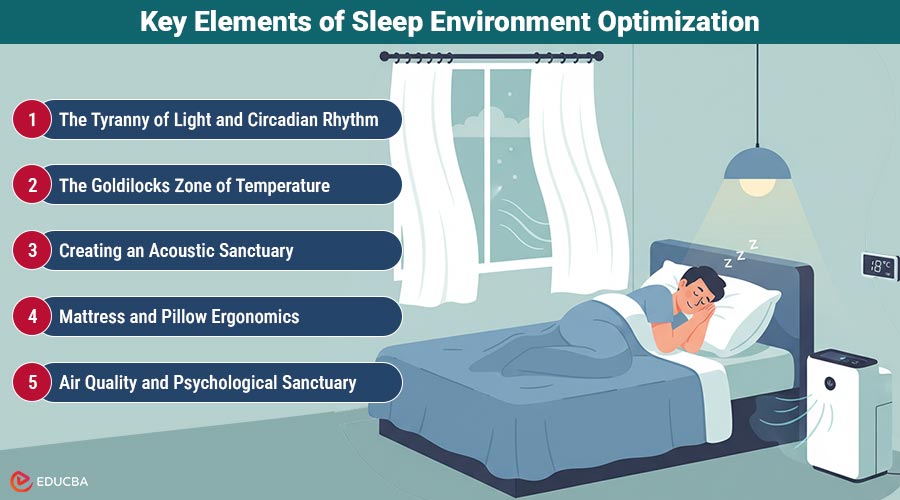
Key Elements of Sleep Environment Optimization
Here are some essential factors to focus on for effective sleep environment optimization:
1. The Tyranny of Light and Circadian Rhythm
Light is the most powerful external factor affecting our sleep, as it regulates our body’s 24-hour internal clock, or circadian rhythm. When the eye detects darkness, the hormone that makes the body sleepy, melatonin, is produced.
Any source of light can interfere with this basic process. Blue light, in particular, is very toxic. The screens (smartphones, tablets, and TVs) produce blue light, which suppresses the production of melatonin to the extent that it delays the onset of sleep and distorts the body’s normal sleep-wake rhythm. Light, whether outside or indoors, and like a glowing alarm clock, can also lead to micro-arousal events or napping, disturbing the quality of sleep. Still, the sleeper may not even notice eventualities.
Keep your bedroom as dark as you can to improve your sleep. Install blackout curtains and avoid screens at least an hour before bedtime.
2. The Goldilocks Zone of Temperature
Temperature control is a silent but strong determinant of sleep quality. To fall asleep and to have good sleep, the core body temperature must be lowered naturally by a few degrees. A room that is too warm prevents you from achieving the necessary cooling, leading to tossing, turning, and restless sleep.
Most people sleep best in a temperature range of 60–67°F (15.5–19.5°C), which supports thermoregulation. Achieving this Goldilocks Zone can be part of your sleep environment optimization strategy:
- Breathable Bedding: It is preferable to use natural materials that are moisture-wicking, like cotton, bamboo, or linen, to keep the body cool and prevent the unpleasant feeling of overheating.
- Layering: Sleepers may also have multiple light blankets on them to adjust the amount of thermal comfort needed during the night without necessarily waking up much.
3. Creating an Acoustic Sanctuary
The primary cause of discontinuous sleep is noise pollution. Surprising, momentary sounds such as the honking of a vehicle, a beating neighbor, or the plumbing can speed up the heart rate, increase cortisol secretions, and pull the brain out of the more profound and restorative sleep stages. The brain can remain in a state of hypervigilance, even when exposed to low-level noises that are not always constant.
The introduction of consistent masking sound is the best technique for alleviating noise disruption. Pink, brown, or white noise machines create a constant sound that masks annoying external noise. It is an acoustic curtain that allows the brain to rest and forget the auditory environment, leading to longer periods of continuous rest. Additionally, keep windows and doors closed to reduce noise from the street.
4. Mattress and Pillow Ergonomics
Light and sound are considered preconditions, but the non-negotiable grounds of healthy sleep are the physical comfort and ergonomic support that your bed system can offer. The pillow and mattress should effectively hold the spine in its natural position to ensure even distribution of body weight, thereby removing pressure points. A wrong or worn-out mattress can leave you in a sagging position or one that contradicts your sleeping style—side, back, or stomach—overriding all other environmental adjustments and forcing the body to change its position every other night to alleviate pain.
The right firmness and material (such as responsive latex, cooling gel foam, or an innerspring hybrid) is a very personal and critical health choice. This investment has a direct effect on posture, circulation, and muscular recovery. That is why you should usually seek help from professionals. Many individuals persevere to discover what they need and visit SleePare’s mattress stores, where experts provide advice to match their needs with the latest sleep technology. A quality and supportive mattress is the most crucial element of the best sleeping environment.
5. Air Quality and Psychological Sanctuary
Two additional considerations for sleep environment optimization are:
- Air Quality: The air that you inhale for eight hours a day must be clean. Regular Aircon Servicing helps reduce allergens and airborne contaminants, including VOCs released from furniture and cleaning products, which can otherwise cause respiratory irritation, congestion, and disrupted sleep. Ventilation of the room and high-efficiency particulate air (HEPA) filters significantly improve air quality and allow free and uninhibited breathing throughout the nighttime.
- Psychological Sanctuary: The bedroom must be psychologically associated with rest. Tidy and unclutter the room to prevent mental strain caused by visual disorganization. The room must not be a sleeping room. Creating a calm, minimalistic atmosphere with relaxing colors will help your mind relax once you enter the room, completing the psychological preparation.
Final Thoughts
Optimizing your sleep environment is a principle of self-care with measurable physiological and psychological benefits. By regulating light, temperature, noise, physical support, and air quality, you remove major barriers to restorative sleep. Proper sleep environment optimization leads to improved mood, cognitive performance, immune function, and daily stress management. Transform your bedroom into a sanctuary, and you will experience the profound benefits of truly restorative sleep.
Recommended Articles
We hope this guide on sleep environment optimization helps you create the perfect bedroom for restorative sleep. Explore these articles for more tips on improving sleep quality and overall well-being.

