


Security Camera Placement: Overview
Proper security camera placement is crucial in determining how effective a camera will be. Without proper placement, the camera captures blurry images, leaves blind spots, and cannot cover a wider area or important locations. You have to place the camera at an optimal location for robust security. This article will discuss the placement of indoor and outdoor security cameras. We will highlight key locations, what to consider when selecting a location, and share tips to enhance its effectiveness.
Where to Place an Outdoor Security Camera?
Here are some ideal locations to place outdoor security cameras.
- Main Entrance: Your main entrance, such as the front door, is an ideal location for placing an outdoor security camera. It helps you monitor everyone visiting your house and parcels.
- Front Yard/Backyard: These areas are important for detecting intruders, trespassers, and thieves before they enter your house or commit any wrongdoing. You can also keep an eye on people coming to your home and passing by.
- Garage: Garages often store valuable assets. Often, thieves target them as they are easier to break into. They provide a soft entrance to the home. Having a security camera at this location is needed for home security.
- Driveway: Install a security camera at the driveway to monitor vehicles entering your property or parking nearby. You can clearly capture license plates and vehicle details.
Where to Place an Indoor Security Camera?
Place indoor security cameras at the following locations for optimal security.
- Entryway: Perfect for capturing everyone entering your house. You can monitor who entered or left. It is a must-have for robust security.
- Hallway: The hallway is a central location for capturing anyone moving between bedrooms, the living area, and upstairs.
- Living Room: To capture lively family moments and protect valuable items, install an indoor security camera in the living room.
- Children/Elderly Room: To remotely protect your loved ones, you can place indoor security cameras in the children’s or elderly room. It provides real-time updates and enables direct communication.
- Pet Area: If you own a pet, it is best to install an indoor security camera that points toward the pet area. It helps you observe your pet’s behavior, prevent unwanted behavior, and calm your pet when you are away.
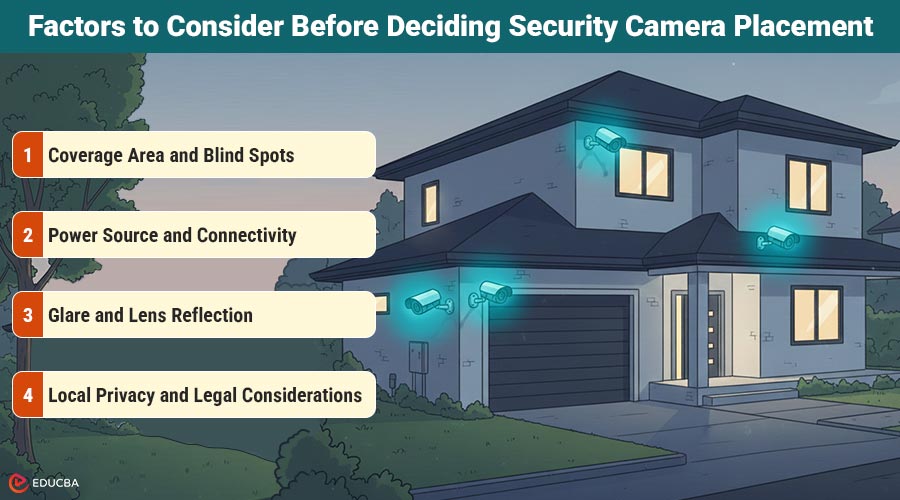
Factors to Consider Before Deciding Security Camera Placement
Before installing your cameras, keep the following key points in mind to ensure proper coverage, connectivity, and compliance:
#1. Coverage Area and Blind Spots
Wherever you place the security camera, make sure it covers the maximum area. There should be no obstacles in the field of view. Secondly, note any blind spots and ensure you cover the most critical area. If one camera is not enough, you can use multiple cameras to cover the area.
#2. Power Source and Connectivity
If it is a PoE camera, you should be able to run an Ethernet cable to the location without any hassle. It is necessary for both power and connectivity. For a plug-in camera, you need a nearby power outlet. If the camera supports Wi-Fi, ensure the signal is strong at the installation location.
#3. Glare and Lens Reflection
When placing the camera, do not point it directly at any reflective surface, such as glass windows or doors. Adjust its angle slightly downward to prevent direct sunlight from hitting the lens. It also protects the lens from raindrops and snow.
#4. Local Privacy and Legal Considerations
Make sure you are not invading your neighbor’s privacy. Only cover your home and important outdoor areas. Even at home, you cannot install cameras in areas where people expect privacy. Also, check local laws and regulations, such as data protection laws and restrictions on camera placement. Remember, in most US states, you cannot record audio without consent.
Tips for Security Camera Placement
To make the most of your cameras, follow these practical tips and best practices for optimal placement and coverage:
- Place security cameras at 8 feet to capture a wider area and keep them out of reach.
- Place the camera in a far corner to maximize coverage.
- Do not position the camera directly toward reflective surfaces, as this can cause glare.
- Make sure the camera lens does not face direct sunlight.
- Avoid pointing the camera directly at neighboring properties. Use privacy masks and record only the areas that need coverage.
- Display appropriate signage in the area to inform people that you are recording.
- Place indoor cameras in hallways and stairways to capture movement throughout the house.
- Do not place a camera near a white wall or under a deep overhang. Infrared lights bounce off white surfaces.
Final Thoughts
Proper security camera placement is as important as choosing a high-quality camera. Selecting the right locations, clearing obstructions, and avoiding blind spots ensures maximum coverage and protection for your home. By following these tips and considerations, your security cameras will be more effective, helping you safeguard your property and loved ones.
Frequently Asked Questions (FAQs)
Q1. Where not to place security cameras?
Answer: Do not place security cameras at locations where privacy is expected, such as bedrooms, bathrooms, changing rooms, and guest rooms. Avoid pointing cameras directly at neighbors’ windows, doors, and covered backyards.
Q2. Is a neighbor allowed to have a camera pointed at my house?
Answer: Neighbors may install a camera aimed at their property to capture the front of the street, the driveway, and other areas visible to the public that are important for security. They cannot point cameras directly at locations where privacy is expected, such as windows and fenced backyards.
Q3. What are the mistakes for home security camera placement?
Answer: People often place cameras at the wrong height and angle. They often do not consider area coverage, visual obstructions, and blind spots. The most common problem is pointing the camera at reflective surfaces or direct sunlight, which causes glare and degrades image quality.
Recommended Articles
We hope this guide on security camera placement helps improve your home security. Check out these recommended articles for more tips and strategies.

