
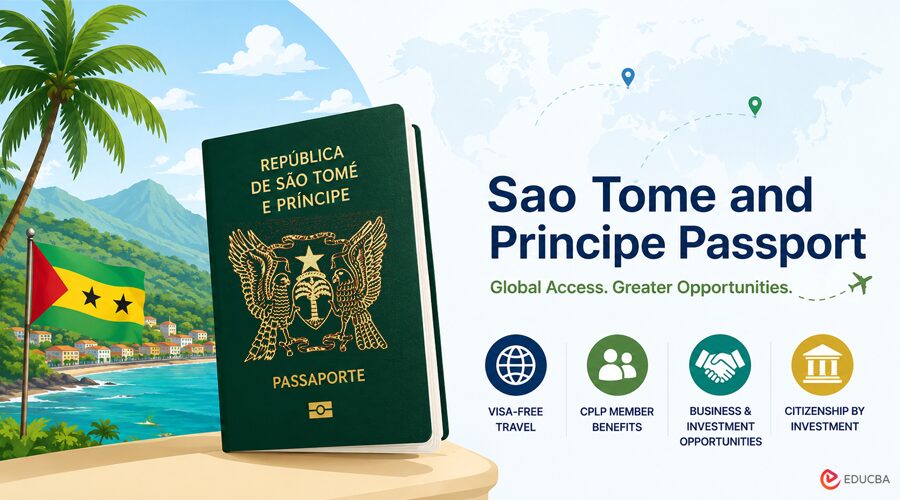
The Sao Tome and Principe passport is among the lesser-known second passport options for global citizens, but its travel document benefits, CPLP membership advantages, and Schengen access make it a genuinely useful addition to a dual-nationality strategy. This guide covers the Sao Tome and Principe passport in detail: its visa-free access profile, its specific benefits over other African passports, and how the citizenship-by-investment route provides a legal path to obtaining it.
Sao Tome and Principe Passport: Visa-Free Access Overview
The Sao Tome and Principe passport provides visa-free or visa-on-arrival access to a meaningful range of countries, with particular strength in the following categories:
- Schengen Area: Citizens of Sao Tome and Principe can enter the 27-country Schengen Area without a visa, a significant benefit for applicants whose passports require a Schengen visa application.
- CPLP member states: As a member of the Community of Portuguese Language Countries, Sao Tome passport holders benefit from preferential mobility arrangements with Portugal, Brazil, Cape Verde, Angola, Mozambique, Guinea-Bissau, Timor-Leste, and Equatorial Guinea.
- African Union member states: The passport provides access rights across the African Union, relevant for applicants with business interests across the continent.
- Additional destinations: Visa-free or visa-on-arrival access extends to additional countries across Asia, the Americas, and the Pacific. The full current list should be verified with an authorized agent as visa agreements evolve.
Why CPLP Membership Matters?
One of the most notable and practical benefits of São Tomé and Príncipe citizenship is its membership in the Community of Portuguese Language Countries (CPLP). The CPLP Mobility Agreement, signed in 2021, establishes a framework for preferential mobility, residency, and work rights across nine member states with a combined population of over 300 million and major economies such as Brazil and Portugal.
For investors and entrepreneurs, this means:
- Business establishment rights: Simplified pathways to establish and operate businesses in CPLP member states.
- Residency pathways: Preferential residency applications in Portugal, and by extension the EU, for citizens of CPLP member states.
- Educational access: Access to Portuguese and Brazilian universities under favorable conditions for citizens of CPLP countries.
- Cultural and linguistic network: Connection to a global network of approximately 300 million Portuguese speakers across four continents.
Obtaining the Sao Tome Passport through Citizenship by Investment
The Sao Tome and Principe citizenship by investment program is the primary legal route for foreign nationals to obtain Sao Tome citizenship and a passport without ancestry or naturalization requirements.
The investment-to-passport pathway follows a structured process:
- Qualifying investment: Make a qualifying investment through one of the approved routes, real estate, capital transfer, or business investment.
- Due diligence: Complete the program’s background verification process, which assesses the applicant’s criminal record, financial history, and source of funds.
- Citizenship grant: Upon approval and completion of investment, citizenship is granted, and a passport is issued.
- Dependent inclusion: Eligible family members, including a spouse, children, and, in certain cases, parents, may be included in the same application and obtain citizenship under the same conditions.
Sao Tome and Principe Passport vs. Other Investment Passports
| Passport | Schengen Access | CPLP Benefits | Min. Investment (approx.) | Processing Time |
| Sao Tome and Principe | Yes | Yes (full member) | Varies | 4-6 months |
| St Kitts and Nevis | Yes (limited) | No | USD 250,000+ | 3-6 months |
| Dominica | Yes (limited) | No | USD 100,000+ | 3-6 months |
| Malta | Yes (full EU) | No | EUR 600,000+ | 12-14 months |
| Vanuatu | No Schengen | No | USD 130,000+ | 30-60 days |
The combination of Schengen access and CPLP membership, with a lower minimum investment than European programs, makes Sao Tome and Principe a distinctive option in the global citizenship-by-investment market.
Who Typically Applies for a Sao Tome and Principe Passport?
The program attracts applicants across several categories:
- Citizens of restricted-passport countries: Individuals whose existing passports provide limited visa-free access, particularly from parts of the Middle East, South Asia, and Africa, who want Schengen access without the higher investment thresholds of European programs.
- African business owners: Entrepreneurs with Pan-African business interests who want a passport that facilitates travel and business establishment across the continent.
- CPLP-oriented investors: Individuals with business interests or family connections in the Portuguese-speaking world who want formal citizenship in a CPLP member state.
- Second-passport portfolio builders: Global citizens diversifying their citizenship portfolio across multiple jurisdictions as part of a broader international planning strategy.
Practical Considerations Before Applying
Before pursuing a Sao Tome and Principe passport, applicants should consider the following factors.
- Use an authorized agent: The program requires applications to be submitted through authorized representatives. Working with an established firm with a proven track record in this specific program significantly reduces risk.
- Verify current program terms: Citizenship by investment program terms, investment minimums, qualifying routes, and visa-free access lists, are subject to change. Always verify current conditions before making an investment decision.
- Understand the holding period: Investment exit conditions and minimum holding periods vary by investment route. Confirm these before selecting your qualifying investment.
- Plan for due diligence requirements: The due diligence process is thorough. Preparing complete and accurate documentation from the start reduces processing time.
Frequently Asked Questions (FAQs)
Q1. How strong is the Sao Tome and Principe passport compared to Caribbean passports?
Answer: The Sao Tome passport is competitive with mid-tier Caribbean investment passports in terms of visa-free access. Its specific advantages are Schengen access and CPLP membership, benefits that Caribbean passports do not offer to the same extent. Caribbean passports, such as those from St Kitts and Dominica, also offer Schengen access but without the CPLP network.
Q2. Does the Sao Tome passport allow the holder to live in Portugal?
Answer: CPLP membership provides preferential mobility rights with Portugal, including simplified residency pathways. However, the specific residency rights available to Sao Tome citizens should be confirmed with a Portuguese immigration attorney, as the exact terms of the CPLP Mobility Agreement continue to be implemented.
Q3. Is the Sao Tome citizenship by investment program internationally recognized?
Answer: Yes. Sao Tome and Principe is a member state of the United Nations, and its citizenship documentation is recognized internationally. The program operates under national legislation, and the citizenship it grants is legally equivalent to that obtained through any other legal route.
Q4. Can I travel to the USA with a Sao Tome passport?
Answer: A Sao Tome passport does not currently provide visa-free access to the United States. US entry requires a standard visa application for Sao Tome passport holders. This should be factored into the assessment of the passport’s utility for applicants who regularly travel to the USA.
Author Bio: Ali Izhar

Ali Izhar is a professional writer with experience creating clear, informative, and engaging content across a wide range of topics. He focuses on delivering well-researched insights and practical information that help readers make informed decisions and better understand complex subjects.
Recommended Articles
We hope this guide to the Sao Tome and Principe passport has helped you understand its benefits and global mobility advantages. Check out these recommended articles for more insights on citizenship and second passports.

