


Introduction to Safety and Security in Healthcare
Ensuring safety and security in healthcare extends beyond medical expertise and technology. As professionals in this sector work tirelessly to improve patients’ well-being, they must also address critical physical and digital security aspects. Healthcare security covers many measures, from safeguarding sensitive patient data to providing secure environments for patients, families, and medical staff. Prioritizing robust security practices is crucial for healthcare facilities and those pursuing careers in this field. Healthcare organizations must implement comprehensive security protocols to create a safe environment that promotes effective patient care.
Measures for Safety and Security in Healthcare
The healthcare industry faces unique security challenges. Facilities must not only provide high-quality medical care but also ensure the safety of patients, staff, and visitors from both physical and cyber threats. As healthcare professionals balance treatment and safety protocols, they create an environment where patient care can thrive.
#1. Physical Security Measures
To safeguard patients, staff, and sensitive areas, healthcare facilities implement various offline security solutions. These include:
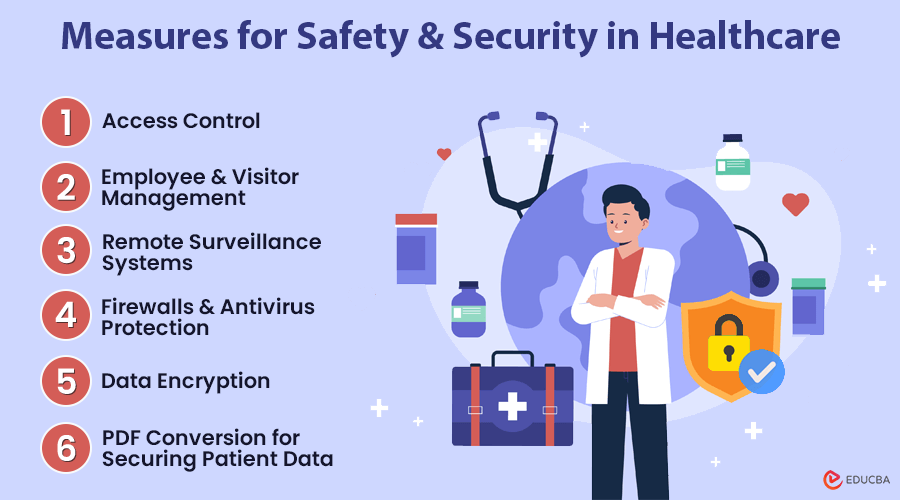
- Access Control: Facilities utilize advanced access control measures, such as keycards, biometric scanners, and password-protected doors, to limit entry into sensitive zones like operating rooms, data storage areas, and medication storage.
- Employee and Visitor Management: Effective employee and visitor management systems help track individuals entering and exiting the facility. These systems use badges and ID verification processes to ensure unauthorized persons cannot access restricted zones, contributing to overall accountability and safety.
- Remote Surveillance Systems: Using remote video surveillance systems in healthcare facilities strengthens security and improves emergency response times. Surveillance cameras provide real-time insights, allowing security teams to detect unusual activities or incidents as they happen. In the event of theft, vandalism, or unauthorized access, these systems provide invaluable footage that can aid investigations and even deter potential offenders.
#2. Digital Security Measures
In the digital realm, protecting electronic health records (EHR) and patient data is crucial to prevent cyberattacks and unauthorized access. Digital security measures include:
- Firewalls and Antivirus Protection: These foundational security tools help safeguard healthcare data by preventing unauthorized access and blocking potential cyberattacks. Firewalls filter incoming and outgoing traffic, while antivirus software detects and removes malicious threats.
- Data Encryption: Encryption transforms sensitive patient information into unreadable formats, ensuring only authorized individuals can access or decode the data. This approach safeguards personal health information from data breaches and ensures adherence to privacy regulations.
- PDF Conversion for Securing Patient Data: Handling Digital Imaging and Communications in Medicine (DICOM) files, which contain vital medical images like MRIs, X-rays, and CT scans, can be complex due to their large file sizes and sensitive information. PDF conversion is a valuable solution for healthcare facilities here as by converting DICOM files to PDF format, healthcare providers can make patient data more manageable and secure. This conversion ensures that only authorized personnel can access or edit the files, reducing the risk of unauthorized access or data loss.
Ensuring the Security of Medical Devices
As networked medical devices become more common, healthcare organizations face growing cybersecurity challenges. Devices like insulin pumps and heart monitors now connect to hospital networks, creating potential entry points for cyber threats. A breach could compromise patient data and directly endanger patient safety.
To protect these devices, healthcare facilities should implement comprehensive security practices. This includes rigorous testing, strong passwords, and routine software updates. A “zero-trust” model is also essential—restricting device access, using multi-factor authentication, and ensuring only authorized personnel can interact with these critical tools.
Importance of Access Control in Healthcare
Access control is crucial for securing sensitive areas like pharmacies, labs, and data storage rooms in healthcare facilities. With access control technologies like biometrics, key cards, and password-protected doors, facilities can monitor and control who enters secure areas.
This safeguards medications and equipment and protects patient information from being accessed by unauthorized personnel. These systems provide detailed records of entry, which can help administrators track activity in restricted areas and respond quickly to security incidents.
Access control enhances security and fosters accountability among staff, ensuring a safer healthcare environment.
Training Healthcare Staff on Security Protocols
- Simulation Exercises: Allowing staff to practice security response scenarios in a controlled environment.
- Ongoing Education: Ensuring staff stay updated with security trends and regulatory changes.
Compliance with Healthcare Regulations
Compliance with healthcare regulations is non-negotiable to ensure that healthcare providers handle patient data securely and responsibly. Regulations such as HIPAA govern how patient information should be stored, shared, and protected.
- HIPAA Compliance: Healthcare organizations must follow HIPAA guidelines for data security, patient confidentiality, and breach reporting.
- Regular Audits: To ensure ongoing compliance, healthcare facilities should conduct periodic audits to assess their security protocols and update them as needed.
Future of Safety and Security in Healthcare
New emerging technologies like machine learning and artificial intelligence hold significant potential for predictive security, enabling facilities to anticipate threats before they occur. For instance, AI-driven surveillance can spot suspicious activity in real time, while machine learning algorithms analyze security data to recognize patterns and identify potential vulnerabilities. Staying informed about these advancements is essential for healthcare professionals. By doing so, healthcare facilities can ensure that their security practices evolve alongside the industry’s advancements.
Final Thoughts
Ensuring safety and security in healthcare is a multifaceted effort that includes both physical and digital security measures. From access control systems and surveillance to protecting patient data and securing medical devices, healthcare facilities must adopt comprehensive security strategies. By closely following regulations, providing thorough staff training, and adopting advanced technologies, healthcare professionals can offer high-quality care in a secure, patient-centered environment that prioritizes safety. As healthcare evolves, so must the strategies to safeguard patients, staff, and sensitive data.
Recommended Articles
We hope this guide on safety and security in healthcare provides essential insights into maintaining a secure environment for patients and healthcare professionals. Check out these recommended articles for more information on best practices and solutions in healthcare safety.

