


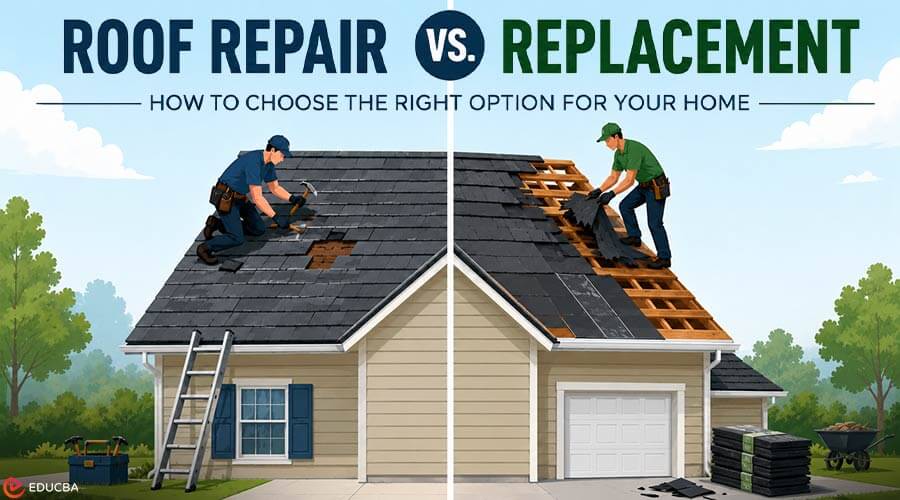
For home and building owners, few property maintenance questions carry as much financial weight as deciding whether to patch a damaged roof or invest in a full replacement. Choosing incorrectly can result in costly recurring leak repairs or an unnecessary roof replacement when a targeted repair would have been enough. This guide explains the key factors contractors consider when evaluating roof repair vs. replacement, as well as common warning signs, cost considerations, and questions homeowners should ask before making a decision.
Bottom Line Up Front:
A roof should generally be repaired if damage is localized (under 20–25% of the surface area), the underlying decking is dry and structurally sound, and the roofing system is under 15 years old. Conversely, full replacement is required if structural sagging is visible, water damage has compromised the roof deck, or local building codes restrict adding a second layer over existing materials.
The Core Decision Factors: Age, Damage Extent & Decking
Evaluating a roof requires balancing three physical parameters: the material’s remaining lifespan, the percentage of the area damaged, and the structural condition of the underlying wooden deck.
- Age of the Roofing Material: Traditional architectural asphalt shingles typically last 20–25 years, while tile and metal systems can last 40+ years. If an asphalt shingle roof is more than 18 years old, spot repairs often serve only as temporary fixes.
- Extent of Damage: If shingle loss or leak points cover less than 20% of the total surface area, spot repair is typically the most cost-effective option.
- Decking & Structural Integrity: Moisture penetration that rots plywood or OSB decking compromises structural safety and requires tear-off and replacement regardless of shingle age.
- Building Code Mandates: According to the 2021 IRC Section R908 Roof Replacement Standards, residential codes prohibit installing a new roof layer over an existing assembly if the building already has two or more layers of roof covering.
Decision Matrix: Roof Repair vs. Replacement Comparison
The comparison table below outlines standard contractor thresholds for common roofing issues:
| Visual Warning Sign | Likely Cause | Recommended Action | Cost Consideration |
| A few missing or cracked shingles | High wind or localized impact | Targeted repair | Usually a relatively minor repair |
| Localized flashing leak | Deteriorated sealant or flashing around chimney or vents | Targeted repair | Generally lower than replacement |
| Localized granule loss in gutters | Normal weathering or isolated shingle deterioration | Monitor or spot repair | Preventive inspection recommended |
| Widespread granule loss and curling | Shingle deterioration and aging | Full replacement may be appropriate | Continuing repairs can become costly |
| Spongy or sagging decking | Moisture intrusion or rotted deck boards | Replacement and structural repair | May require tear-off and decking replacement |
| Multiple leaks across different rooms | Widespread roofing, membrane, or underlayment failure | Full replacement may be appropriate | Repeated repair expenses can add up |
Note:
In accordance with NRCA Reroofing Guidelines, performing routine annual inspections allows homeowners to catch flashing and shingle issues early, extending total roof service life before replacement becomes necessary.
Cost Efficiency & Energy Considerations
When weighing repair against replacement, property owners must consider long-term energy efficiency and material advancements. Modern replacement materials incorporate reflective granules and advanced underlayments that reduce attic thermal absorption. Under the ENERGY STAR Cool Roof Products Guide, installing reflective roofing materials can reduce peak cooling demand by 10% to 15%, significantly lowering summer utility bills in warm climates.
As Fernando Alonso, founder of Alo’s Roofing, a residential and commercial roofing contractor based in California, explains, honest evaluation relies on assessing structural safety first:
“Homeowners often panic at the first sign of a water stain on their ceiling, assuming they need a complete roof replacement. In many cases, if the decking is intact and the shingles have not reached systemic failure, a precise flashing or ridge cap repair can completely stop the leak. An honest contractor will always walk you through the structural evidence before recommending a full tear-off.”
Key Red Flags That Require Immediate Attention
Regardless of whether you choose to repair or replace, certain warning signs indicate active moisture penetration that requires prompt attention:
- Dark Water Stains on Ceiling or Attic Rafters: Signals active underlayment penetration.
- Blistering Interior Paint: Caused by trapped moisture vapor leaking into top-floor walls.
- Moss or Mold Growth Between Shingles: Indicates persistent moisture retention that breaks down shingle backing over time.
- Daylight Visible Through Attic Decking: Confirms physical gaps in the decking and exterior shield.
Summary Checklist for Homeowners
Before deciding between repair and replacement, complete this evaluation checklist:
- Age Check: Determine the approximate age of your current roofing system (is it approaching 20+ years?).
- Decking Inspection: Check your attic for sagging rafters, wet insulation, or visible daylight.
- Layer Audit: Verify whether your roof already has two layers of shingles installed.
- Professional Estimate: Obtain a comprehensive, written inspection report with photo documentation before signing a replacement contract.
Frequently Asked Questions (FAQs)
Q1. Can I repair a roof myself?
Answer: Spot repairs on single-story structures are technically possible for experienced DIYers, but steep pitch work, flashing replacement, and structural inspections carry safety risks and potential warranty voidance. Professional contractors ensure sealants and underlayments meet local building codes.
Q2. How long does a typical roof repair take compared to a replacement?
Answer: Most localized repairs (flashing resealing, pipe boot replacement, or shingle patching) take 2 to 5 hours. A complete residential roof tear-off and replacement typically takes 1 to 3 days, depending on home size, pitch, and weather conditions.
Q3. Will Insurance Cover Roof Repair or Replacement?
Answer: Homeowners insurance generally covers repairs or replacements caused by sudden, accidental events (such as hail storms, falling tree limbs, or severe wind). Damage resulting from gradual wear, lack of maintenance, or age is typically excluded.
Recommended Articles
We hope this comprehensive guide to roof repair vs. replacement helps you make informed decisions about maintaining and protecting your property. Check out these recommended articles for more insights and practical tips on roofing maintenance, repairs, and home improvement.

