


Updated October 14, 2025
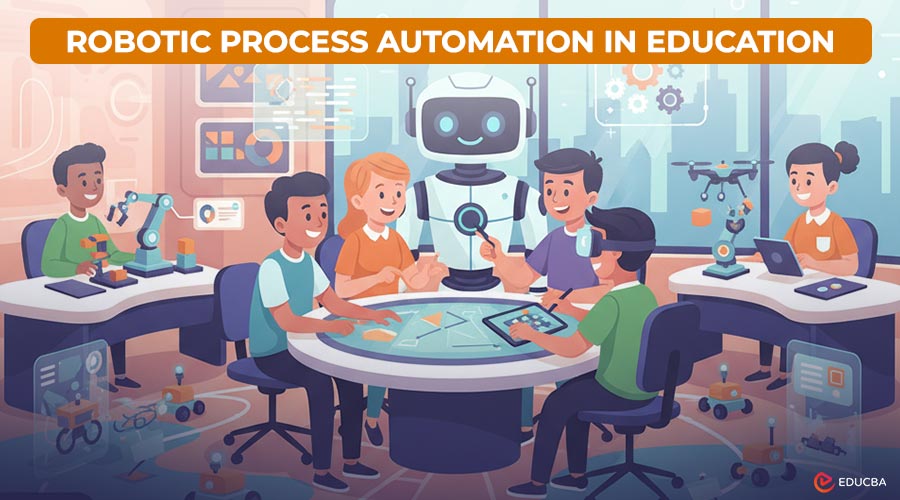
Introduction to Robotic Process Automation in Education
Some may question the application of RPA in education, wondering whether it truly delivers benefits and in which areas it is most effective. Initial research indicates that adoption in educational institutions has been relatively slower than in other sectors, primarily due to limited awareness and concerns regarding complexity. Nevertheless, a closer examination demonstrates that robotic process automation in education offers substantial value.
RPA in education is already assisting institutions in automating tasks such as admissions, grading, attendance, and fee management. Universities implementing RPA for enrollment have observed a 40 percent reduction in processing time. Additionally, some institutions have reduced grading turnaround by up to 90 percent. According to McKinsey, RPA can reduce administrative costs by 25 percent within the first year of deployment.
From 24/7 student support via chatbots to real-time data handling, robotic process automation in education demonstrates itself as more than a technological trend. It serves as a practical instrument that enhances staff efficiency, improves accuracy, and elevates the overall student experience.
Nine Applications of Robotic Process Automation in Education
Personnel across universities and schools, including admissions teams, IT staff, and researchers, reported common challenges: they must accomplish more with fewer resources, contend with often outdated systems, and meet the rising expectations of students and parents.
Institutional leaders are not pursuing technology for its own sake. Rather, they seek practical solutions capable of alleviating operational pressure without requiring extensive system overhauls. This context is where RPA in education has increasingly demonstrated its relevance.
This overview presents a substantive look at how automation addresses operational challenges.
1. Admissions
Institutions widely recognize the admissions period as one of the most demanding times of the academic year. Admissions directors described the overwhelming volume of applications, transcripts, and documents, as well as the need for manual data entry. Beyond the workload, there was considerable anxiety associated with student expectations, potential errors, and the pressure to maintain accuracy under time constraints.
Automation has transformed this process. Universities using robotic process automation in education have cut application processing time by up to 40 percent. Bots are capable of collecting and verifying student data, cross-checking eligibility, and identifying missing information without continuous oversight. Teams reported a 30 to 50 percent reduction in errors and significantly faster turnaround times. One director noted, “It is not merely about speed; it is about ensuring reliability and peace of mind.”
2. Attendance
Although attendance may appear straightforward, operations managers highlighted its time-consuming and often inconsistent nature, particularly in hybrid learning environments. Manual tracking and corrections were a source of frustration.
Using robotic process automation in education, institutions achieved over 95 percent accuracy and cut administrative time by up to 60 percent. One principal stated, “We did not realize how much of our day was consumed by this task until we regained that time.”
3. Grading and Assessments
Grading represents a significant contributor to faculty workload and potential burnout. The backlog can grow rapidly, and pressure to return results promptly may affect assessment quality, particularly during peak examination periods.
Institutions implementing robotic process automation in education for grading, especially standardized tests and multiple-choice formats, have achieved an 80 to 90 percent reduction in report turnaround time. AI-enabled grading tools have also reduced human error and enhanced consistency. Educators emphasized that automation allowed them to concentrate more effectively on providing student feedback and support.
4. Student Support
Support staff frequently contend with repetitive inquiries regarding admissions deadlines, course selection, and fee reminders, limiting their capacity to address more complex concerns.
RPA-powered chatbots have substantially alleviated this workload. Some institutions experienced a 30 to 40 percent reduction in helpdesk tickets, with response times halved. A student services manager remarked, “Automation allowed us to dedicate attention to matters that truly require human intervention.”
5. Finance and Payments
Finance departments face challenges associated with fee collection, reconciliation, and payroll, particularly during peak periods. Errors can result in both inconvenience and compliance issues.
Institutions utilizing RPA in education for fee processing and payroll reported a 40 percent reduction in errors and a 50 percent decrease in time spent on payroll management. A finance lead observed, “Payroll processes are no longer a source of stress.”
6. Scheduling
Coordinating meetings, interviews, examinations, and classroom assignments is frequently described as complex and prone to miscommunication.
Through robotic process automation in education, scheduling efficiency improved significantly, resulting in fewer missed appointments and reduced calendar conflicts. Staff were able to redirect their focus to higher-value activities as the system managed coordination automatically.
7. Research
In research-intensive institutions, data collection often consumes a disproportionate amount of time, limiting analytical work.
RPA in education has reduced data collection time by over 50 percent, enabling researchers to devote more attention to analysis and deriving actionable insights.
8. Transcripts and Reporting
Transcript preparation and compliance reporting can be labor-intensive and susceptible to errors, impacting institutional credibility and student satisfaction.
The adoption of robotic process automation in education improved transcript accuracy to nearly 100 percent and decreased report generation time by 40 to 50 percent. One registrar summarized, “Automation enables us to remain consistently ahead of deadlines.”
9. Personalized Learning
Educational leaders aspire to provide personalized learning, yet the associated administrative effort is substantial. Collecting performance data, identifying patterns, and tailoring support often require significant manual input.
With RPA in education combined with AI tools, institutions have observed improvements in student retention and success rates ranging from 15 to 25 percent. Additionally, chatbots addressing routine academic inquiries reduced educator workload by up to 20 percent, allowing for more individualized student engagement.
Final Thoughts
Even a well-conceived automation strategy may underperform without appropriate implementation support. Selecting an RPA service provider with expertise in the education sector is critical. Effective deployment requires alignment with existing systems, workflows, and institutional objectives.
The appropriate partner facilitates incremental implementation, scalability, and minimal complexity. They collaborate with internal teams, provide comprehensive training, and ensure that RPA in education enhances operational efficiency rather than creating an additional burden.
When exploring RPA solutions, it is essential to choose a provider who engages thoughtfully with institutional challenges and demonstrates tangible experience within the education sector. This step is pivotal in converting potential benefits into measurable outcomes.
Recommended Articles
We hope this detailed guide on robotic process automation in education helped you understand its benefits and applications. Explore our related articles on:


