


What Is Retail Media?
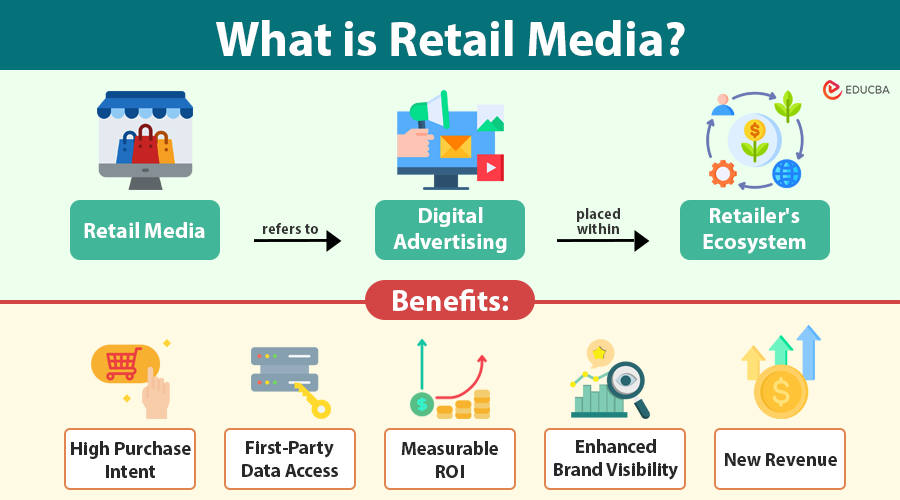
Retail media refers to digital advertising placed within a retailer’s ecosystem, encompassing its website, mobile app, and other owned digital properties. It enables brands to engage consumers directly in the shopping environment, leveraging first-party data to deliver precise targeting, ensure transparency, and measure campaign performance effectively.
When a consumer sees a sponsored product on Amazon, a banner ad on Walmart.com, or a display ad on Instacart, they are interacting with retail media. These ads utilize shopper data to display relevant products at the right moment, thereby increasing the likelihood of engagement and purchase.
Table of Contents
Key Takeaways
- Retail media enables brands to connect directly with consumers within retailer ecosystems, leveraging first-party data for precise targeting.
- Ads appear when shoppers have high purchase intent, increasing engagement, conversions, and ROI.
- Multiple formats, including sponsored products, display/video ads, on-site search, off-site ads, and in-store screens, offer versatile engagement opportunities.
- Collaboration between brands and retailers creates mutual benefits: brands gain measurable insights, and retailers unlock new revenue streams.
- Technology, AI, and omnichannel integration are driving the rapid evolution of retail media.
- Challenges such as data fragmentation, measurement discrepancies, ad saturation, and privacy concerns must be carefully addressed and managed.
- Retail media is becoming a central pillar of marketing strategies, enabling stronger customer relationships and sustainable growth.
Why Retail Media Matters?
Retail media transforms the way brands connect with customers by reaching them exactly when they are ready to make a purchase. With third-party cookies disappearing and privacy rules tightening, first-party data has become a competitive advantage. Retailers hold rich insights — from shopping patterns to purchase frequency — that brands can harness to create precise, high-impact campaigns.
Beyond targeting, retail media deepens brand–retailer collaboration. Brands access real-time sales data to measure success, while retailers unlock new revenue streams through strategic ad placements.
Key Components of Retail Media
Retail media leverages multiple formats and channels to connect brands with shoppers at the right moment:
1. Sponsored Products
Brands bid for prime visibility by promoting products in search results or category pages. These placements drive higher conversions because they appear when shoppers are actively making purchase decisions.
2. Display and Video Ads
Retailers showcase banner and video ads on their websites, apps, and email newsletters to enhance brand awareness and effectively engage consumers.
3. On-Site Search Advertising
Brands target users through search-based campaigns, ensuring their products appear when shoppers look for related items, capturing intent-driven traffic.
4. Off-Site Advertising
Retailers extend their influence beyond their own platforms by placing ads across social media, connected TV, and external websites, using first-party insights to reach the right audience.
5. In-Store Digital Screens
Physical stores embrace retail media with digital displays that promote special offers or highlight featured products, blending online targeting strategies with offline shopping experiences.
How Retail Media Works?
Retail media leverages data, insights, and strategic placements to connect brands with the right shoppers at the right moment. Here is how the process unfolds:
Step 1: Data Collection
Retailers collect a wide range of consumer data, including purchase history, browsing behavior, and product preferences. They anonymize this data to ensure compliance with privacy regulations while maintaining actionable insights. This rich dataset forms the foundation for highly targeted advertising.
Step 2: Audience Segmentation
Using the collected data, retailers segment shoppers into precise groups based on factors like buying patterns, frequency of purchase, demographics, and interests. These segments allow brands to target the right audience with personalized messages that resonate.
Step 3: Ad Placement
Brands leverage these insights to secure ad placements. They can do this programmatically through automated bidding platforms or via direct deals with retailers. The placements can appear in search results, category pages, emails, apps, or even on physical store screens.
Step 4: Campaign Launch
Once the ad campaign goes live, it reaches shoppers at the exact moment they are exploring or purchasing products. The timing and context increase the likelihood of engagement and conversion, ensuring that advertising dollars are spent efficiently and effectively.
Step 5: Real-Time Tracking
Retail media networks provide real-time analytics on impressions, clicks, and conversions. Advertisers can monitor which placements perform best, which audience segments respond most, and how campaigns drive sales, creating a transparent and accountable marketing process.
Step 6: Optimization
Marketers use these insights to refine their campaigns continually. They can adjust targeting, creative content, bidding strategies, and ad placements to improve performance. This iterative approach maximizes return on ad spend (ROAS) and helps brands achieve measurable business growth.
Benefits of Retail Media
Retail media offers powerful advantages, making it one of the fastest-growing advertising channels. Brands and retailers alike gain measurable results and strategic value:
1. High Purchase Intent
Retail media connects with consumers during their shopping journey, boosting the chances of interaction and purchase. Ads appear at the exact moment shoppers are ready to make a purchase, making every impression more impactful.
2. First-Party Data Access
Brands can target audiences using accurate, privacy-safe first-party data. Insights into shopping behavior, preferences, and purchase history allow for highly relevant, personalized campaigns that drive results.
3. Measurable ROI
Closed-loop reporting tracks ad exposure directly to sales, giving marketers full visibility into performance. This transparency enables brands to measure return on ad spend (ROAS) and make informed, data-driven decisions.
4. Enhanced Brand Visibility
Sponsored product placements and display ads boost awareness and trust among shoppers. By appearing prominently in search results, category pages, or on-site banners, brands increase recognition and influence purchase decisions.
5. New Revenue Streams for Retailers
Retailers monetize their digital real estate and data assets by offering advertising solutions to brands. This creates an additional revenue channel while strengthening their relationships with partners.
Trends Shaping the Retail Media Landscape
Retail media continues to evolve rapidly, driven by technology, consumer behavior, and innovative retail strategies. Key trends are shaping how brands and retailers connect with shoppers:
1. Rise of Retail Media Networks (RMNs)
Leading retailers such as Amazon, Walmart, and Target have launched their own media networks, offering advanced targeting and ad capabilities. Smaller retailers are joining the trend through partnerships and white-label solutions, creating new opportunities for brands to reach engaged audiences directly within retail environments.
2. Integration with Connected TV (CTV)
Retailers are combining first-party retail data with streaming platforms to reach consumers beyond e-commerce websites. By merging shopping insights with CTV campaigns, brands can deliver highly relevant ads to viewers in a more immersive, media-rich environment.
3. AI and Automation
Artificial intelligence is revolutionizing retail media by enabling smarter bidding strategies, personalized ad delivery, and real-time performance tracking. AI-driven optimization helps brands maximize ROI while reducing manual effort and inefficiencies in campaign management.
4. Omnichannel Expansion
The line between online and offline advertising continues to blur. Retailers integrate digital campaigns with in-store experiences, creating a seamless journey for shoppers across websites, apps, emails, social media, and physical stores.
5. Collaborative Commerce
Brands and retailers are increasingly co-creating campaigns, sharing insights, and aligning strategies to drive engagement. This collaborative approach strengthens partnerships, improves targeting, and enhances the overall shopping experience for consumers.
Challenges in Retail Media
Despite its growth, retail media faces several challenges:
- Data Fragmentation: Managing and integrating data across different retail platforms can be complex.
- Measurement Standardization: Each network uses its own reporting metrics, making cross-channel comparison difficult.
- Ad Saturation: As more brands compete for limited space, ad costs may rise, reducing ROI for smaller players.
- Privacy Concerns: Advertisers must maintain transparency and compliance with data protection laws.
The Future of Retail Media
Retail media is rapidly evolving, and its future will reshape how brands connect with consumers.
1. Expanding Networks
Analysts predict rapid growth as retailers expand their ad networks and brands dedicate a larger portion of their digital budgets to retail media.
2. Commerce + Content + Data
Retail media combines shopping, content, and consumer insights, enabling brands to deliver targeted ads and influence purchasing decisions.
3. Omnichannel Integration
It plays a central role in omnichannel strategies, enabling seamless campaigns across websites, apps, social media, connected TV, and in-store experiences.
4. Mainstream Adoption
Retail media has evolved from a niche to a mainstream platform, providing brands with a direct path to high-intent shoppers and a competitive edge.
5. Growth & Customer Loyalty
Brands that use retail media intelligently build stronger customer relationships, boost conversions, and achieve sustained business growth.
Real-Life Examples
Retail media drives real results for brands across industries:
- Amazon Sponsored Products: Brands appear in search results, boosting conversions when shoppers actively look for related items.
- Walmart Connect: Display and video ads target shoppers on Walmart.com and the app, increasing visibility and sales.
- Target Omnichannel Ads: Brands reach consumers online and in-store using first-party data, creating a seamless shopping experience.
- Instacart Sponsored Listings: Grocery brands appear in search results and category pages to capture high-intent buyers.
- Sephora Personalized Recommendations: Ads leverage purchase history to deliver targeted suggestions, driving engagement and repeat sales.
Final Thoughts
Retail media is no longer a niche advertising tactic; it has become a central pillar of modern marketing strategies. Brands that adopt retail media intelligently can connect with high-intent shoppers, drive measurable business outcomes, and build long-term customer loyalty. As technology and data capabilities continue to evolve, retail media will further reshape how brands and retailers engage with consumers in a digital-first world.
Frequently Asked Questions (FAQ’s)
Q1. How is retail media different from traditional digital advertising?
Answer: Retail media focuses on advertising within retailer ecosystems (websites, apps, in-store), using first-party data to target consumers during the shopping journey, unlike broader display or social media ads.
Q2. How do retailers measure retail media success?
Answer: Retailers use closed-loop measurement, tracking impressions, clicks, and conversions directly linked to sales to calculate ROI and return on ad spend (ROAS).
Q3. Can retail media work for offline stores?
Answer: Absolutely. In-store digital screens and omnichannel campaigns enable brands to engage shoppers in physical locations while leveraging online insights.
Q4. Is privacy a concern in retail media?
Answer: Retail media uses anonymized first-party data to comply with privacy regulations while delivering targeted campaigns. Transparency and compliance are critical.
Q5. How can AI improve retail media campaigns?
Answer: AI helps optimize bidding, personalize ads, predict performance, and analyze large datasets, improving targeting efficiency and ROI.
Recommended Articles
We hope this guide on retail media was helpful. Explore related articles on digital advertising strategies, e-commerce marketing tips, omnichannel retail solutions, and the role of AI in enhancing ad targeting and campaign performance.

