


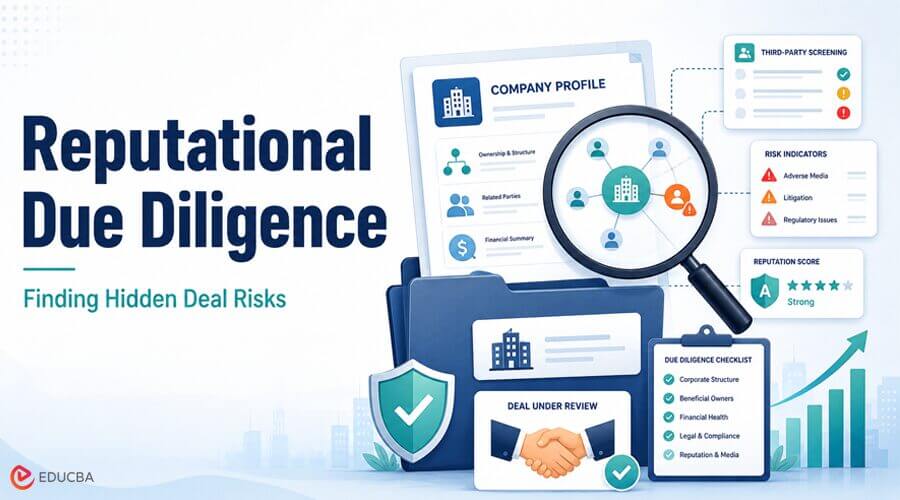
A company can pass a financial review and still create a serious problem for its buyer. Its accounts may be accurate, its contracts enforceable, and its registration current. None of those findings establishes how its owners conduct business, which interests influence its leadership, or how a controversial history could affect the new relationship.
That is the gap between formal verification and reputational risk. For investments, acquisitions and sensitive third-party appointments, reputational due diligence examines the conduct, credibility, affiliations and public record of the people and organizations involved. It asks which issues could affect the decision, even when they do not appear as liabilities in the target’s documents.
The purpose is to establish which signals are supported by evidence, which are immaterial and which require a change to the deal, contract or monitoring plan.
What is the Difference Between Due Diligence and Reputational Due Diligence?
Due diligence is the broader process of investigating an entity before entering a transaction or business relationship. Its scope may include financial performance, contracts, tax, intellectual property, operations, technology, employment and regulatory compliance.
Legal due diligence tests formal rights and obligations. Financial due diligence examines earnings, cash flow, debt and valuation assumptions. Technical reviews assess systems or products. Each workstream answers a different question.
Reputational due diligence adds another layer. It examines how the target and its key people have behaved, whom they are connected to and how credible their public claims are. Relevant sources can include regulatory notices, litigation, local-language media, historic corporate records, archived websites, public statements, professional histories and documented relationships.
This is not the same as counting negative articles or assigning an automated sentiment score. A well-sourced investigation distinguishes a substantiated regulatory finding from an unsupported allegation. It also considers age, pattern, jurisdiction, proximity to the subject, and relevance to the proposed relationship.
Identifying Hidden Liabilities Before Investment
Some exposures sit outside the data room because the target does not hold them as formal documents. Others appear only when separate records are connected.
A reputational risk assessment may identify:
- An owner’s undisclosed links to politically exposed or sanctioned parties;
- Repeated litigation, regulatory disputes or misconduct allegations involving the same executives;
- Dissolved or renamed companies connected to the current management team;
- Public claims that conflict with filings, professional histories or operating evidence;
- Bribery, labor, environmental or human-rights concerns within a supply chain;
- Close relationships with agents, intermediaries or related parties that were not disclosed;
- Patterns of customer, employee or partner complaints that point to a wider governance issue.
One signal rarely decides a transaction. A founder’s previous business failure is not evidence of misconduct. The assessment changes if that business also left unpaid creditors, faced repeated misrepresentation claims and transferred assets to another entity controlled by the same people. The relevant finding is the pattern of connection.
This distinction matters when identifying hidden liabilities before investment. The report should explain what happened, how reliably it can be established, who was responsible, and why it affects the current deal.
Why Registers and Checklists Are Not Enough?
Registers are essential starting points. The UK’s Companies House register can show a company’s status, officers, filings, charges, and people with significant control. Companies House states that its online service is not a complete source of company information and advises users to seek independent advice before acting on it.
A registry record can confirm what was filed. It may not explain why ownership changed, whether two directors have a relationship outside the company or whether the target’s actual operations match its public position.
Checklists have a similar limitation. They promote consistency but cannot decide whether an issue is material. A litigation search marked “complete” says little unless the reviewer has resolved the subject’s identity, examined the case and assessed its relevance. Reputational work begins where the checklist requires judgment.
How Do Businesses Conduct Third-Party Reputational Due Diligence?
The depth of third-party due diligence should reflect the risk created by the relationship. A low-value office supplier does not require the same level of review as an acquisition target, defense contractor, local market-entry agent, or adviser with access to confidential information.
1. Define the Decision and Risk Exposure
Start with the proposed relationship. Record the jurisdictions, access, financial value, regulatory exposure, and consequences of failure. This determines which questions the review must answer.
2. Verify the Entity and Relevant People
Confirm legal identity, trading names, addresses, ownership and management. Resolve name variants and distinguish people with similar names before reviewing media or litigation.
3. Map Ownership and Affiliations
Identify beneficial owners, parent companies, subsidiaries and material related parties. The review may also need to examine agents, close business associates or former entities when they remain relevant to control or conduct.
4. Review Legal, Regulatory and Sanctions Exposure
Search the appropriate court, enforcement and regulatory sources. Sanctions screening should include name variants and an assessment of ownership or control rather than a simple exact-name search. The UK financial sanctions guidance sets out the current UK framework, including the ownership and control elements.
5. Examine Adverse Media in Context
Search in the languages and jurisdictions relevant to the subject. Trace important claims to their source, distinguish reporting from commentary and look for corrections, legal outcomes or later evidence. Ten articles repeating one allegation still represent one underlying claim.
6. Compare Declarations With External Evidence
Test biographies, ownership statements, ESG claims and descriptions of past performance against independent records. Discrepancies may indicate weak record-keeping, exaggeration or deliberate concealment. The report should not assume which explanation is correct without evidence.
7. Rate Materiality and Define Action
Separate findings by evidence strength and business consequence. A useful report connects each material issue to a decision: proceed, seek clarification, change contract terms, add controls, monitor or stop the relationship.
This risk-based approach also reflects the OECD’s guidance for responsible business conduct, which asks companies to assess and address adverse impacts across their operations, supply chains and business relationships. See the OECD due diligence framework.
What a Reputational Due Diligence Report Should Contain?
The output should allow a legal, investment, or compliance team to follow the reasoning without having to repeat the investigation. It should include:
- The mandate, subjects, jurisdictions and time period;
- Identity resolution and relevant corporate relationships;
- Material findings with source references;
- A distinction between verified facts, credible allegations and analytical assessments;
- Explanations of gaps, conflicting records and limits on available information;
- A reputational risk assessment tied to the proposed relationship;
- Recommended follow-up questions, controls or escalation steps.
Data handling also requires attention. A provider should explain its lawful basis for processing personal information, its retention policy, its access controls, and its use of subcontractors. The Information Commissioner’s Office publishes guidance on the UK data protection principles.
When is Ongoing Monitoring Appropriate?
A pre-deal review captures conditions at a particular time. It does not prevent later changes in ownership, management, sanctions status, litigation or public conduct.
Monitoring is appropriate where the third party has continued access, operates in a higher-risk jurisdiction, performs a regulated function, or could materially affect the organization’s reputation. The plan should define the events that trigger review rather than sending every media mention to senior management.
Examples of useful triggers include a change in beneficial ownership, a new regulatory action, a material lawsuit, a sanctions designation, or credible reporting of misconduct. Each trigger should have an owner and escalation route.
Questions to Ask a Due Diligence Provider
Before appointing a firm, ask:
- Which jurisdictions and languages can your team cover directly?
- How do you resolve identities and corporate relationships?
- How do you rank source reliability and conflicting evidence?
- Will the report separate fact, allegation and assessment?
- How do you decide whether an issue is material to our transaction?
- What legal and data-protection controls govern the work?
- What information will you need from us?
- What happens if an urgent finding appears before final delivery?
Due diligence services should be judged by the quality of their reasoning, not the number of databases advertised. The provider should be able to explain how a finding was established and how it affects the decision.
Reputation is a Decision Variable, Not a Sentiment Score
Reputation is not an abstract measure of popularity. In a transaction or third-party relationship, it reflects documented conduct, credible associations, and how those facts may affect regulatory standing, stakeholder trust, and operational continuity.
The useful question is not whether negative information exists. It is whether the available evidence reveals a pattern or relationship that changes the risk accepted by the buyer. Reputational due diligence makes that judgment explicit while the decision is still reversible.
Recommended Articles
We hope this guide helps you understand how to start a carpet cleaning business, from planning and equipment to certification, marketing, and growth. Explore these recommended articles for more insights into cleaning businesses, professional certification, entrepreneurship, marketing, and business growth.


