


Introduction to QR Code Marketing ROI
It is rare to see a marketing campaign without QR codes, be it a printed ad (eg, billboards, flyers, product packaging, brochures) or digital advertising (eg, TV, social media). One crucial aspect of using this scannable tool is that it immediately connects offline audiences with online experiences, allowing customers to take action instantly. On the other hand, marketers gain valuable insights about user engagement and improve their strategies to enhance QR code marketing ROI.
Whether your goal as a marketer is to generate leads, build relationships through loyalty programs, gather feedback, drive website traffic, or boost sales, QR codes help customers take the desired action quickly and conveniently. Additionally, you can track real-time QR code performance and QR code marketing ROI to gain a clear insight into the campaign’s success.
This blog explains how tracking and measuring the QR code marketing ROI of your campaigns can help you understand the results and see the value it delivers.
Calculating QR Code Marketing ROI
The formula to calculate QR code marketing ROI is:
Here, the “Net Profit” refers to the profit/revenue generated after deducting the campaign cost (expenses incurred for printing, designing, marketing, etc).
For example, if a campaign generates USD 3,000 in sales due to the improved QR code scans, and the campaign cost is USD 1,000. Then, applying the formula, the ROI is 200% (3000–1000)/1000*100.
To truly understand your QR code marketing ROI, marketers must calculate the overall costs and returns, as given below:
Identifying Costs
- QR code generation platform subscription
- Design and printing costs (if physical)
- Associated marketing spend (ad placement, staff time)
- Cost of goods sold (if direct sales).
Quantifying Returns
- Direct sales generated from QR code scans
- Lead generation value (e.g., value of a new subscriber)
- App downloads (monetization value per download).
Key Analytics Metrics to Track QR Code Marketing ROI
During the campaign, tracking the QR code scan performance is crucial to understanding whether your campaign is moving in the right direction and achieving your QR code marketing ROI goals. Marketers must constantly study two types of analytics metrics: scan metrics and engagement (post-scan) metrics.
Scan Metrics
- Total scans: Shows how many times users scan the QR code.
- Unique scans: To identify the distinct users who scan the code.
- Scan location: To understand the geographical data (eg, country, state, region/city) of where scans occurred.
- Scan time/date: To evaluate the scan timeline (eg, when scans are most frequent based on day, week, or month).
- Device type: Identify the devices (e.g., smartphones, desktops, or tablets) that users use for scanning.
Engagement Metrics (Post-Scan)
- Click-through rate (CTR): To learn how many people click the displayed link after scanning to land on the final page or destination.
- Conversion rate: To calculate the number of scans that lead to a desired action (purchase, download, or sign-up).
- Time spent: To know the users’ engagement and the time spent on the linked content.
- Bounce rate: To understand how many people leave the page without taking action (it applies to landing pages).
Essential Tools and Solutions for Tracking QR Code Campaign
Tracking QR code marketing ROI requires leveraging specific solutions and tool integrations, which are built-in features for many QR code service providers. However, not all providers have such features. QRCodeChimp, Flowcode, and QR Tiger are leading platforms offering comprehensive tracking tools.
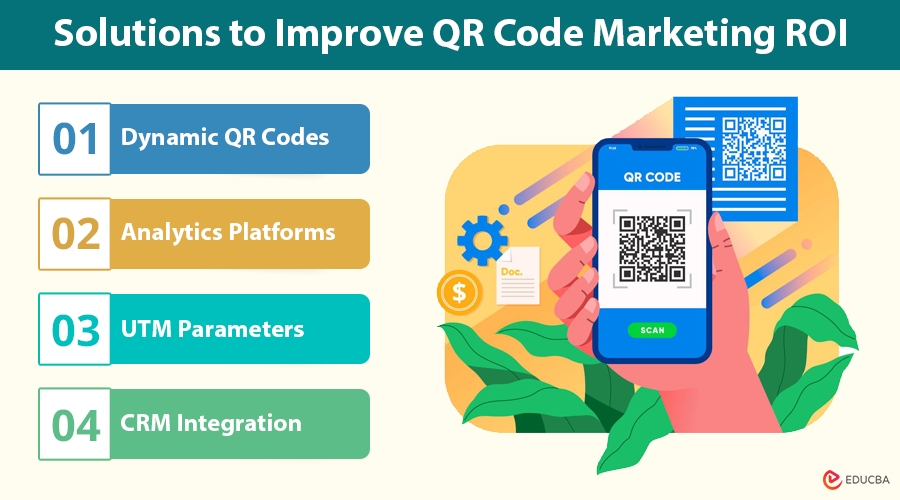
Here are four essential tools and solutions marketers should consider when aiming to improve QR code marketing ROI:
- Dynamic QR codes: Dynamic QR codes created with a Dynamic QR code generator allow real-time tracking through analytics, unlike static QR codes. Dynamic codes allow updates or editing of information during the campaign, without the need to reprint the code.
- Analytics platforms: Many QR code platforms come with built-in analytics dashboards, providing insights into different analytics metrics, such as total scans, total clicks, user location, and more.
- UTM parameters: Integrating Google Analytics into the QR code platform using UTM parameters provides valuable insights into the user journey, traffic sources, and conversions. The UTM parameters help track QR code sources.
- CRM integration: CRM integration enables linking of QR code interactions to customer profiles and automation of follow-ups or retargeting.
Optimizing Campaigns to Boost ROI
To maximize QR code marketing ROI, marketers must apply optimization strategies such as:
- A/B testing QR codes: Experiment with the same QR codes in different channels/locations or different QR codes using different landing page designs, calls to action, and placement styles.
- Improved strategy: Analyze scan data and identify the best-performing metrics. Alternatively, if the scan rate is low, refine your marketing strategy to boost user engagement, such as by using promotional offers tailored to your target audience.
Final Thoughts
A successful QR code marketing campaign requires setting clear goals, tracking real-time scan performance, refining strategies, and accurately calculating QR code marketing ROI. By using analytics metrics, dynamic QR codes, and CRM integration, marketers can leverage valuable insights, test new ideas, and build campaigns that deliver maximum ROI.
Recommended Articles
We hope this guide on QR Code Marketing ROI was helpful. Explore related articles on QR code campaign best practices, creative QR code marketing ideas, and tools to track and boost your QR code performance.


